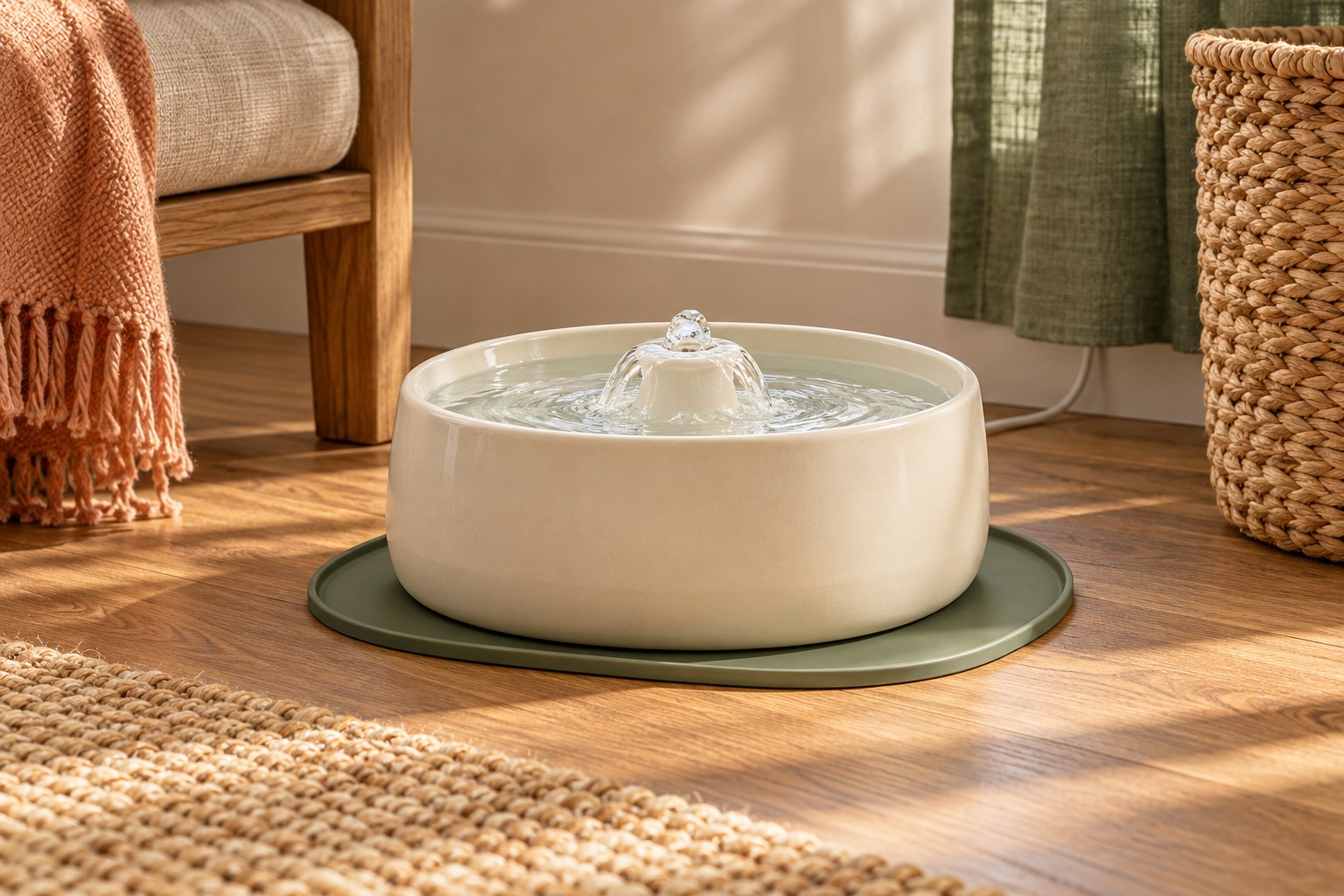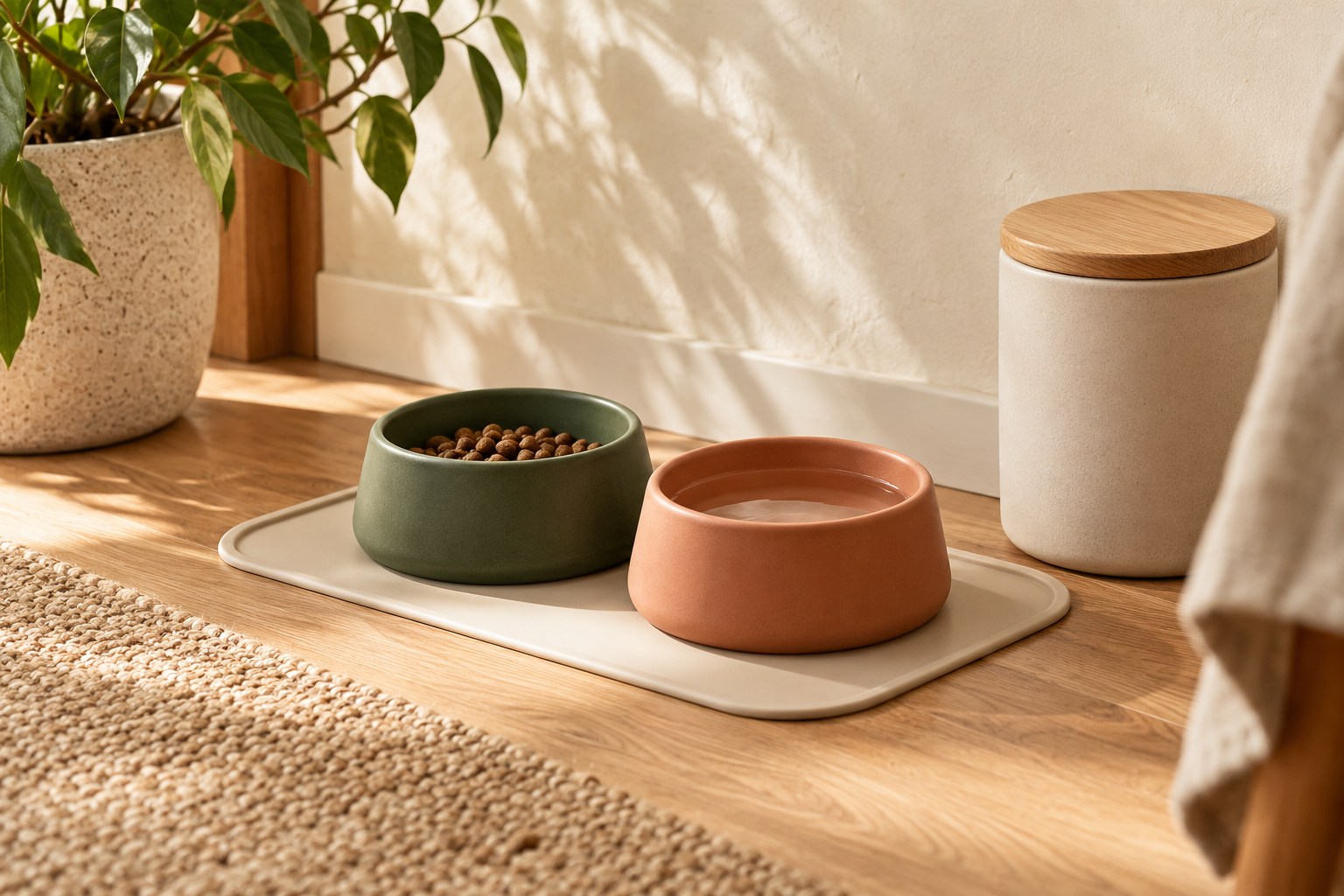
A wide, shallow dish gives a cat several possible approaches to a portion. That sounds simple, yet some products achieve their advertised width with a broad decorative rim and leave only a small central well. Compare the working interior rather than the outside diameter.
There is no need to assume that one bowl shape suits every cat. Observe where food collects, whether the cat can reach it comfortably, and how much ends up outside the dish. Those details provide a more useful starting point than a product name promising universal comfort.
Measure the feeding surface
Record the diameter of the flat or gently curved area where food actually rests. Then measure the wall height from that area to the rim. A dish 16 centimetres across with a large rolled border may offer less usable room than a simpler 14-centimetre plate.
If you serve food that is pressed into a mound, imagine how the portion will sit in the middle. Very flat dishes give easy access but little resistance when a portion is pushed sideways. A modest upturned edge may contain movement without creating a deep well.
Watch the final bites
The last part of a portion is a useful observation point. Food may migrate to a steep wall, lodge under an overhang, or slide around a polished surface. A cat stopping at that stage does not establish the cause, but it tells you which design detail to examine.
Try rotating the dish and changing its position before buying several replacements. An awkward corner or a crowded feeding station can make the same dish harder to approach. Keep the animal's access path clear so the bowl comparison is meaningful.
Choose a surface that cleans simply
Smooth stainless steel, suitable glazed ceramic, and other food-contact materials have different weights and care requirements. Focus on the manufacturer's intended use and your ability to clean the whole item. Rubber rings and decorative sleeves need the same attention as the visible interior.
A shallow plate is easy to wipe but can be slippery in wet hands. A small exterior lip can make lifting easier. If a dishwasher is part of the routine, confirm that the complete dish, rather than only a detachable insert, is approved for that method.
Contain scatter without restricting access
A mat should extend beyond the bowl enough to catch ordinary spills while leaving a firm walking surface. Avoid putting a shallow dish in a tall-sided container that effectively turns it into a deep bowl. A low tray can work if the cat can approach without stepping over a distracting edge.
For a hypothetical two-dish comparison, use the same portion and location on separate occasions. Note food left at the edge, movement of the dish, and cleanup effort. Buy the shape that works in that setting rather than treating the widest option as an automatic upgrade.
Look at the edge from the cat’s approach
A wide border can be useful for handling yet become a high ridge from the feeding side. Side photographs help reveal whether the inner transition is gentle or abrupt. Compare the distance from the food surface to the top of that border rather than treating the external height as the whole story.
If a hypothetical shallow plate leaves food on an inaccessible outer ledge, a slightly deeper smooth-sided dish may work better despite being less wide. The comparison should follow the actual food path. Try the intended portion without spreading it into every available corner, then observe where it migrates. A product that looks open from above can still create awkward final bites through its rim profile.
For our approach to product claims and illustrations, see the Editorial Policy.