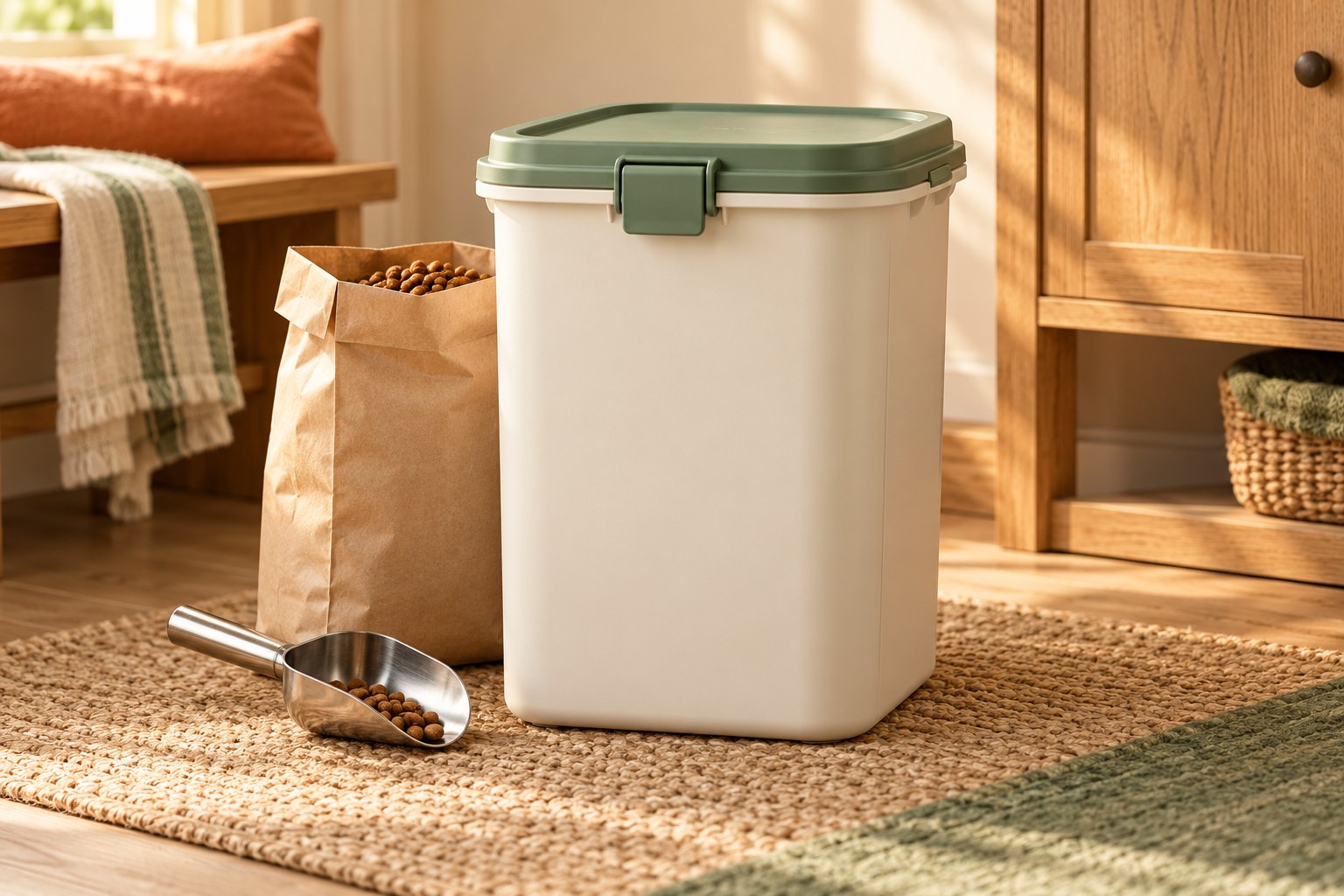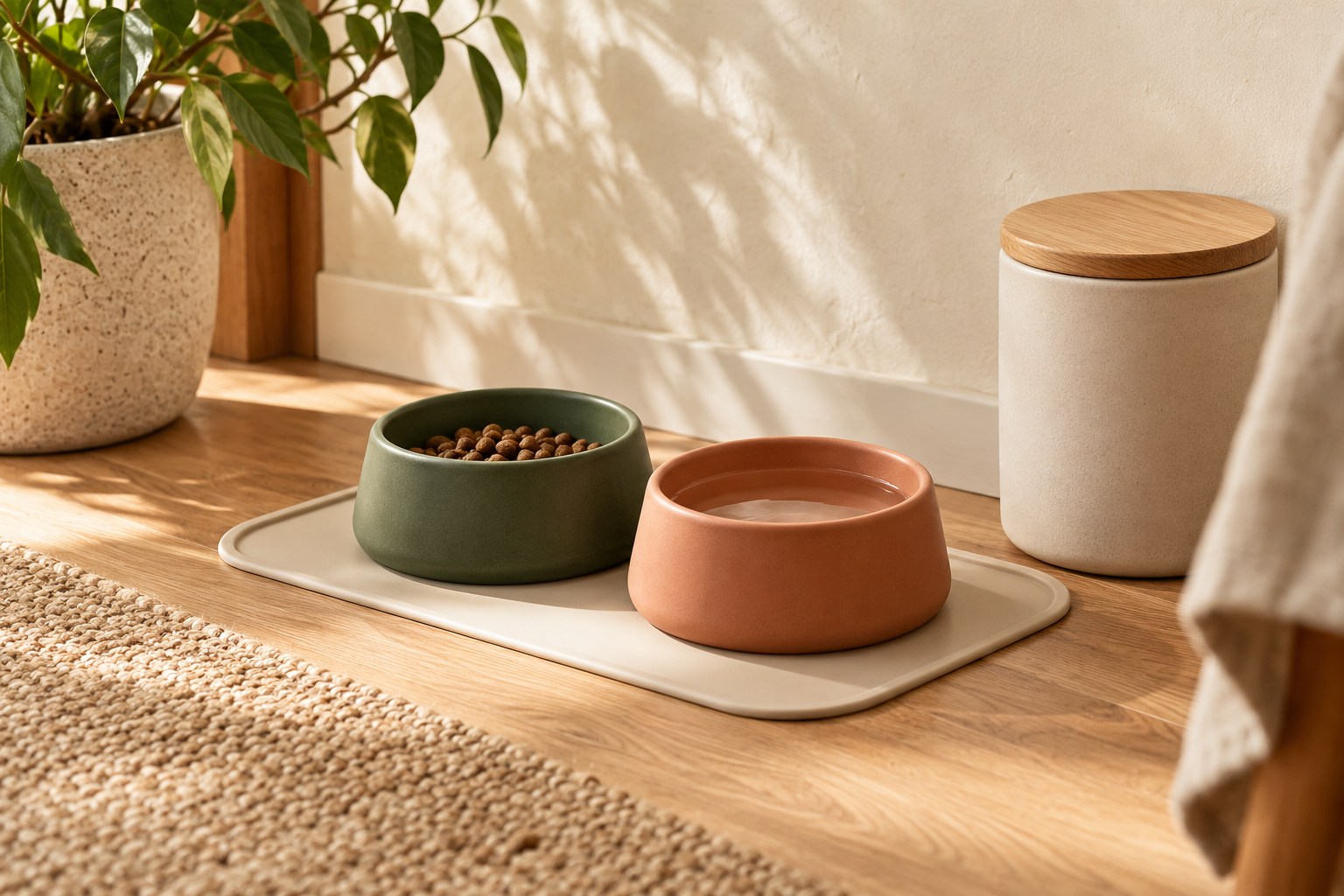
Splash-resistant water bowls use several mechanisms. Some narrow the exposed water surface with an inward lip. Others place a floating plate above the water, allowing a small drinking area through the centre. These approaches change both access and cleaning, so compare the mechanism before comparing capacity.
A bowl that reduces a few drips at home may not contain a sharp jolt in a moving vehicle. Treat splash-resistant as a description of a design goal, not a promise that water cannot escape. The practical test is whether the product manages the kind of movement your household actually experiences.
Identify the route water takes
On a rimmed bowl, water reaches the animal through a restricted opening while the surrounding lip redirects some movement inward. Inspect the gap between rim and basin. It should remain accessible for cleaning, and the removable rim should locate securely without being forced.
A floating plate changes height with the water level. Look for guidance on the permitted fill range and correct plate orientation. A plate that is upside down, trapped at an angle, or obstructed by debris may behave differently from the assembled product shown in a video.
Compare the drinking opening
The opening needs to suit the intended animal's approach. A large basin can still have a small working access point. Measure that opening separately and check side views, particularly if the upper surface sits above the surrounding floor or tray.
Introduce the bowl while ordinary water remains available. Observe whether the animal approaches, touches the moving surface, and drinks comfortably. A hesitant response is a reason to slow the introduction or choose a simpler design, not to remove other access and wait for acceptance.
Calculate usable capacity
The reservoir's maximum volume may include water that is difficult to reach or exceeds a recommended operating mark. Look for a stated working fill line. Avoid adding extra water to improve access if that bypasses the mechanism's intended operation.
For a hypothetical comparison, Bowl A may advertise two litres but work best below a lower mark, while Bowl B holds less and exposes a broad open surface. The first might suit a stationary station with occasional nudging; the second might be easier for an animal that avoids moving plates. Capacity alone cannot settle that choice.
Test spill paths in the right setting
At home, watch how the bowl responds to ordinary drinking and a gentle accidental nudge while you are present. Notice whether water stays in the basin, collects on the plate, or exits through a side seam. Do not deliberately create large spills near electrical items.
For travel, use only equipment intended for that setting and follow its instructions. Secure placement matters separately from the bowl's rim design. A sliding bowl can spill because the whole object moves, even if its internal baffle works as intended.
Budget for complete disassembly
A floating plate adds an upper and lower face, an opening, and sometimes a seal or valve. All water-contact areas need the manufacturer's cleaning process. Check whether pieces separate without tools and whether they can be laid out to dry without holding water in a hollow section.
Keep an open bowl available while components are washed. If the plate develops damage, replace it with the exact supported part rather than using an improvised disc. The extra mechanism earns its place only when its benefit exceeds the added maintenance.
Decide whether the mechanism is earning its space
Keep a simple comparison over several supervised uses: water found outside the bowl, ease of drinking, and time needed to service the parts. You do not need a dramatic before-and-after claim. If the mat stays drier but the plate needs awkward daily attention, decide whether that trade suits the household. If access is less comfortable, choose another design rather than making spill reduction the only measure of success.
For our approach to product claims and illustrations, see the Editorial Policy.