
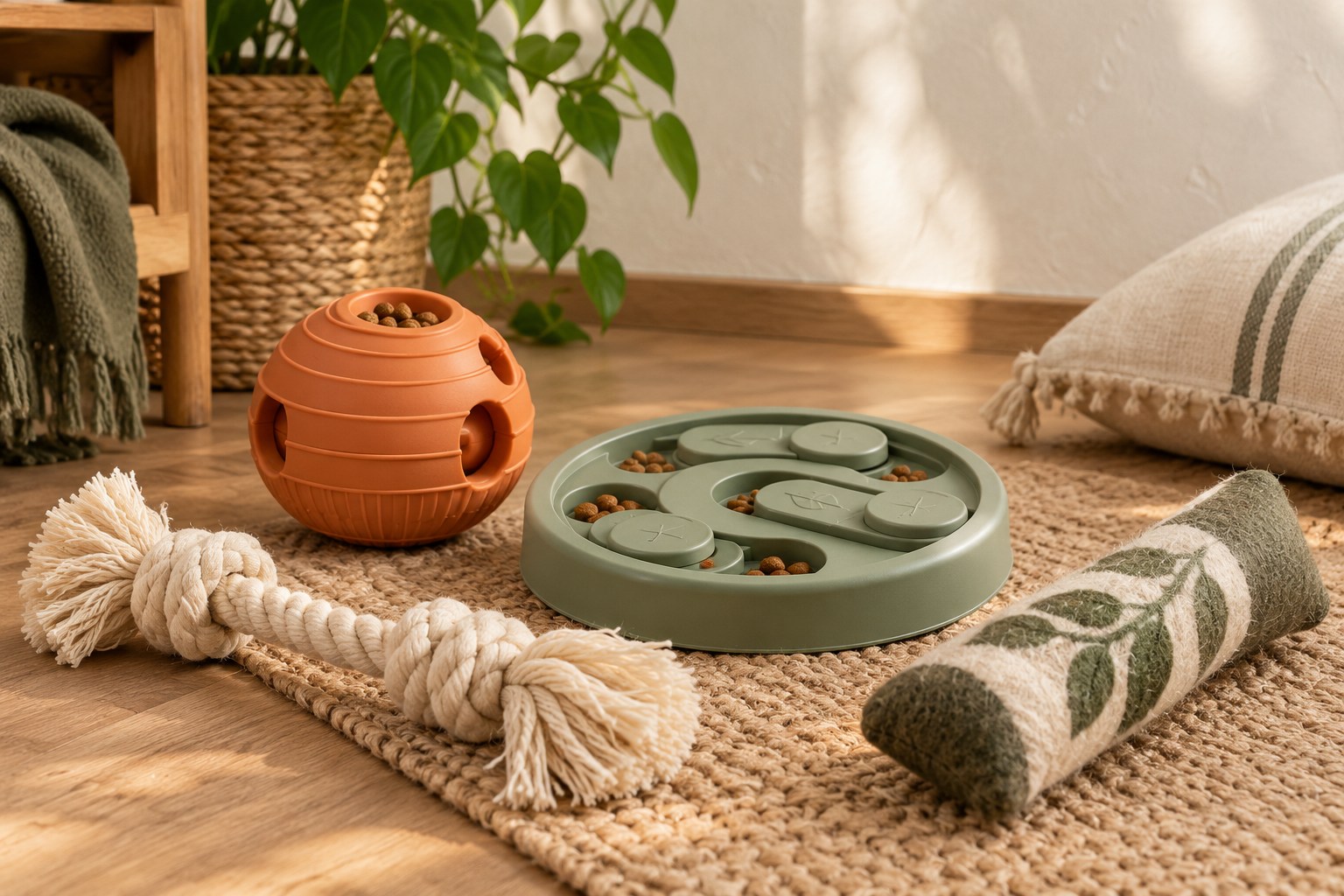
A plush toy's character shape is the least useful part of its specification. Long ears, dangling legs, decorative eyes, and hidden squeakers all change how the animal can grip and pull it. The practical question is whether that construction suits the intended supervised interaction.
Soft toys are not suitable for every pet or every style of play. If the animal quickly tears fabric or swallows material, choose another appropriate activity. A reinforced seam claim does not establish that the whole toy is resistant to damage.
Follow the seam around the shape
Look for the seam path at narrow necks, limb attachments, and the junction between different fabrics. These points may receive repeated pulling. Thick outer fabric can still be joined by a small seam allowance or an awkward transition, so compare close-up photographs where available.
Embroidered details reduce some separate decorative pieces but do not make the toy indestructible. Inspect embroidery, labels, and any applied patches too. A small loose strip can attract focused pulling even when the main body remains intact.
Consider what is inside
Read whether the toy contains stuffing, a squeaker, crinkle film, a rope core, or a replaceable component. Each changes the consequences of a torn seam and the inspection required. A stuffing-free toy may still have other internal parts, so the phrase does not mean nothing can come loose.
If a product has a replaceable squeaker pocket, confirm that it closes securely and is intended for the animal's size. Keep spare components stored separately. Do not add a household squeaker or other insert to a toy that was not designed to contain it.
Compare appendages with the play style
Long fabric limbs can be easy to carry and shake, but they also provide concentrated pulling points. A compact pillow shape offers fewer appendages yet may encourage the animal to work at one seam. Observe the pet's actual interaction rather than assuming a particular silhouette is universally tougher.
For a hypothetical gentle carrier, a washable compact plush may suit the desired activity. For an animal that immediately pins and tears the same limb, another copy of the identical toy is unlikely to change the pattern. The construction should match the observed use.
Plan supervision and retirement
Keep the toy within view and remove it when damage begins. Check underneath the body and around the seams after play; a small opening can be hidden by fur-like fabric. Account for any missing internal component rather than assuming it remains safely inside.
Do not leave damaged toys in an open basket while waiting for repair. Use only repairs explicitly supported by the manufacturer, and consider whether the repaired area remains suitable for use. Household stitching can close a visible tear without restoring the original construction or containing a damaged insert.
Wash without hiding the problem
Read care instructions for the complete toy, including internal materials. A washable cover does not necessarily mean the whole object can be machine washed. Dry all layers fully before storage, paying attention to thick seams and padded sections.
Inspect again after washing because wet fabric can reveal pulled stitches or distorted seams. If the toy cannot be cleaned or dried properly, retire it. A simple shape with accessible seams often provides a clearer maintenance routine than a highly detailed character with many hidden joins.
For our approach to product claims and illustrations, see the Editorial Policy.