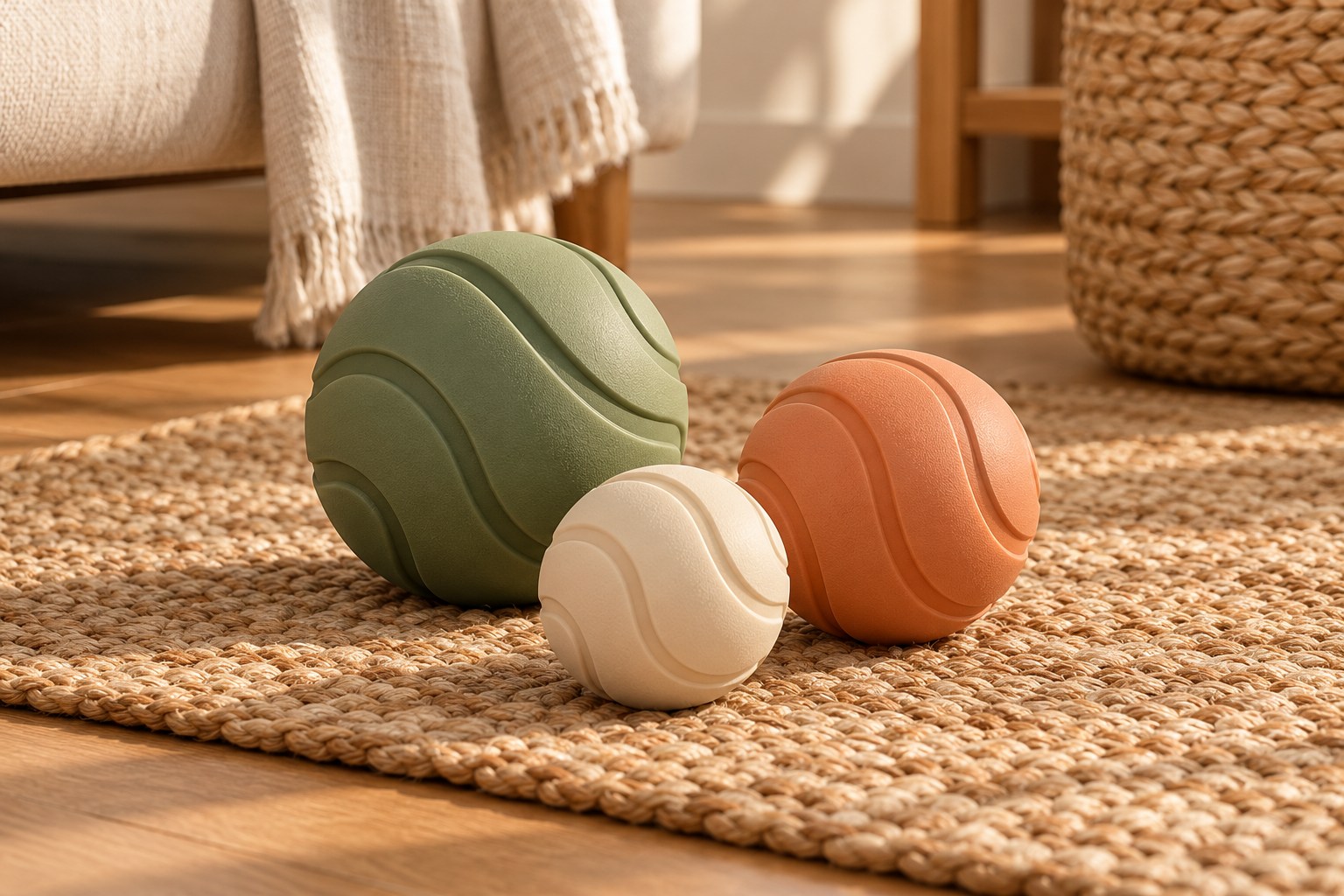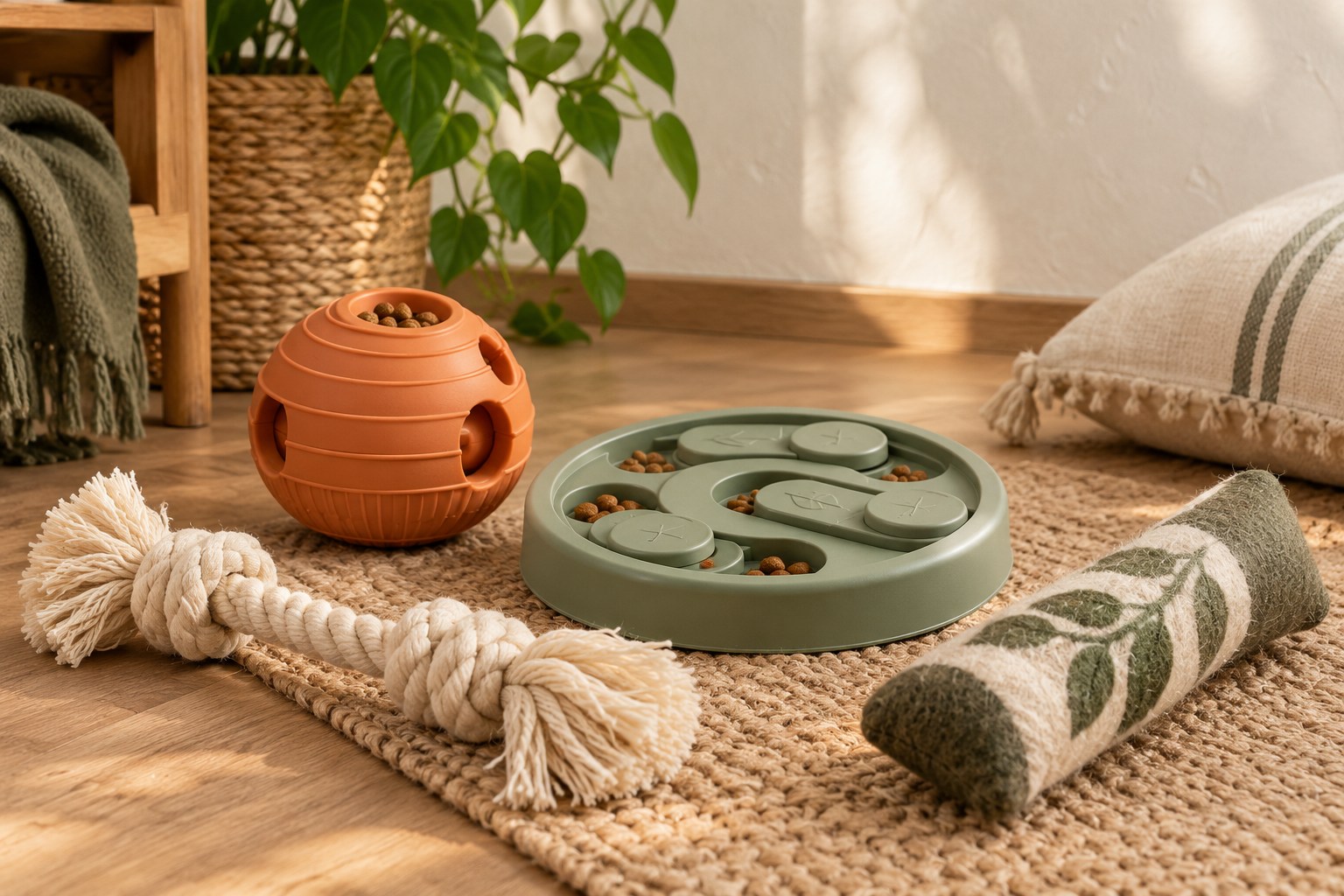
A wobble toy moves away from upright and then returns, usually because its weight is concentrated near a rounded base. The pet's nudge changes the toy's angle, which can bring food toward a release opening. The interaction depends on several details working together, not simply on the object being heavy.
Use the product only as intended, with suitable contents accounted for within the individual pet's established feeding plan. Keep the session supervised. A wobble toy is not necessarily built for chewing, and a large base does not make every upper component resistant to damage.
Compare base curvature
A shallow curve may tip through a modest angle and return quickly. A more rounded base can allow a larger movement. The actual behaviour also depends on weight distribution, so shape alone cannot predict the complete result. Look for demonstration footage on a plain surface rather than judging a still image.
Notice whether the toy returns to the same position or travels across the floor. A design that moves widely may suit a clear room but become trapped beneath furniture in a narrow one. Choose the movement range you can supervise, not the most dramatic wobble.
Find the relationship between tilt and release
An opening low on the body may release contents after a small movement. A higher opening may need a larger tilt or a particular direction. Internal baffles can change that relationship further. Read how the maker expects the animal to move the toy.
Before introducing it, load a small amount and move it by hand on the intended surface. Check that ordinary permitted movement releases food. If nothing emerges, inspect for a blocked path, an unsupported food size, or an incorrectly fitted part before increasing difficulty.
Test the empty and loaded toy
Contents can shift inside and alter the feel. A partly loaded toy may move differently from a nearly empty one. Check the permitted fill range and avoid packing the chamber tightly, which can obstruct the intended release path.
For a hypothetical comparison, Toy A might reset sharply and release several pieces with a modest nudge. Toy B might stay tilted longer and require a second movement. The useful choice depends on whether the pet can understand and repeat the action comfortably, not on which produces fewer pieces per minute.
Match the floor and surroundings
A rounded base may behave differently on carpet, tile, or a flexible mat. A soft surface can slow the reset, while a hard surface may transmit noise. Do not add an improvised padded sleeve that hides damage or interferes with the release opening.
Use a clear area where the toy cannot reach stairs, cables, or narrow gaps. Check whether released food remains visible around it. A patterned rug can make cleanup harder, and food trapped beneath a heavy toy can be missed if you only inspect the surrounding floor.
Watch the animal's chosen strategy
Nudging and batting may fit the design, while carrying, chewing, or pinning the toy may not. Follow the manufacturer's intended use and stop if the animal begins damaging it. A toy that invites an unsuitable strategy is not made appropriate by closing the opening further.
If the pet seems unsure, simplify within the supported settings or return to an easier activity. You can make the first interaction clearer with an accessible amount and placement rather than expecting the animal to discover every mechanical detail unaided.
Assess weight as a handling issue
You will need to lift, empty, and wash the toy. A broad weighted base can be awkward in wet hands, and a narrow fill opening can make complete emptying difficult. Look for a grip area and a documented disassembly process that suit your routine.
Keep the weighted component out of water if the instructions require it. Do not assume a sealed-looking base is washable. Follow the care method for each part and allow internal food-contact surfaces to dry completely before loading again.
Decide when to move on
A wobble toy can remain interesting through small supported changes in opening or placement. It does not need to become progressively restrictive. If the pet uses it smoothly and the routine remains manageable, consistency can be useful.
After every session, remove leftovers, inspect the closure, and check the base for damage or leaks. Record which setup works on your floor. That practical combination of movement and access is a better reference than a generic beginner or advanced label.
Compare easy access with a useful reset
A toy can be too restrictive even when it rights itself beautifully. If the pet repeatedly completes the intended nudge but nothing releases, inspect the outlet and contents rather than praising the long session. Conversely, a broad opening that releases quickly can be a sensible introduction. The first comparison should establish that the movement has a clear result; later supported adjustments can change the pace without removing that relationship.

For our approach to product claims and illustrations, see the Editorial Policy.