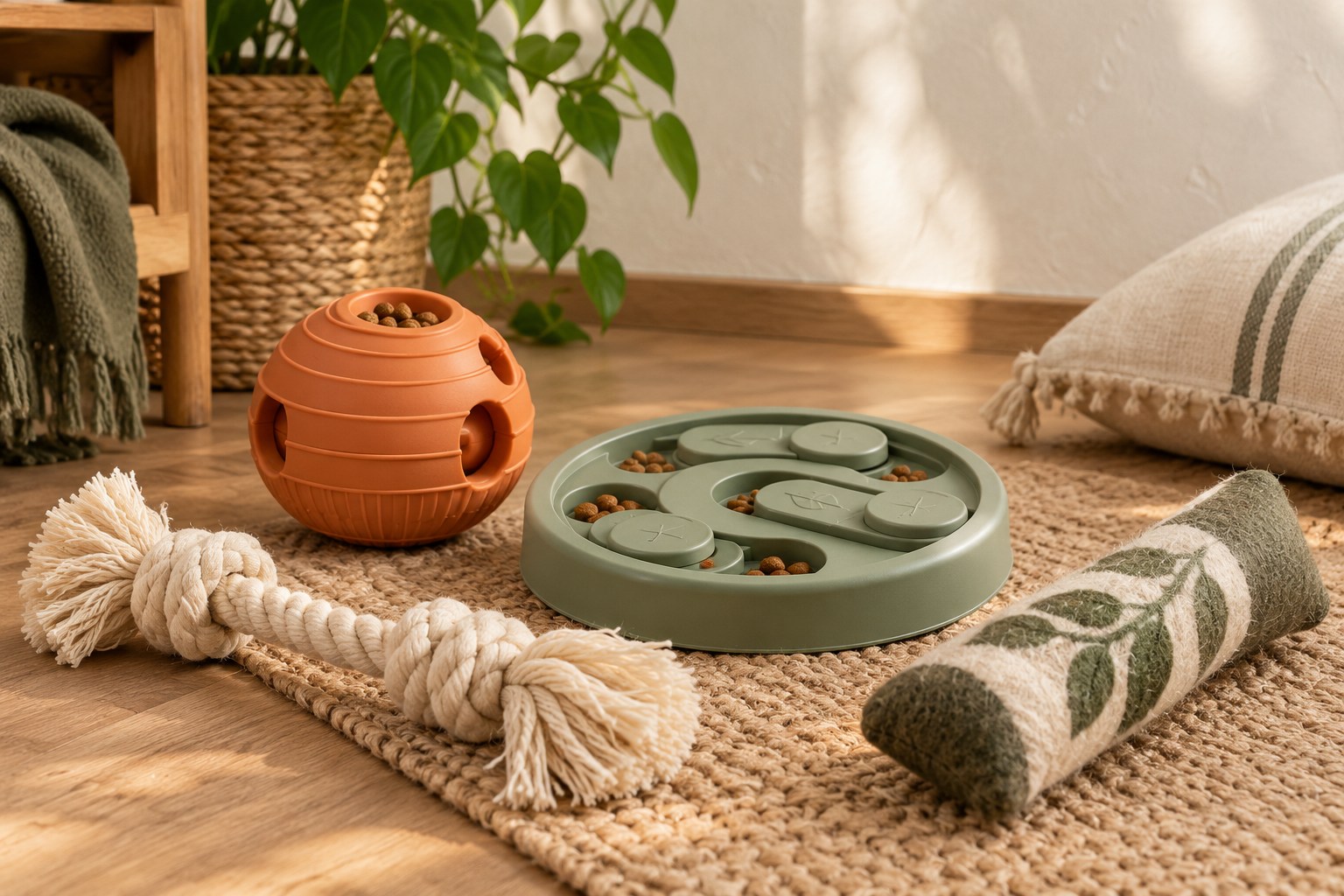
A kicker toy is usually long enough for a cat to hold with the front paws while interacting with the body using the hind feet. Its shape differs from a small mouse or ball, but the name alone does not establish an appropriate size or construction. Look at the complete body, ends, and internal contents.
Choose a pet product intended for this style of play and observe how the individual cat uses it. A toy that is immediately torn apart or swallowed is unsuitable regardless of how popular its shape appears in product photographs.
Compare length with usable body area
The advertised length may include a thin tail, ribbons, or ears that do not provide much gripping surface. Measure the main body separately. A broad central section can offer more useful area than a longer toy whose actual body is narrow.
Thickness and flexibility also matter. A very firm cylinder behaves differently from a soft flat pillow, even when both are the same length. Check whether the toy bends, compresses, or maintains its form, and follow the manufacturer's intended size and use.
Inspect the ends and narrow joins
End seams can receive repeated pulling and kicking. Look for a simple well-finished closure rather than many decorative appendages. Fabric labels and loose trim create extra points to inspect and may attract focused chewing.
An embroidered face can reduce separate decorative parts, but stitching still needs checking. Examine the underside and corners after play. Thick fur-like fabric can conceal a small seam opening, so inspect by parting the surface gently where necessary.
Read the filling information
Some kickers contain loose stuffing, crinkle material, an aromatic plant filling, or a refillable pocket. Each affects cleaning and inspection. Do not assume a refillable toy is washable while filled, or that an unstuffed design contains no internal components.
If a pocket is designed to open, verify its supported closure and use only the intended contents. Keep spare filling and small inserts secured away from pets. A loose internal accessory should never become a separate play object.
Introduce without encouraging hand play
Offer the toy in a clear area and let the cat choose how to approach. Keep hands separate from the active gripping area rather than holding the kicker tightly against the cat's body. A longer main body can help provide that separation when the design suits the animal.
For a hypothetical cat that enjoys gripping a compact soft toy, a moderately longer simple kicker may be a useful comparison. If the cat instead drags it by a decorative tail and chews that section, choose a plainer construction or another appropriate toy rather than adding more loose features.
Check washing and storage
Follow care instructions for all internal materials. A removable cover may have different requirements from the complete toy, and dense filling may take longer to dry than the surface suggests. Inspect seams again after cleaning and before returning it to play.
Remove damaged kickers promptly and account for missing material. Store toys with loose strings, ribbons, or elastic securely after supervised use. Even a simple fabric body should be kept under the level of supervision its construction and the cat's observed behaviour require.
For our approach to product claims and illustrations, see the Editorial Policy.