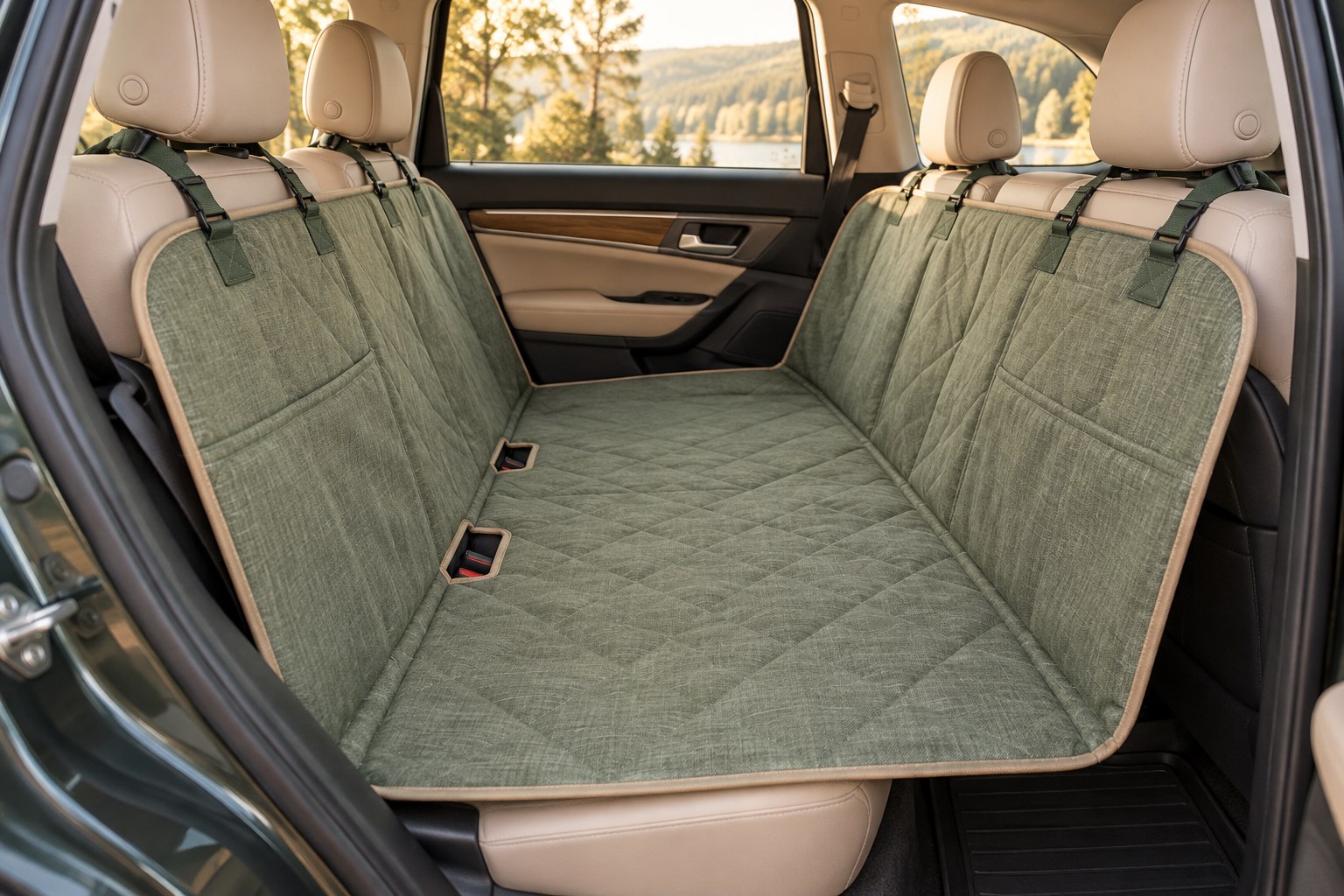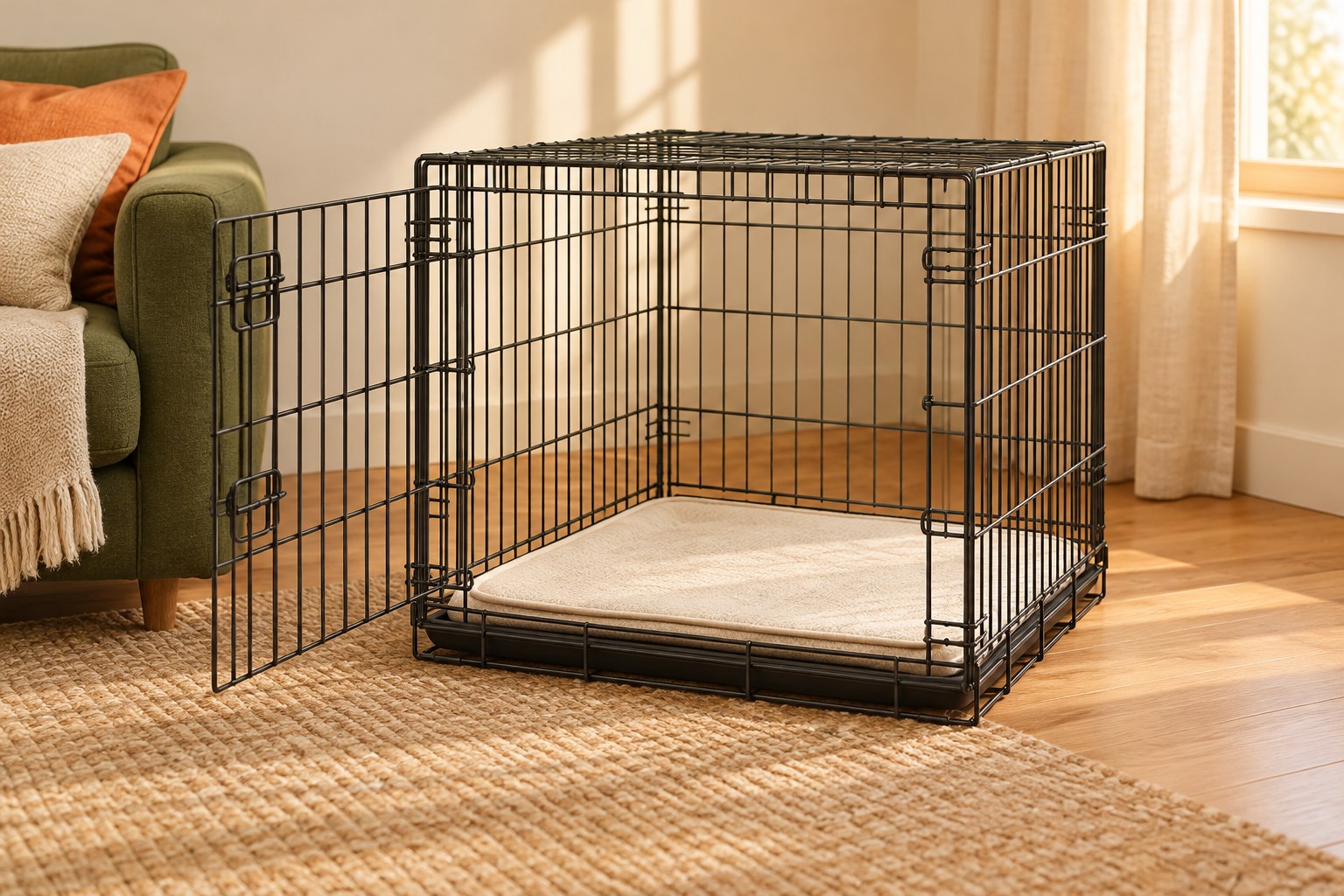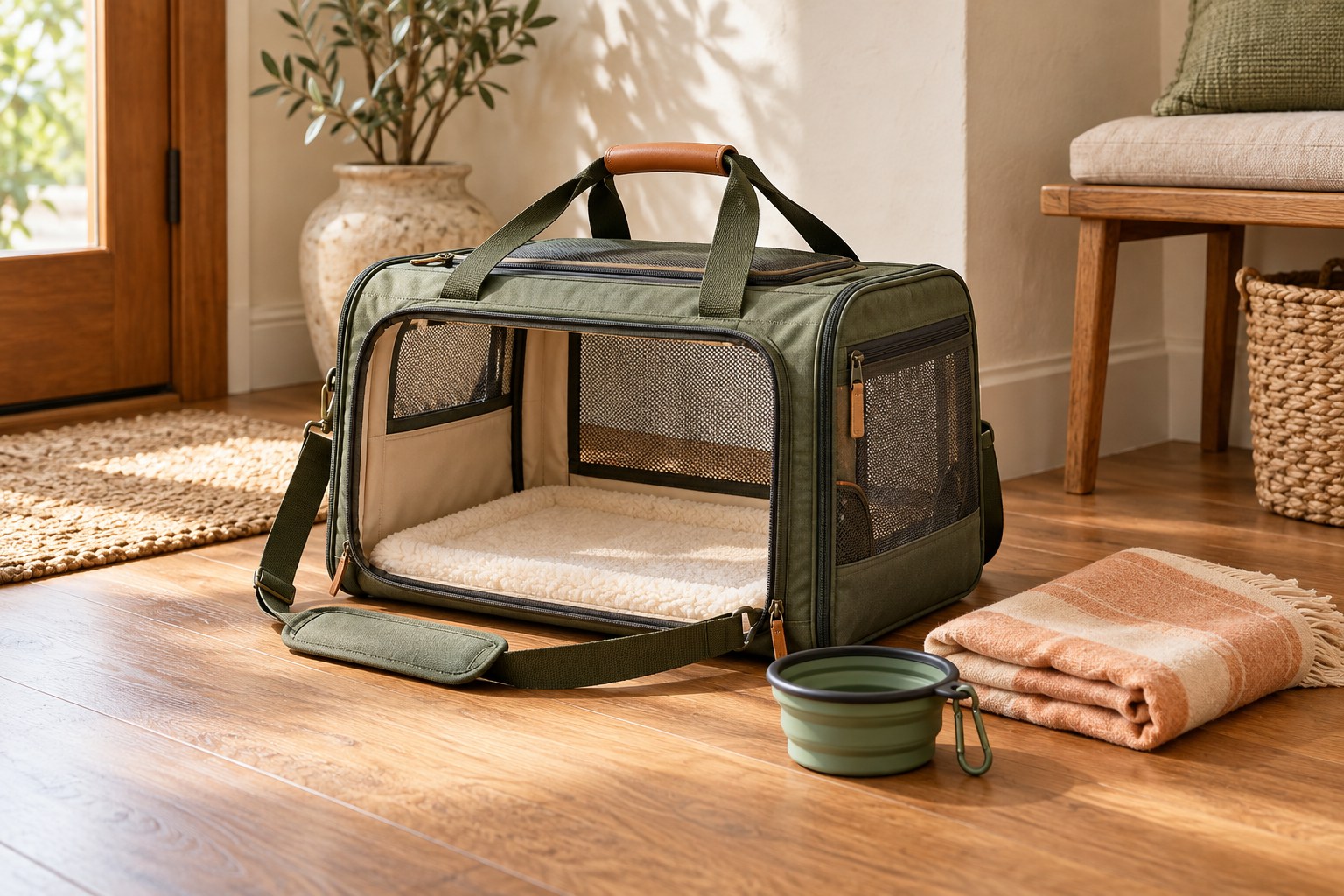
A pet travel bag is not simply a smaller version of a human suitcase. Some items must be available while the animal remains securely contained; others are only needed at the destination. Packing by access order reduces rummaging and makes it easier to keep clean supplies separate from used equipment. Begin with the journey's actual stages rather than a generic shopping list.
Make the first compartment purposeful
Keep the items needed during loading and ordinary stops in a clearly accessible section. That might include current contact information, relevant documents, waste supplies, and a clean towel. The exact contents depend on the pet and journey. Store sensitive documents securely and avoid displaying more personal information than necessary on the outside of a bag.
The bag should open without spilling loose objects around the animal. A broad zip opening can improve visibility, while many small pockets may hide items that are easy to forget. Choose a layout the household can understand quickly. Labels on internal pouches can help, especially when more than one person will handle the bag, but they should describe real roles rather than create unnecessary categories.
Separate clean and used textiles
Pack a dry towel or compatible spare liner in its own clean section. Give used damp items a separate temporary container that can be emptied and cleaned promptly. Do not treat a sealed pouch as permanent storage for wet fabric. The goal is short-term separation during the journey, followed by proper washing and complete drying when the opportunity is available.
Choose textile sizes around the carrier or vehicle setup rather than packing several bulky household throws. Excess padding can reduce carrier space or interfere with the intended restraint installation. Keep the approved travel configuration unchanged unless the instructions allow an accessory. A spare liner is useful when it fits the product; an arbitrary thick blanket may create a new problem.
Keep equipment identification clear
If spare parts are needed, pack only components that genuinely belong to the exact product. A similar clip or strap should not be carried as a universal substitute for restraint hardware. Retain model information and instructions in an accessible format so any necessary adjustment follows the intended process. Equipment used for ordinary walking has a different role from the specified car restraint.
For items with charging needs, use the correct charging setup and keep cables separate from the animal's space. Check whether the destination has suitable power before relying on a device. Do not pack electrical equipment beside damp towels. A simple pouch for clean dry chargers can reduce confusion without turning the bag into a collection of accessories that will never be used.
Plan destination supplies separately
Items only needed after arrival can sit deeper in the bag, provided they remain protected and identifiable. Consider a portable resting mat, familiar washable bedding, and cleaning supplies compatible with the equipment being used. Verify the destination's relevant requirements directly, especially if accommodation or transport rules affect what can be brought. Do not rely on an old trip's arrangement as universal guidance.
If medication or an individual health plan is involved, follow veterinary instructions and keep it appropriately identified and stored. A general travel bag guide cannot determine those needs. Avoid decanting essential labeled items into anonymous containers merely to make the bag look coordinated. Clear identification and suitable storage matter more than an attractive row of matching pouches.
Reset the bag after travel
Empty used textiles, remove waste, inspect the bag for leaks, and clean it according to its label. Dry the interior fully before repacking. Check supplies for damage and relevant expiry or replacement needs. Keep the bag away from pets that may investigate food residue or chew straps. A travel kit becomes dependable through this reset, not through the initial purchase alone.
Before the next journey, review the contents against that specific plan. Remove unnecessary bulk and add only items with a clear purpose. Update contact details and verify exact transport requirements where applicable. A compact organized bag should support attentive handling and a sound travel setup, leaving the person able to carry the animal's enclosure level and under control rather than struggling with several loose bags.

For our approach to product claims and illustrations, see the Editorial Policy.