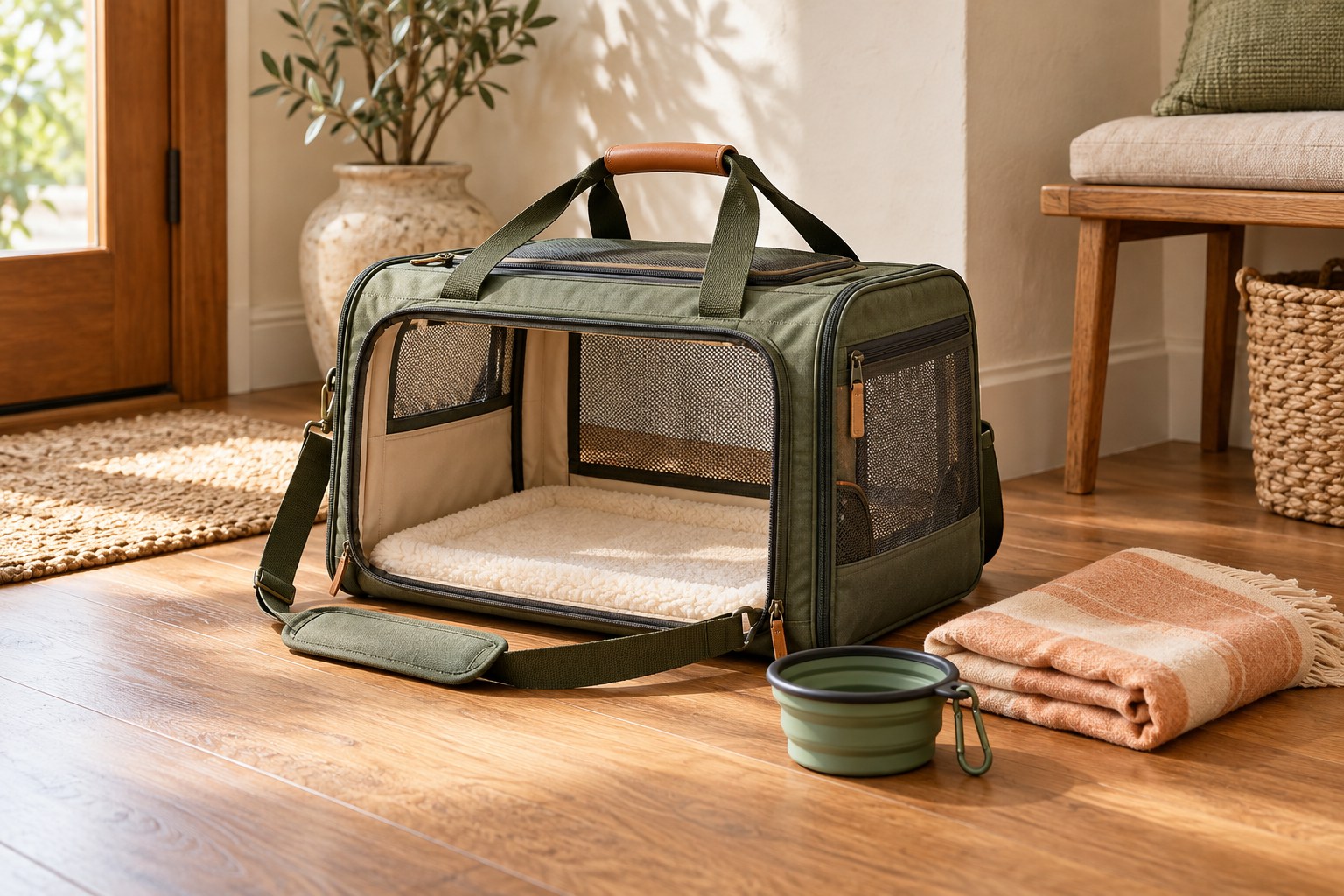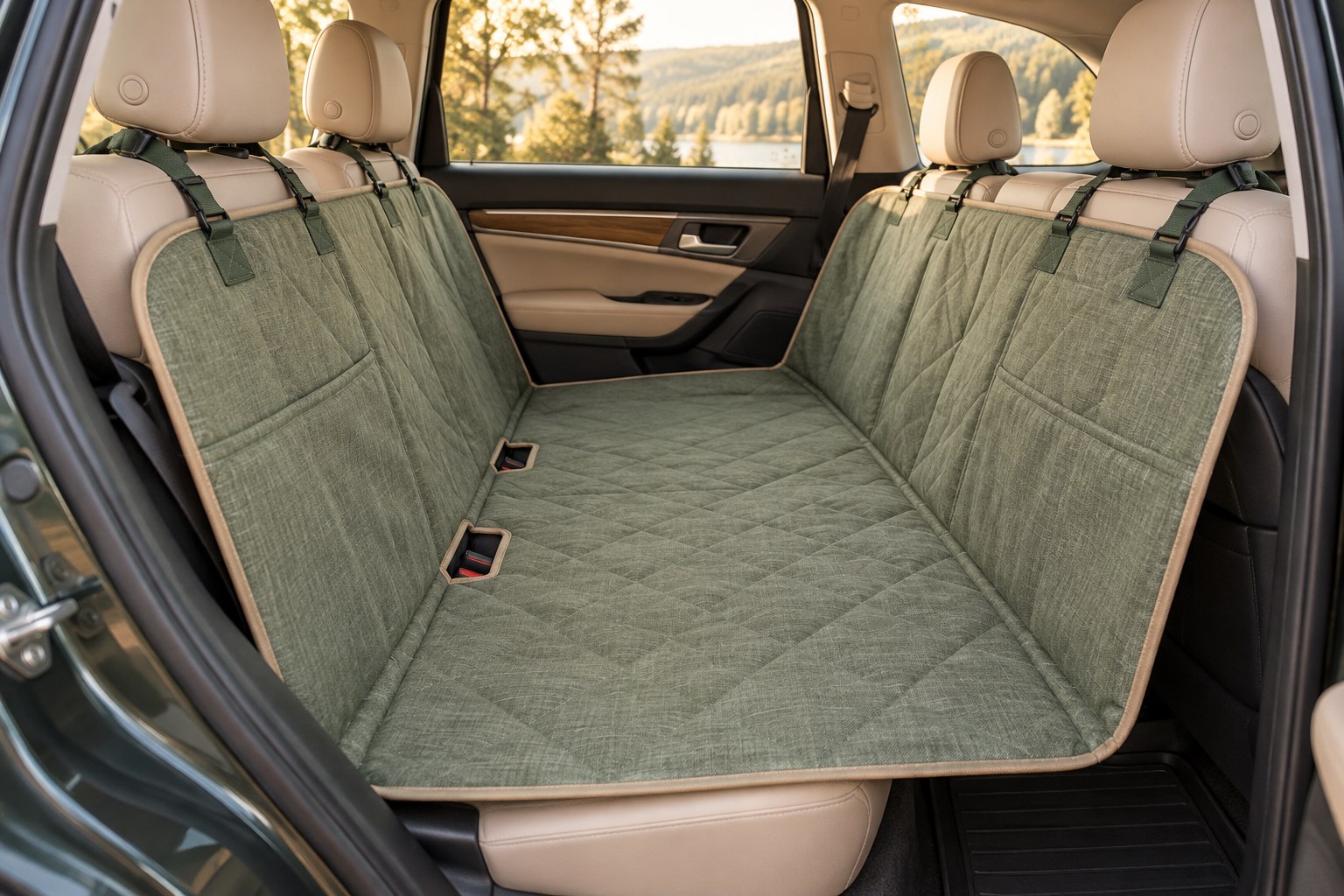
A crate that sits neatly in a vehicle is not automatically appropriate for the pet or securely installed. Travel adds a second set of questions beyond ordinary enclosure fit: how the crate is retained, what the vehicle provides for attachment, and what evidence supports any performance claim. Start with the complete setup instead of choosing a box by the cargo area's width alone.
Keep interior and vehicle measurements separate
Measure the pet according to the crate maker's sizing guidance and compare with the usable interior. The animal needs appropriate room for normal positions, while overly thick bedding can reduce height and door clearance. Sloping walls and rounded corners may reduce the platform further. Weight capacity and a size name cannot replace actual length, width, and height information.
Measure the intended vehicle location with relevant seats and doors in their normal travel positions. Include the loading opening, wheel arches, sloping rear hatch, and any floor steps. A crate that fits once inside may be impossible to load without removing seats. Confirm that ventilation and the door remain accessible after installation rather than pressing the enclosure tightly against luggage on every side.
Read the attachment instructions before buying
The manufacturer should describe how that exact crate is intended to be secured. Check the required hardware and whether the vehicle has suitable attachment points. A cargo tie-down, seat anchor, or luggage hook should not be assumed interchangeable without relevant instructions. Do not wrap an arbitrary strap around the crate and treat the resulting appearance of tightness as proof of restraint performance.
If the product is not intended for secured vehicle use, ordinary containment and comfort may be its only established roles. Choose equipment appropriate to the journey instead of adding unapproved modifications. The vehicle manual can also limit what should be attached where. Resolve conflicts between instructions with the relevant manufacturers before carrying the animal, rather than choosing whichever fastening method seems easiest.
Examine performance claims closely
Terms such as strong, travel-ready, or crash-tested require detail to be meaningful. Look for the exact product model, size, test method, installation configuration, and result. A claim about another size or an earlier model does not automatically transfer. Independent documentation can help evaluate a claim, but no blanket wording establishes protection in every type of collision or vehicle arrangement.
Keep comfort accessories separate from restraint evidence. A padded liner, insulated cover, or storage pocket may be useful without contributing to crash performance. Added equipment must not obstruct ventilation or interfere with the specified installation. Avoid treating an attractive package of crate accessories as a complete safety system unless the relevant configuration is actually documented and appropriate to the vehicle.
Plan access and daily loading
Door orientation affects both loading and the ability to reach the pet in a secure place. A side door may be inaccessible once the crate is positioned behind a seat. Double doors can add flexibility, but every closure needs inspection. Keep an appropriate clear approach outside the vehicle so loading does not require opening the enclosure directly into traffic or an unsecured public area.
Consider the handler's ability to lift and position the empty crate. A heavy shell may be awkward around a high bumper, and carrying handles may have specific limits. Follow the maker's instructions rather than moving an occupied crate by a handle intended only for repositioning the empty enclosure. If the setup cannot be used comfortably, revise it before the first important trip.
Maintain the complete travel setup
Before journeys, check crate condition, closures, required fasteners, and attachment hardware. Remove damaged equipment from use and seek the maker's guidance after an impact or other significant event. Clean beneath the liner and inspect the vehicle contact points as well as the visible shell. Dry removable bedding completely and reinstall it without covering ventilation or adding unintended bulk.
Store the installation instructions and exact model information with travel records. Recheck compatibility when changing vehicles, crate size, or hardware. A setup that worked in one car is not automatically suitable in another. Practical travel planning combines appropriate containment, a verified installation method, attentive care, and a realistic understanding of the evidence supporting each product's claims.

For our approach to product claims and illustrations, see the Editorial Policy.