A long line can give a dog room to investigate while maintaining a physical connection in places where that arrangement is permitted. It also creates moving material on the ground and allows more momentum than an ordinary leash. Successful use depends on selecting an appropriate space and handling slack before the dog reaches the end.
Start with a manageable length, a well-fitted harness, and an uncluttered area away from traffic.
Choose space before choosing length
An open field with good visibility is different from a wooded path full of roots, cyclists, and narrow turns. Avoid running a line across shared routes where it can trip someone. Check local lead rules and any restrictions around wildlife or livestock. A shorter training line may be more practical than the longest available option while you learn to gather and release it. The dog only benefits from extra distance that you can observe and manage responsibly.
Balance weight and surface behavior
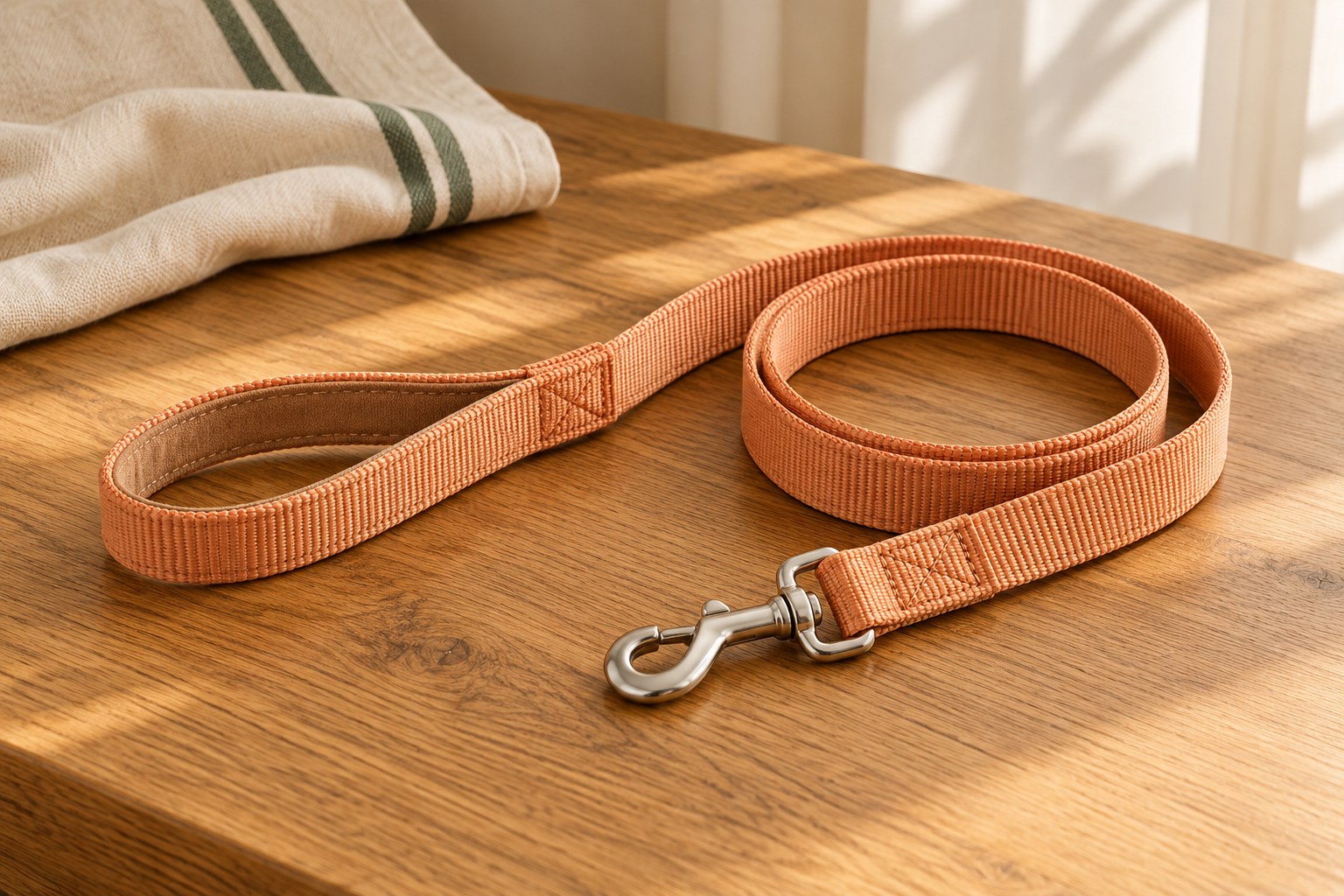
Light webbing is easier for a small dog to move but can tangle and absorb water. A coated line may slide through damp vegetation more easily yet become slippery in the hands. Rope has its own weight and snagging behavior. Compare the entire wet line, including its clip, if that is your usual environment. Gloves can improve comfort, but no glove makes it safe to let fast-moving material drag through a closed hand or wrap around a finger.
Handle slack before acceleration
Keep spare line in organized folds, feeding it out without dropping a large tangled pile. Watch the dog’s direction and begin moving or gently gathering before the remaining distance disappears. Avoid sudden stops at the very end of the line. If the dog is running hard, recall or redirect early using previously practiced cues; do not rely on the equipment to absorb a full-speed impact. A harness spreads contact differently from a collar, but it does not remove momentum.
Plan retrieval and untangling
Stop the dog before unwrapping a line from a post or bush so that material cannot tighten around a leg. Keep clips and loops out of puddles where you cannot see what lies beneath. After the walk, inspect the full length for abrasion, cuts, and knots that have become difficult to release. Dry the line spread out rather than storing it wet in a tight coil. A separate ventilated pouch can keep damp equipment organized on the way home without becoming its permanent storage.
Work through a narrowing path
Suppose an open field leads to a gate beside a shared path. Begin gathering the line well before reaching the gate, inviting the dog closer with a practiced cue. Stop in a clear place if you need both hands to organize folds. Pass through only when the spare material is controlled and no loop crosses the route used by other people. Once back in suitable open space, release distance gradually rather than dropping the whole line at once.
This transition is worth practicing independently because it combines several tasks: changing distance, opening a gate, and monitoring nearby activity. A line that feels manageable in the middle of a field may become awkward at the boundary. If you cannot gather it comfortably, use a shorter line while learning or switch to an ordinary leash before the narrow section. Do not clip an additional leash in a way that creates long loose branches near the legs.
Inspect your own position too. Keep broad loops away from ankles and avoid standing inside a coil. The aim is organized movement before the route narrows, not a last-second attempt to stop a dog that has already crossed through.
For our approach to product claims and illustrations, see the Editorial Policy.