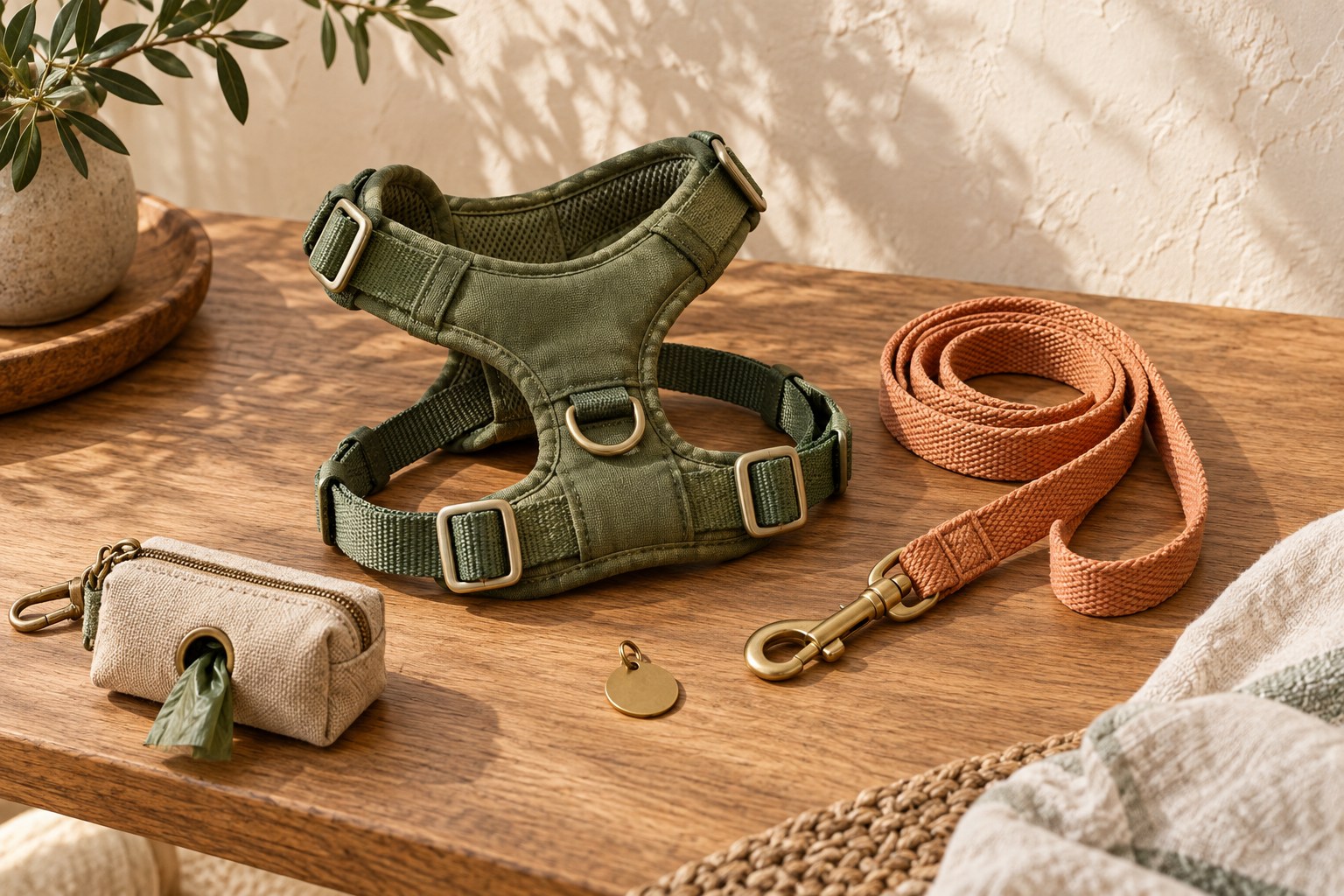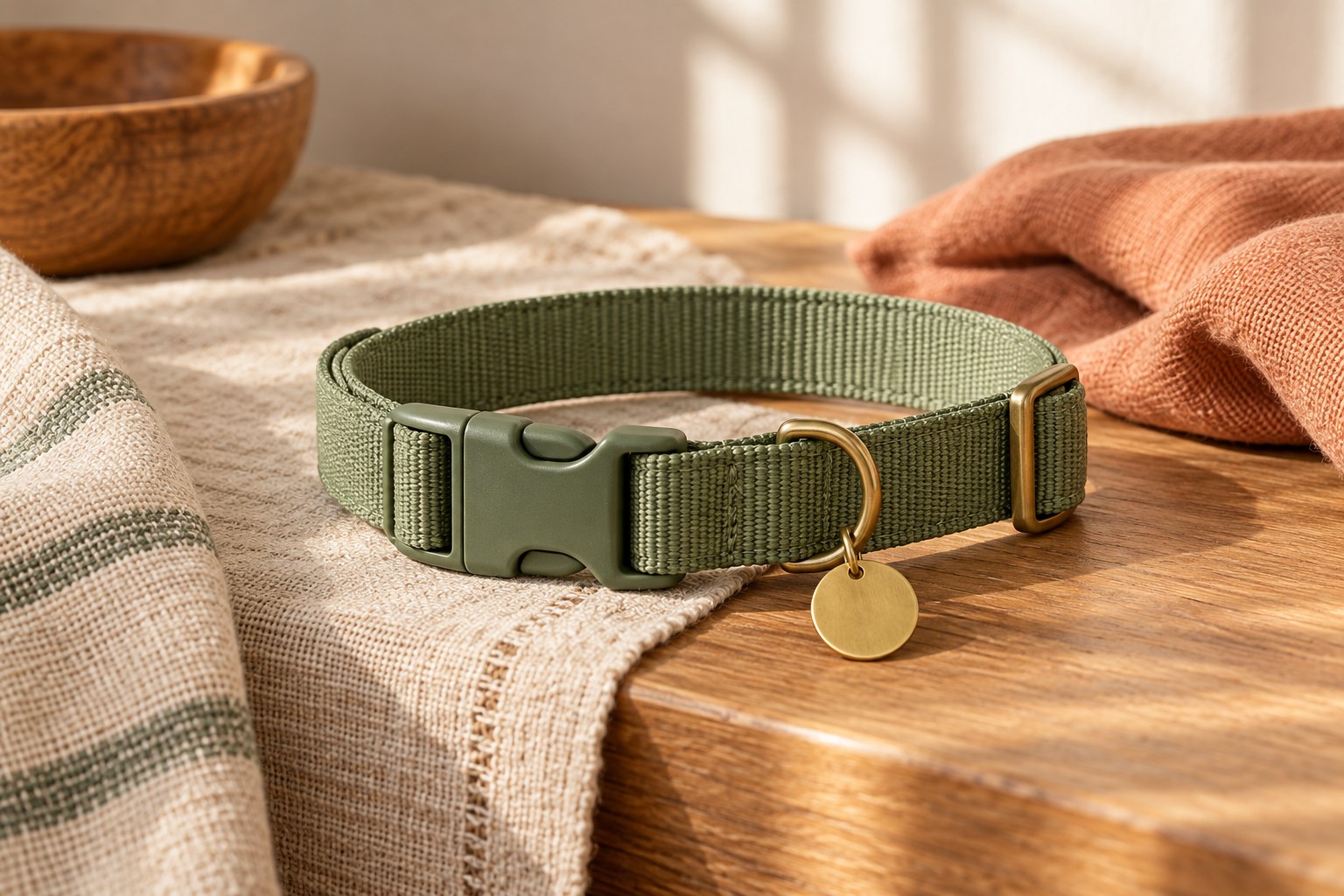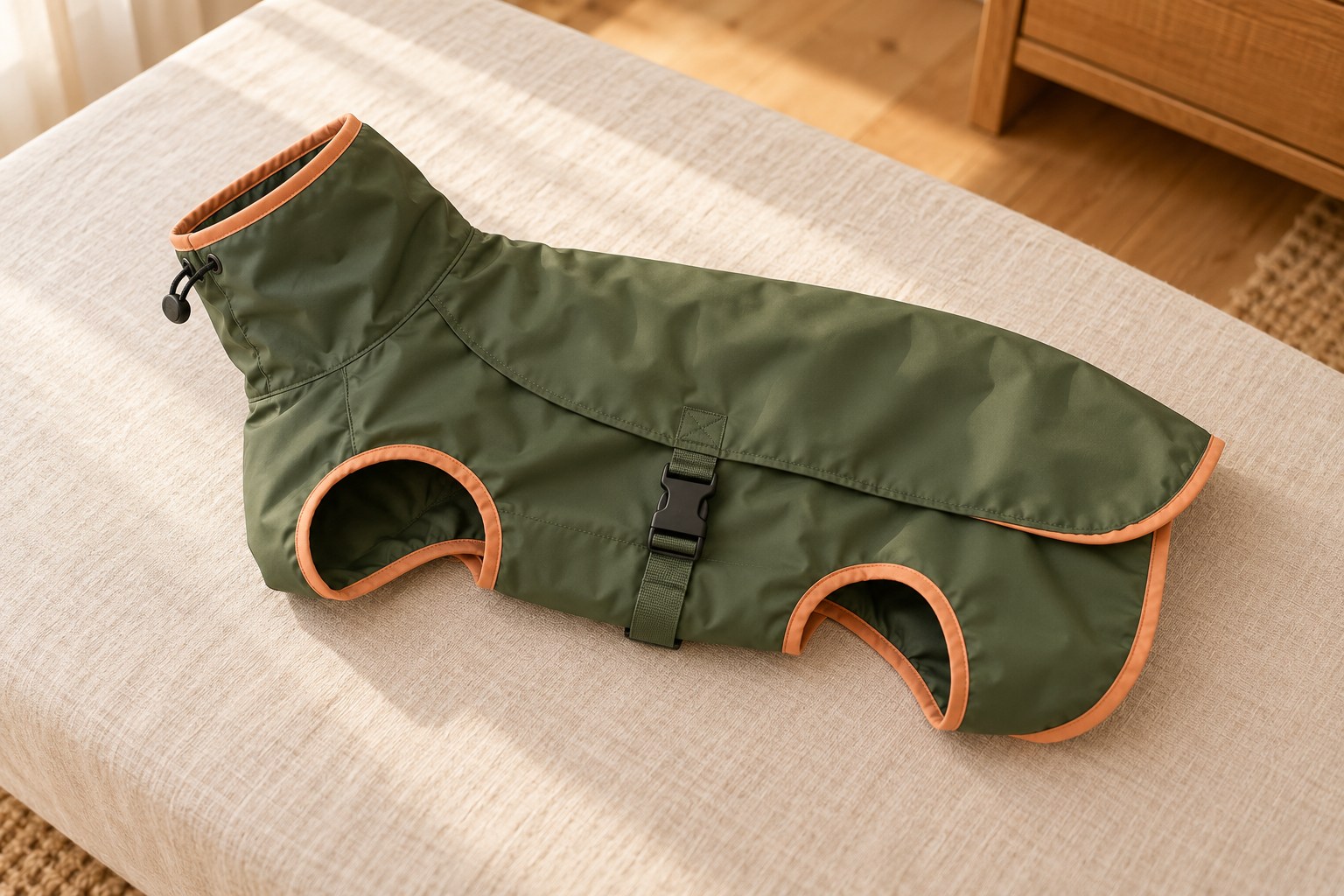
A harness that fits well on a bare coat of fur may sit very differently over a padded raincoat or fleece. Clothing adds thickness, compresses under straps, and sometimes creates a slippery outer layer. A leash opening in the wrong place can also pull the harness out of alignment.
There is no universal rule that a harness must always go above or below clothing. The compatible arrangement depends on both products and their instructions.
Check the opening before tightening
A coat with a small leash slot may suit one back-ring position but not another. Put the coat and harness together without attaching the leash, then locate the ring through the opening. It should emerge without pulling the coat toward the tail or folding fabric underneath the harness. A front-clip harness needs a suitable front opening if worn beneath a coat. Do not route a leash through a neck opening that bunches against the throat just to reach the ring.
Account for compressible layers
Thick padding may initially make a harness seem snug, then flatten during movement and leave unexpected slack. Adjust with the dog wearing the actual combination, walk a few steps, and inspect again. When the harness is over the coat, check whether the coat shifts sideways under light leash contact. When it is underneath, feel for seams or zipper hardware trapped against the body. A soft-looking lining can still hide a stiff label, binding, or folded closure beneath a loaded strap.
Preserve access to working hardware
Buckle release tabs should remain reachable without dragging the coat over the dog’s head. Keep drawcords, zipper pulls, and elastic loops clear of clips and adjustment sliders. If a coat has an integrated leash ring, use it only according to the maker’s stated purpose; an attachment for a light garment is not necessarily a walking restraint. A hypothetical dog changing between a thin shell and a padded coat may need distinct harness settings recorded with small washable marks.
Recheck on every clothing change
Removing a coat at the park instantly changes the fit of a harness worn above it. Stop in a secure place, readjust, and check both the neck and rib sections before continuing. Inspect damp clothing under straps after the outing, because moisture and grit can increase friction. Store the coat and harness separately to dry. If the combination requires repeated complicated adjustments, a better-matched coat opening or a different harness pattern may simplify the whole routine.
Work through two clothing combinations
Suppose a dog wears a thin rain shell in autumn and a padded coat in winter. The harness may need only a small circumference change over the shell, while the winter layer compresses more and changes where buckles sit. Record each successful setting with a simple photograph or a removable mark permitted by the material. Do not assume one remembered slider position will suit both garments.
Test the leash opening with the dog lowering its head. A slot aligned while standing tall may pull backward as the coat shifts. If the coat uses a zippered harness opening, make sure the zipper cannot contact the ring or pinch a leash connector. For a front clip, check the line path as the dog turns in each direction. The best combination lets all components perform their ordinary jobs without using the clothing to redirect or support walking tension.
Consider handling when the outfit is wet
At the end of a rainy walk, fabric can cling, closures can collect grit, and hands may be cold. Practice the removal sequence when everything is dry so it remains simple later. Decide whether the harness comes off first or the coat opens around it, following both products’ instructions. Keep the dog securely contained while changing equipment, especially if the leash must be disconnected.
Open wet panels fully for drying and inspect the areas compressed beneath straps. A garment that repeatedly stays damp in one fold may need a different storage method or a simpler pattern. Check the harness separately for dye transfer, trapped grit, and changed adjustment. If one item is replaced, repeat the combination test instead of assuming a similar-looking opening or equal labeled size will behave the same way. Compatibility belongs to the pair of products as actually fitted.
Keep a secure indoor place available for changing layers mid-routine. If the coat comes off after a warm walk, adjust the harness before opening an exterior door again. A previously correct layered setting can leave substantial slack once the garment is removed.
For our approach to product claims and illustrations, see the Editorial Policy.