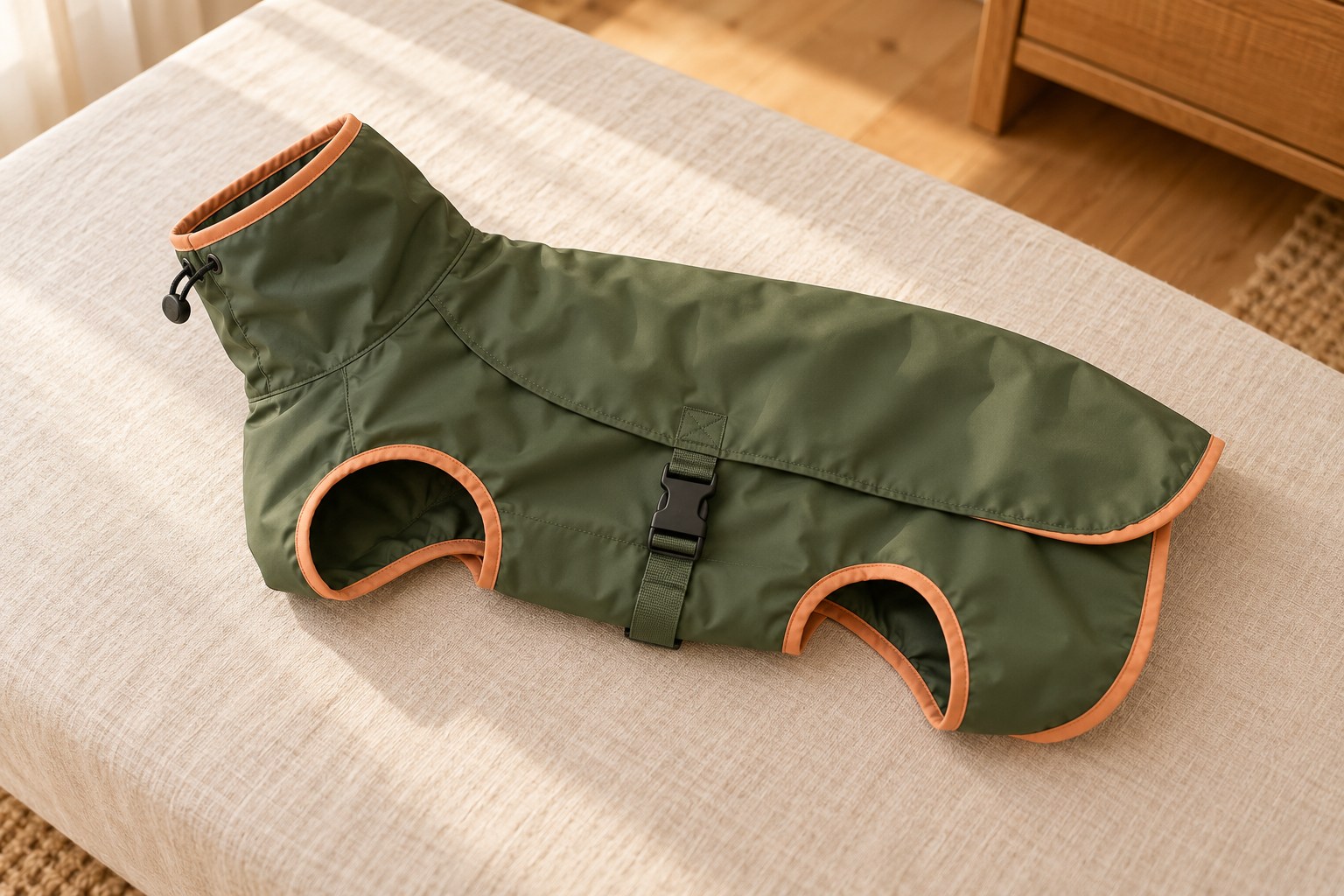
A lightweight fleece can provide a simple layer without the bulk of a padded coat. It is often easy to pack and flexible during movement, but it is not automatically a rain shell or a wind barrier. Its usefulness depends on the dog, the weather, and whether the pattern remains comfortable once the fabric stretches.
Choose fleece for a specific gap in the walking wardrobe rather than assuming every cool day needs more clothing.
Inspect stretch direction and recovery
Pull the fabric gently across and along the garment to understand where it gives. Stretch around the chest can help movement, but fabric that remains distorted may gradually change the fit. Ribbed openings should recover without pinching. A hypothetical long-bodied dog may need more back length than a standard pullover provides; stretching a short garment over that body can draw its neck backward and pull leg openings into the armpits. Elasticity is not a replacement for compatible dimensions.
Compare pullover and opening styles
A pullover has fewer closures but must pass over the head and usually requires guiding the front legs through openings. A full opening can reduce that handling, although buckles or hook-and-loop patches add bulk. Consider the dog’s comfort with dressing and your ability to reach fastenings. Rehearse briefly indoors before the first walk. If the dog freezes or struggles, stop and adjust the approach; a garment that is easy for the owner to unfold may still be difficult for the dog to wear.
Find the seams beneath the harness
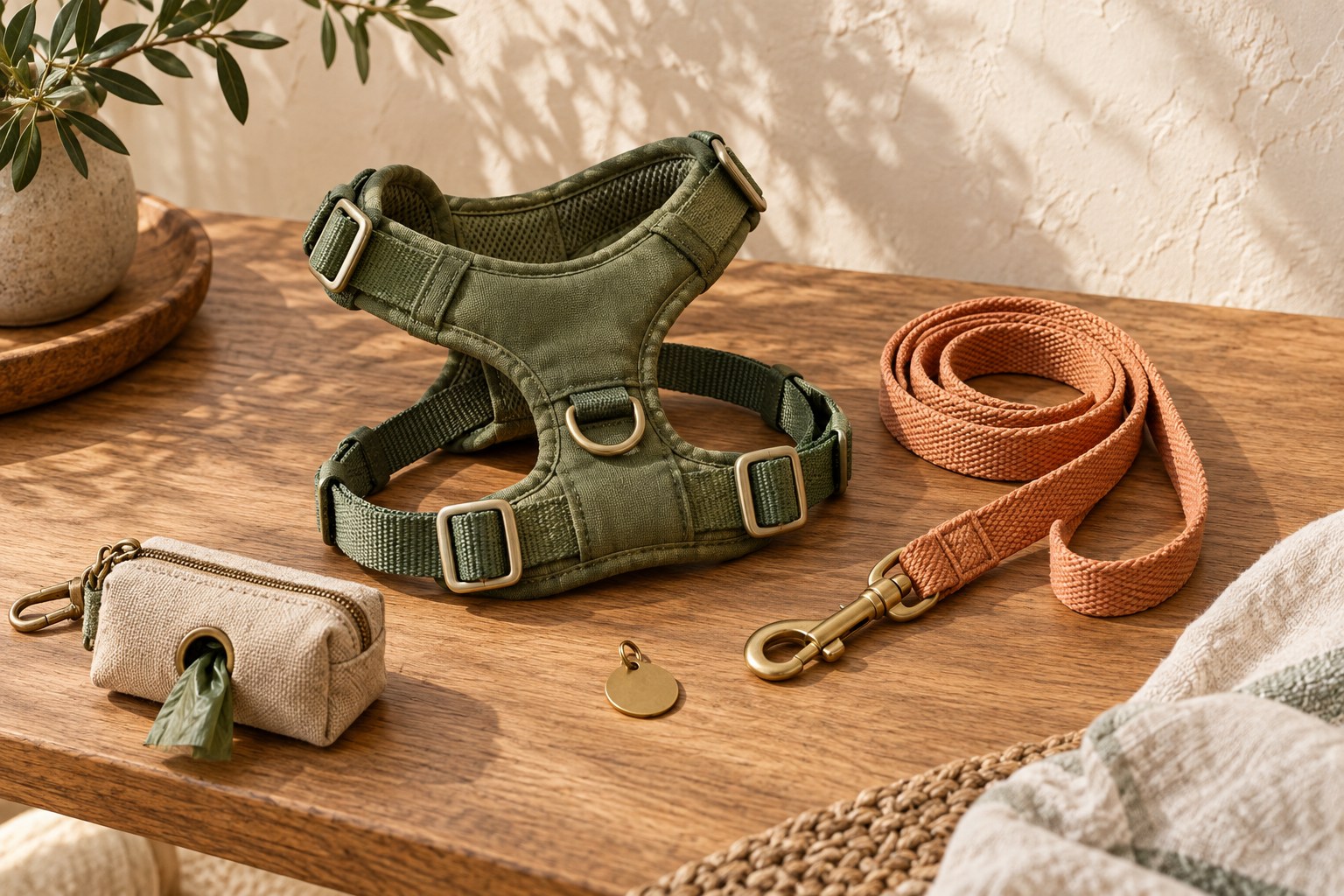
Put the fleece on with the harness and trace every strap. Thick seams along the spine or chest can become concentrated pressure points. A harness worn above a stretchy garment may also draw the fleece sideways during turns. Refine the arrangement with a few quiet steps, then check whether the leg openings remain clear. Remove the garment and inspect the inner surface for bunching. Do not rely on the softness of the fabric alone to judge the complete combination.
Respect the material’s limits
Fleece can hold air but may allow wind through and collect water. Read the care and performance information for the actual fabric. In damp conditions, carrying a dry spare layer or shortening the outing may be more useful than placing another random garment over wet fleece. Avoid assuming that a two-layer combination works simply because both pieces fit separately. Their combined bulk can change harness adjustment, and their overlapping openings can restrict reach to a leash ring.
Use simple care to preserve fit
Remove burrs and debris before laundering, follow the stated wash temperature, and avoid heat that can distort elastic or synthetic fabric. Let the garment dry fully before storage. Check the neck and leg openings after washing because their shape affects comfort more than a small cosmetic change in the body panel. Revisit size as a young dog grows. A fleece that has become too short or tight should be replaced instead of stretched harder into place on each outing.
For our approach to product claims and illustrations, see the Editorial Policy.