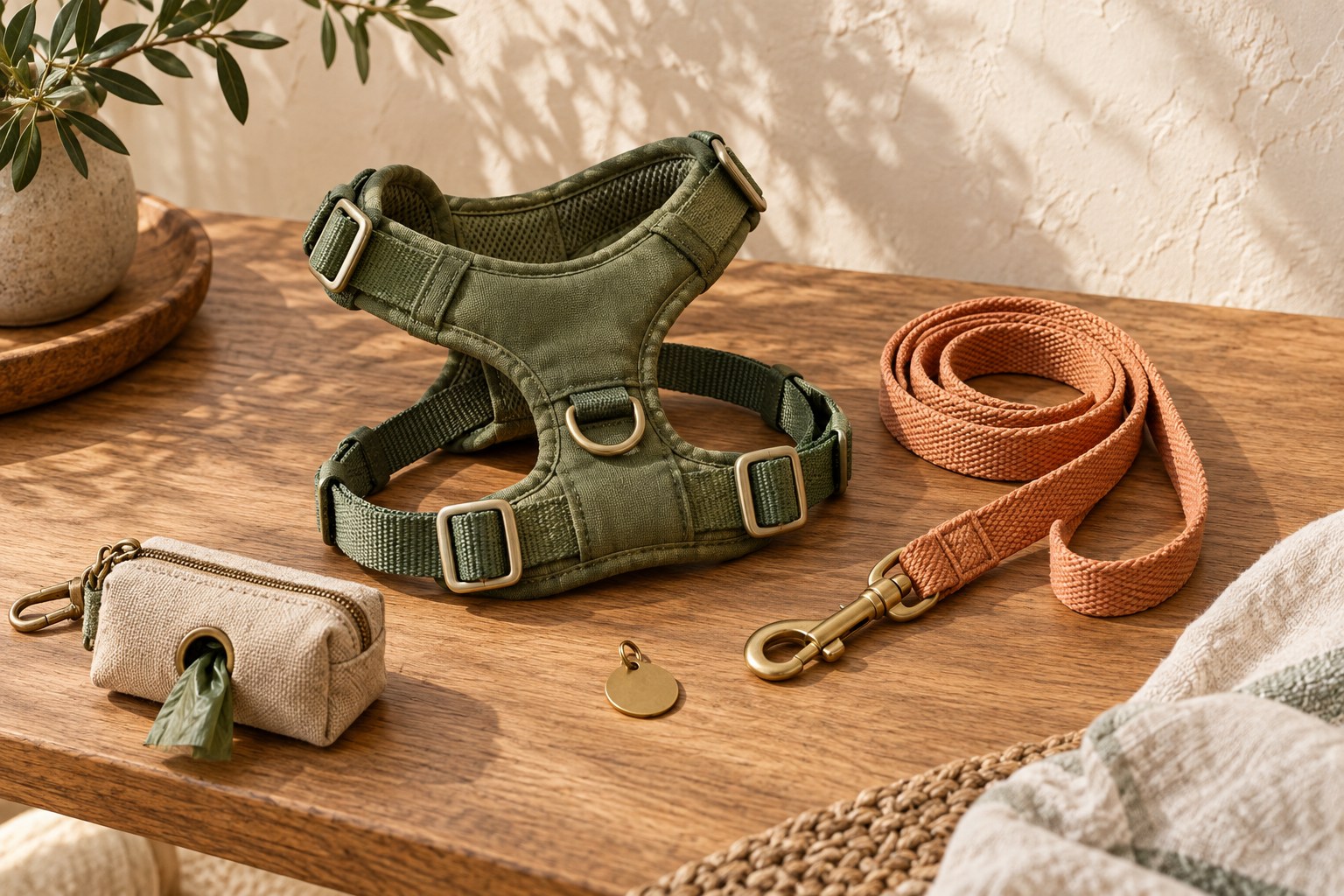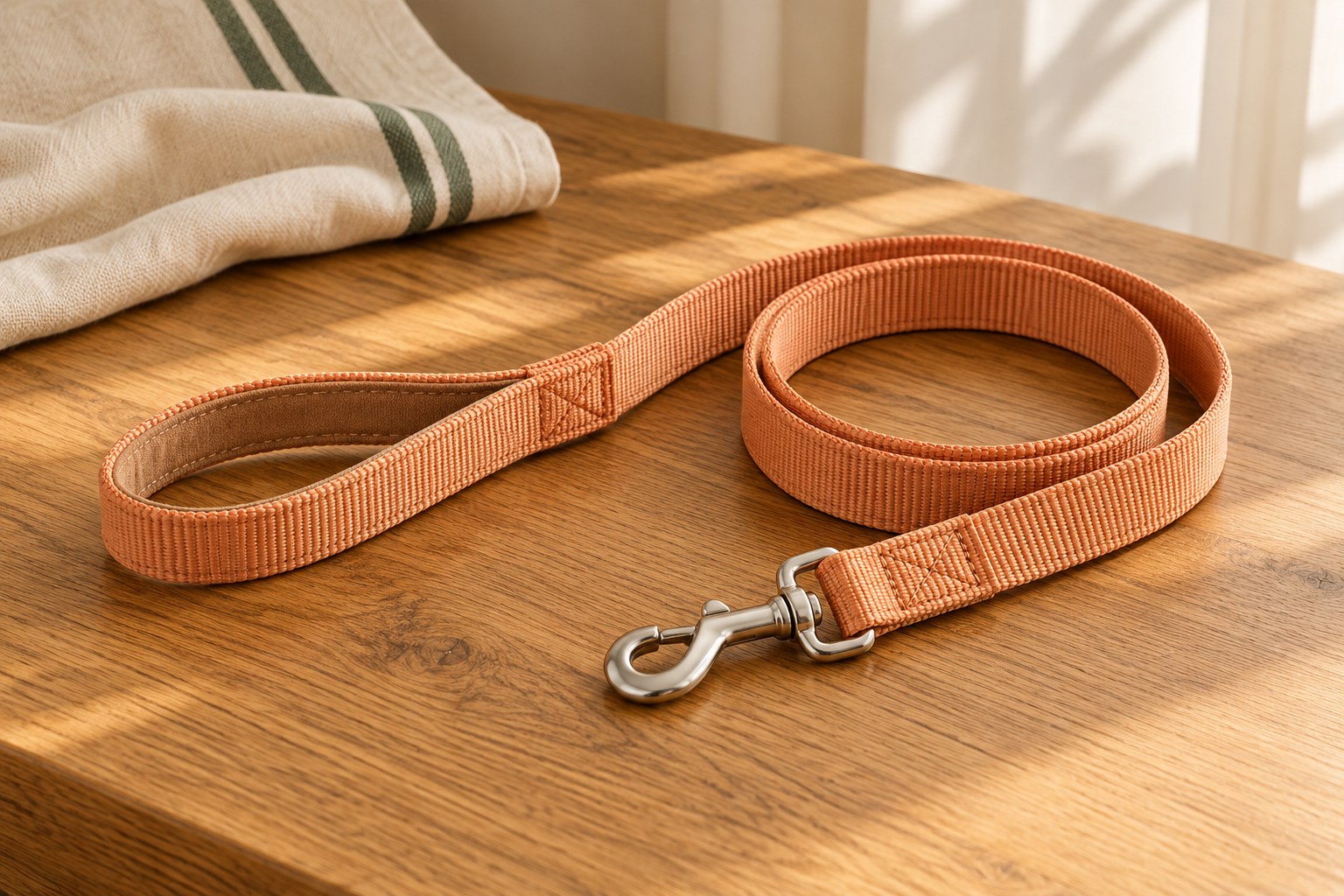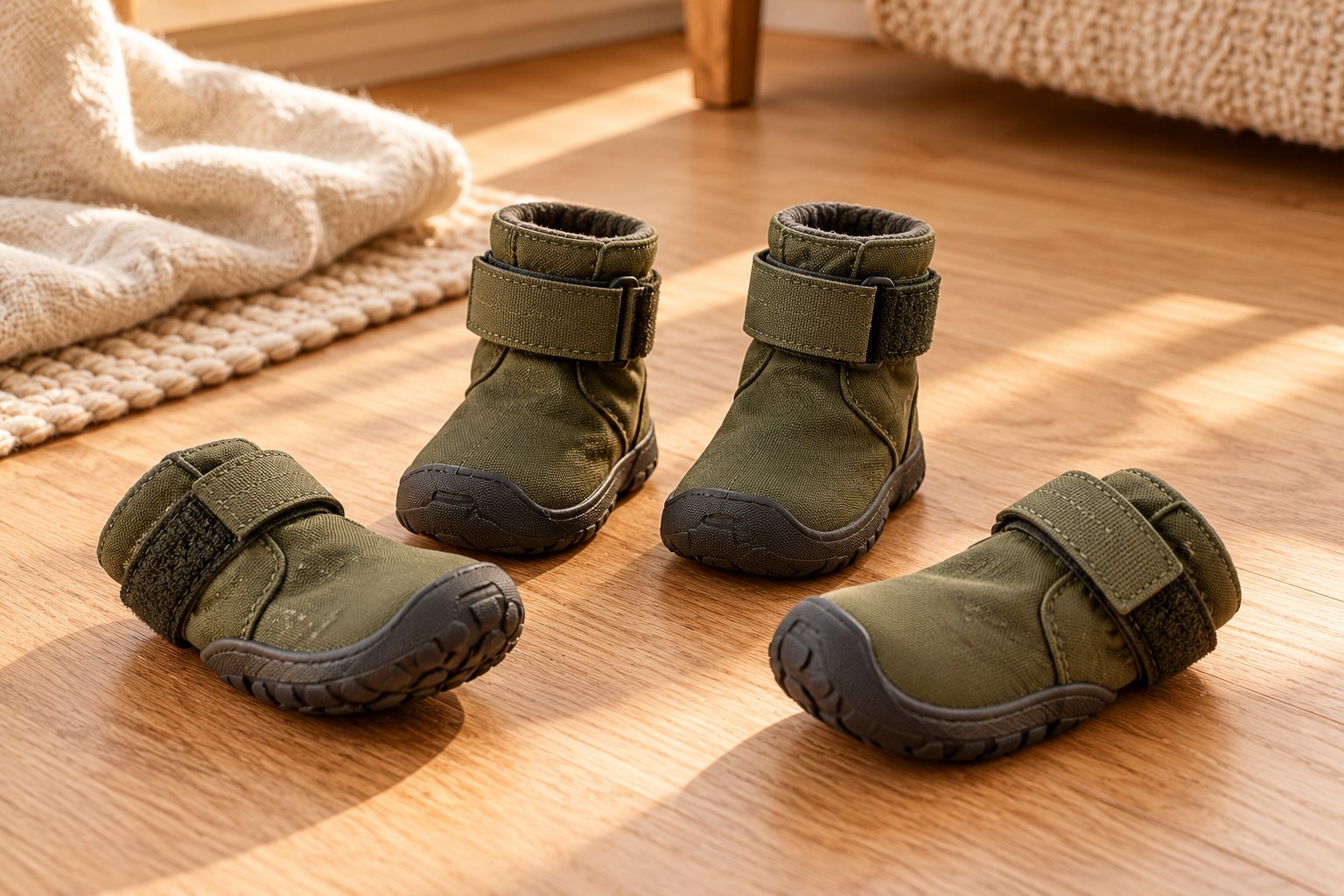
New boots add weight, pressure, and unfamiliar contact around the feet. Some dogs adapt readily; others need a slow introduction or a different product. A short practice routine helps separate normal curiosity about a new sensation from a fit problem that will not improve through repetition.
Work in a quiet area with secure footing, and choose a time when you can stop well before either you or the dog becomes frustrated.
Begin before fastening anything
Place a boot nearby and reward calm investigation without pushing it toward the paw. Then practice the brief paw handling needed for fitting, using the dog’s established comfort level. If lifting a foot is difficult or causes distress, seek reward-based training or veterinary guidance as appropriate. Do not use the boot session to force handling the dog already finds upsetting. A wide-opening boot may simplify the task, but the handling routine still matters.
Seat the paw completely
Open the boot fully, guide the foot in without bending toes awkwardly, and confirm the paw reaches the sole. Smooth fur and lining away from closure areas. Fasten according to the manufacturer’s guidance and check placement around dewclaws and joints. A boot that appears too loose may actually be incompletely seated, but excessive tightening is not the answer. Remove it, inspect the interior, and try again calmly. Keep the first wearing interval brief enough that removal remains easy and unhurried.
Reward a few ordinary steps
Invite movement over a nonslip floor using a familiar cue or a reward placed nearby. Avoid pulling the dog forward by the leash. An unfamiliar stepping pattern may settle as the dog explores the sensation, but persistent refusal, repeated paw shaking, stumbling, or obvious distress calls for stopping and reassessing. Compare boot orientation after only a few steps. If the sole rotates away from the bottom of the paw, check sizing and shape rather than asking for a longer session.
Add duration and surfaces separately
Once brief indoor movement is comfortable, try a short outdoor stretch on an easy surface in suitable weather. Do not simultaneously add a long route, stairs, crowds, and difficult ground. A hypothetical dog comfortable walking down a quiet driveway may still need a separate introduction to curbs. Pause early to inspect closure tension and remove any debris. Gradual progression gives you useful feedback about the product, whereas a long first walk can hide the point at which discomfort began.
Record what actually needs changing
Note which boot twists, whether the opening is difficult to manage, and where contact marks appear. These details help decide between more familiarization, a different size, and a different pattern. Remove boots after the outing, inspect feet and skin, and dry the lining. Stop use and consult a veterinarian for pain, irritation, or an existing paw concern. Practice should build voluntary comfort; it should not train the dog to tolerate a boot whose construction repeatedly creates a problem.
For our approach to product claims and illustrations, see the Editorial Policy.