Pet toys combine materials in ways that are not always visible. A rubber shell may contain a weighted base, a plush body may hide a sound unit, and a food puzzle may include components that must stay dry. Cleaning should follow the complete construction rather than the outer appearance.
Keep the manufacturer's care instructions with toys that have special requirements. If a method is not supported, do not assume that hotter water, a dishwasher, or a strong household chemical is an improvement. The useful goal is a clean, intact toy that can be inspected and returned to its intended use.
Sort before washing
Separate food-contact equipment, washable fabric toys, nonpowered hard toys, and products with electrical or sound components. These groups are a starting point, not a replacement for individual instructions. Two rubber toys may still require different methods because of internal construction.
Inspect for damage before cleaning. Washing is not a repair, and a torn seam or cracked housing should not return to play simply because it smells or looks cleaner. Remove loose pieces and follow the appropriate retirement or supported repair route.
Empty food toys completely
Open the product only as directed and remove remaining food from wells, baffles, channels, and closures. A toy can sound empty while holding a small piece behind an internal barrier. Look through every accessible route rather than relying on shaking alone.
Use brushes or tools only where appropriate for the material and instructions. Deep narrow passages need a planned cleaning route before purchase. If the toy repeatedly retains inaccessible residue, a simpler design may be more practical than an increasingly elaborate cleaning routine.
Respect mixed-material limits
Check whether a removable fabric cover can be washed separately from its filling or backing. Foam, elastic, adhesives, printed finishes, and sound mechanisms may limit the permitted method. A washable label should be read with its conditions, not interpreted as permission for any machine cycle.
For a hypothetical plush toy with a removable sound insert, follow the specified removal and closure sequence. Store the insert securely during washing and count it back into the assembly. Do not dismantle a sealed toy merely because a different product offers that feature.
Clean hidden surfaces
Puzzle tracks, suction cups, threaded caps, and the underside of rubber lips all create sheltered areas. Inspect them after washing. A dishwasher cycle, where permitted, does not remove the need to check whether the intended surfaces are actually clean.
Keep any electrical base or weighted component dry when the instructions require it. Wipe-only parts need their own method. Do not immerse a complete assembly because the detachable outer tray can be soaked; the distinction between those components is central to the care process.
Give drying enough space
Lay parts out so water can drain from grooves and air can reach fabric layers, following the product guidance. Dense rope, plush filling, and hollow chambers can remain damp after the surface feels dry. Avoid immediate sealed storage when hidden moisture may remain.
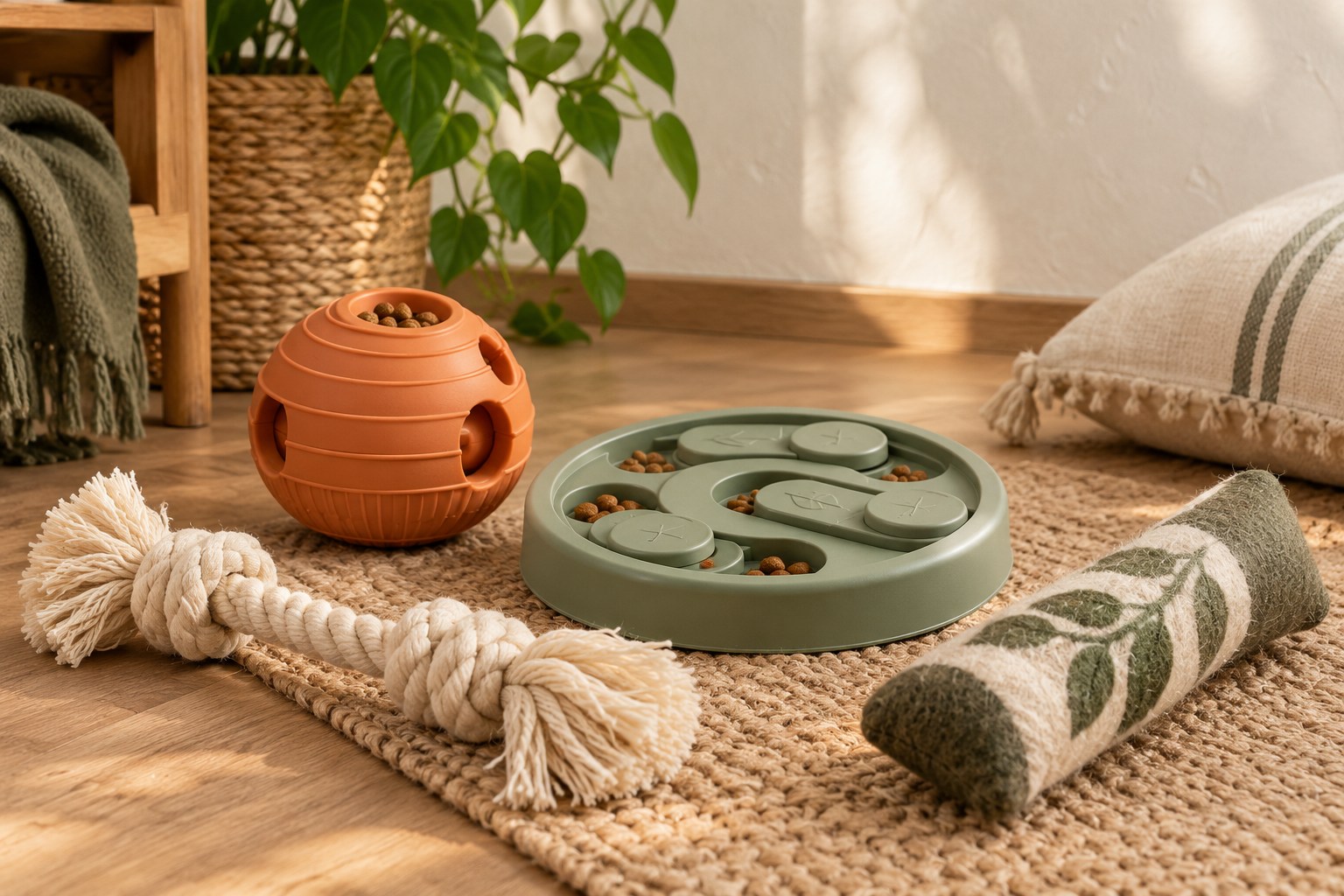
For a hypothetical multi-part food puzzle, a spare compatible serving tray can allow proper drying without rushing reassembly. It does not eliminate the need to dry the original parts. Plan the routine around available counter space and the time before the next intended session.
Reassemble and verify
Check seals, clips, lids, and moving mechanisms against the manual. A cleaned slider should move as intended, and a replaceable insert should sit securely. Count removable pieces and keep incompatible spare parts separate.
Inspect again when dry because cracks, pulled stitches, or distorted shapes may be easier to see. Test supported movement before offering the toy. If washing has changed the fit or exposed damage, remove it from use rather than forcing the parts together.
Make cleaning influence future purchases
Notice which toys are straightforward to maintain and which repeatedly wait in a dirty pile. A toy that fits the animal but not the household's realistic care routine may not be a good repeat purchase. Fewer accessible parts can be a valuable design feature.
Keep the system manageable: inspect, empty, follow the correct method, dry, reassemble, and check. The sequence can be consistent while the method differs by product. That distinction avoids the mistake of applying one convenient cleaning shortcut to every material in the collection.
For our approach to product claims and illustrations, see the Editorial Policy.