A coupler splits one leash into two branches. It can reduce the number of handles in your hand, but it also links the dogs’ movements to each other. One dog stopping to sniff changes the other dog’s available space. That shared connection is most manageable when both dogs already walk comfortably together.
Start with their behavior and proportions rather than assuming one handle automatically means an easier walk.
Compare pace and personal space
Walk the dogs with separate handlers if possible and observe how often they choose similar speeds and directions. A dog that circles to investigate every doorway may constantly pull a quieter companion off course. Some dogs also dislike another dog walking close beside their shoulders. A coupler cannot resolve those differences. If the pair repeatedly cross over or become tense when brought together, work on comfortable parallel walking before introducing equipment that physically links their paths.
Balance branch lengths
Adjustable branches can accommodate differences in height or preferred position, but the practical range is limited. A tall dog and a small dog may still pull the central junction unevenly. Check that clips are proportionate to each dog and that the junction does not drag near the ground. With both dogs standing, neither branch should be under constant tension. Test turns slowly in an enclosed space and make sure a branch cannot pass under a leg as one dog steps behind the other.
Think through individual interruptions
Picking up waste, greeting someone, and passing a narrow barrier become more complicated when the dogs are linked. You need a way to hold both dogs comfortably while one pauses. Do not leave them tethered together unattended, even briefly outside a shop. A hypothetical pair with similar pace may manage an open pavement well but need separate leashes for a crowded veterinary entrance. Carrying a second leash gives you a straightforward alternative if the shared arrangement stops working.
Inspect the extra moving parts
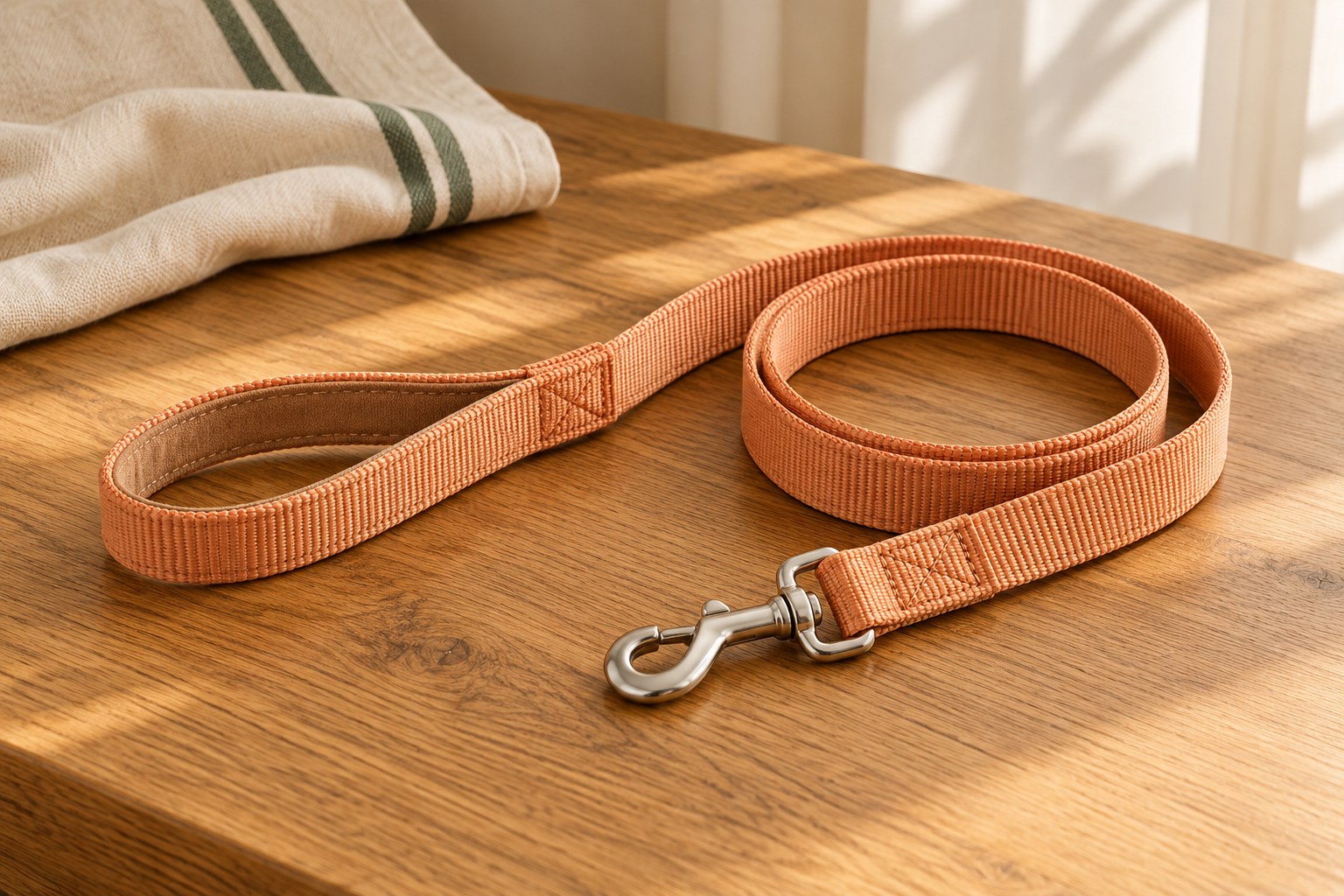
A coupler adds two clips, a central ring or swivel, and sometimes several adjusters. Check that all gates close and that branches do not twist into a tight cord. Clean grit from moving parts as directed and inspect the short branches for chewing or abrasion. The main leash should suit the combined handling demand, but a stronger product cannot make an unstable pairing comfortable. Choose separate leashes whenever individual distance, direction, or attention needs outweigh the convenience of a single handle.
Compare a shared turn with separate turns
In an enclosed clear space, ask both dogs to move through a wide turn at a comfortable pace. Observe whether the inside dog slows while the outside dog continues, tightening one branch across the other. Now try a brief stop for one dog. If the companion is repeatedly pulled off balance or pressed close, separate leashes may offer the individual distance the pair needs.
A hypothetical pair of similar size can still have very different sniffing patterns. One may prefer walking near the handler while the other investigates the verge. An adjustable coupler can alter branch length, but it cannot give both dogs fully independent directions. Avoid solving that conflict with constant tension or by shortening both branches until neither can move naturally.
Recheck the pairing as the dogs age, recover from a health issue, or change confidence. A coupler that once worked comfortably may become inconvenient later. Keep individual harness fit and clip operation part of the inspection, since one shared handle can make it easy to overlook the separate equipment attached to each dog.
For our approach to product claims and illustrations, see the Editorial Policy.