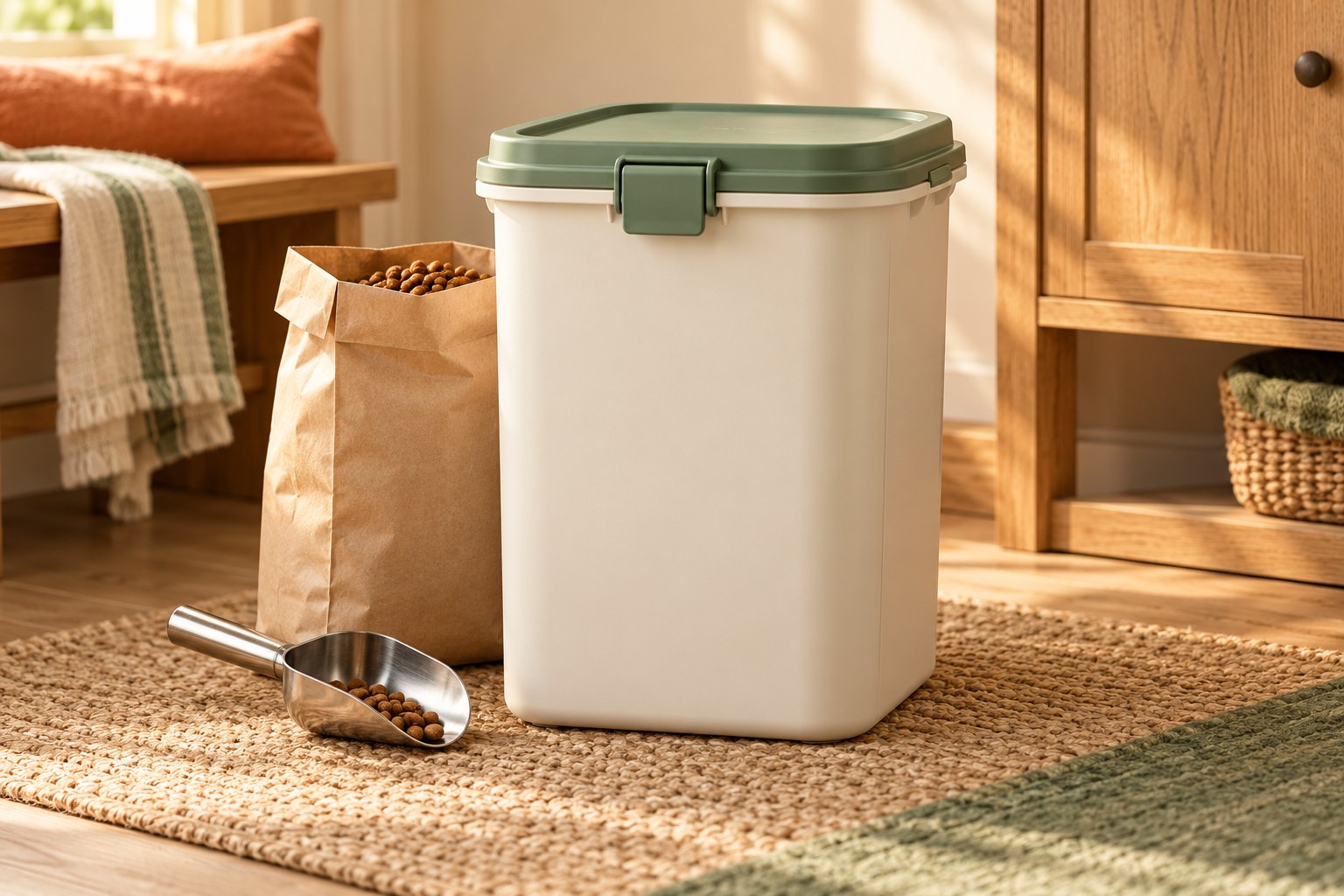
A storage lid is a small mechanical system. Its gasket needs an even contact surface, its latches need to pull the lid into position, and the user needs to recognise when it is fully closed. A prominent airtight label cannot tell you whether that system will be convenient to use twice a day.
Start by choosing a container intended for food storage and follow the food packaging instructions. Then compare how the closure works. A reliable, inspectable seal is more useful than a complicated lid that people leave partly fastened.
Inspect the gasket's route
Look for a continuous seal without awkward joins or inaccessible recesses. If the gasket is removable, check whether the manual explains how to lift it out and seat it again. Some seals are designed to remain in place and should not be stretched for cleaning.
Imagine removing crumbs from the channel. A broad open groove is easier to inspect than a deep narrow slot beneath an overhang. The surface underneath needs to dry as well as the visible gasket. Keeping a spare lid seal can be useful when the manufacturer offers the correct replacement.
Compare closure effort
Try each latch with the container resting where it will normally stand. A closure that feels easy on an empty countertop may be awkward at the back of a shelf. Check whether you need to hold the lid down while fastening the opposite side.
Large levers may offer a better grip, while small clips can create pressure on a fingertip. Personal handling needs matter here. If multiple household members use the container, choose a closure everyone can operate completely without assuming someone else will finish the job.
Distinguish alignment from force
The lid should locate clearly on the body before latches are fastened. If it can sit diagonally and still appear closed, everyday mistakes become more likely. Alignment marks or a fitted rim can make correct placement easier to recognise.
Do not force a reluctant latch over trapped packaging or an incorrectly seated gasket. Open the lid and inspect the obstruction. Excessive force can damage the mechanism while leaving the underlying closure problem unresolved. A slightly larger container may be more practical if the folded food bag repeatedly obstructs the seal.
Plan for inspection and replacement
During ordinary cleaning, check hinges, latch pivots, gasket condition, and the body rim. Remove a container from use if damage prevents it from closing or cleaning properly. Avoid improvised sealants or adhesives on food-contact parts unless a suitable repair is explicitly supported.
For a hypothetical cupboard with limited height, a simple lift-off lid and two accessible clips may outperform a tall hinged mechanism. Test the full motion in the intended location. The most sophisticated seal is of little value when the shelf prevents you from closing it squarely.
Test closure visibility for everyone using it
Look for a clear visual or tactile indication that the latch has reached its intended position. A lid that appears closed before the last clip engages can invite mistakes, especially when the bin is stored below eye level. Check both sides rather than relying on the sound from one latch.
If a hypothetical container sits inside a cupboard with its rear clip hidden, repositioning the bin may make closure more reliable. Choosing a front-access mechanism could be another option. Do not remove the rear latch to simplify access; it may be needed to hold the lid evenly. The right design makes correct closing obvious and achievable in the actual storage space, without depending on a difficult final reach.

For our approach to product claims and illustrations, see the Editorial Policy.