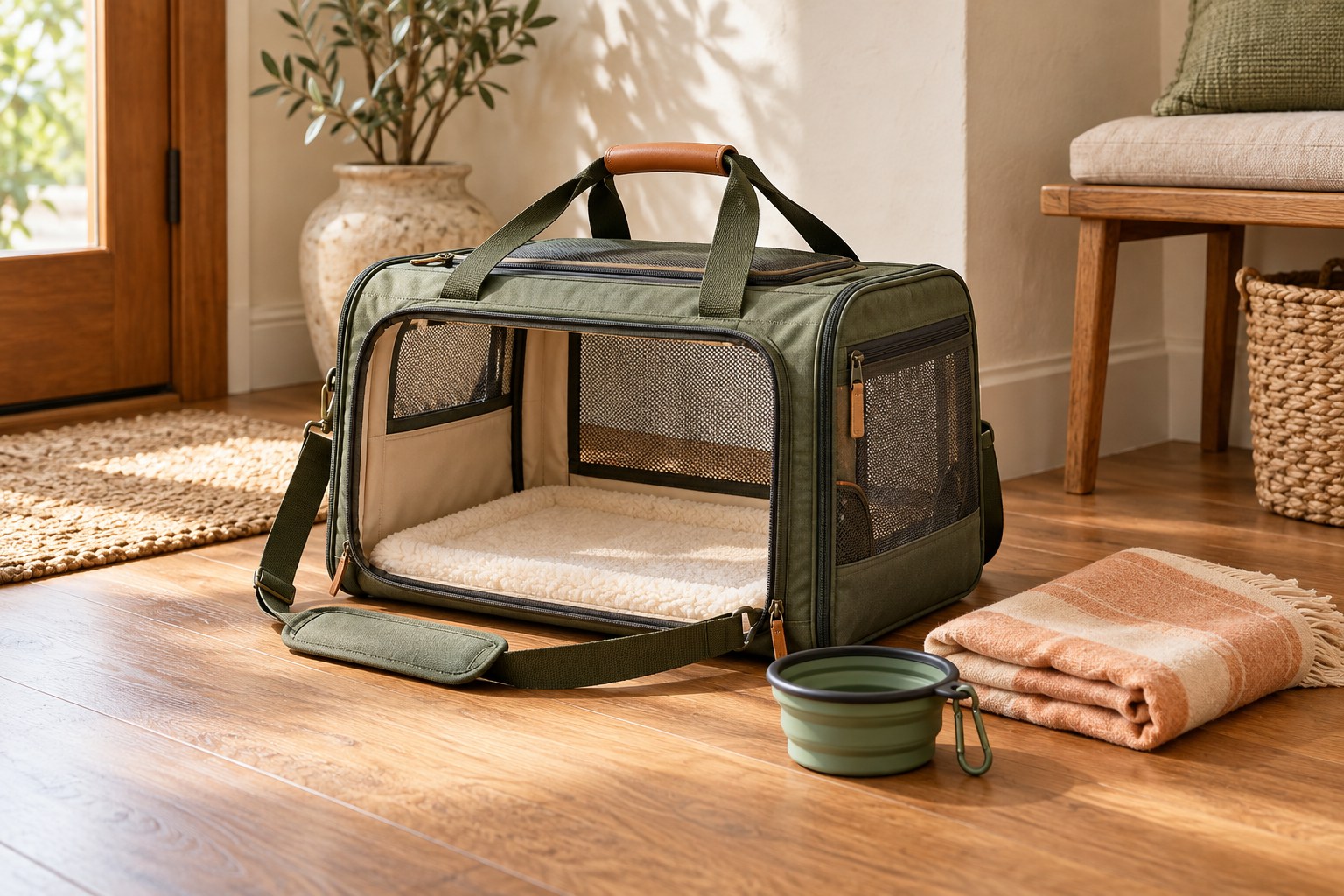
A soft-sided carrier is often shown standing perfectly upright with every mesh panel visible. The real product must retain useful space when a pet is inside and when the bag is lifted. Flexible walls make storage easier, but they also mean that floor support, frame structure, handles, and opening placement deserve close examination. Begin with the pet's measurements and the exact use you intend.
Compare usable interior dimensions
Measure the pet in ordinary standing and resting positions according to the carrier maker's sizing guidance. Weight capacity is necessary to check, but weight does not describe body shape. Two equally heavy pets may need different floor length and internal height. Ask whether the listing's dimensions are measured inside or outside and whether a tapered roof reduces space near the edges.
The carrier should permit the positions appropriate to its intended use, including room for the animal to turn and lie naturally. A flexible roof should not be treated as extra permanent headroom merely because it can be pushed upward. If the purchase is for a particular airline journey, verify the exact airline, flight, aircraft, and current requirements before buying. A generic airline-approved badge cannot establish acceptance for every trip.
Inspect floor support and the frame
The floor should remain supported in the way the design intends when lifted from its handles. Look for a clearly described base insert rather than relying on thick upholstery in a photo. A rigid removable panel may help maintain shape, but it needs secure positioning and compatible padding. An insert that slides sideways can leave part of the floor less stable even when the fabric shell is intact.
Check whether the bag contains a frame or simply shaped seams. Collapsible rods and folding panels can simplify storage, yet their connections should be secure in the working position. Follow assembly instructions carefully. Do not add an improvised board with exposed edges to compensate for inadequate support; choose a carrier whose complete structure suits the pet and whose intended components are available for replacement.
A worked comparison of two listings
Consider two hypothetical bags. The first lists exterior dimensions of fifty by thirty by thirty-two centimeters, but its internal platform is forty-four by twenty-six and its padded roof leaves twenty-seven centimeters of height. The second has a slightly shorter exterior yet a forty-five-by-twenty-eight-centimeter platform and twenty-nine centimeters of internal height. The larger-looking bag is not automatically the roomier enclosure. Neither set of numbers establishes suitability until compared with the individual pet and the intended transport requirements.
Now add the carrying details. Suppose the first bag has broad mesh panels but its side pocket folds over one of them when filled. The second has less visible mesh in the display photo but keeps those openings exposed in its actual closed configuration. That difference may matter more than a feature count. Check the complete working arrangement, including the packed pocket, installed floor, liner, and strap position, rather than comparing isolated specifications taken from different configurations.
Follow every opening
An upper opening can make loading and inspection easier, while an end door provides a different approach. Each extra zipper introduces another closure to check. Look for secure fastenings and mesh that is firmly attached around its perimeter. A locking zipper may be useful when designed for that role, but household clips added arbitrarily can interfere with emergency access or strain parts not meant to carry load.
Ventilation panels should remain exposed when the carrier is placed and carried as intended. A side pocket, outer coat, or bag stacked beside it should not block them. Product photographs can exaggerate visible mesh by showing the carrier with all expandable sections open. Confirm the ventilation and usable space in the closed configuration that will actually be used during transport.
Carrying comfort affects the animal too
Two handles joined above the bag may help keep it level, while a shoulder strap changes how it hangs against the person's body. Check the strap attachment points and stated carrying method. Do not assume every decorative loop is load-bearing. Practice handling the empty carrier and then follow the manufacturer's guidance for safe familiarization before using it on an important journey.
A carrier that swings or tilts with each step may be awkward even within its weight capacity. Consider the distance to be carried, stairs, and the handler's ability to keep the load controlled. A wheeled accessory is a separate design question, not an automatic improvement. If lifting is difficult, choose an appropriate plan rather than relying on an unapproved trolley attachment.
Make cleaning accessible
Removable padding is convenient, but ask whether the shell and base insert can also be cleaned. An absorbent pad should lie flat and must not crowd the animal or obstruct openings. Check seams and pockets after cleaning, then dry the entire assembly before closing it for storage. A damp folded carrier can conceal moisture in the floor and mesh borders.
Inspect the bag before each trip for damaged mesh, frayed handle attachments, zipper problems, and loose base panels. Retain the model details and care instructions. A comfortable-looking liner cannot restore a structurally damaged shell. Replace or repair components only through suitable instructions and approved parts, and treat any uncertain carrying connection as a reason to stop using the bag until resolved.

For our approach to product claims and illustrations, see the Editorial Policy.