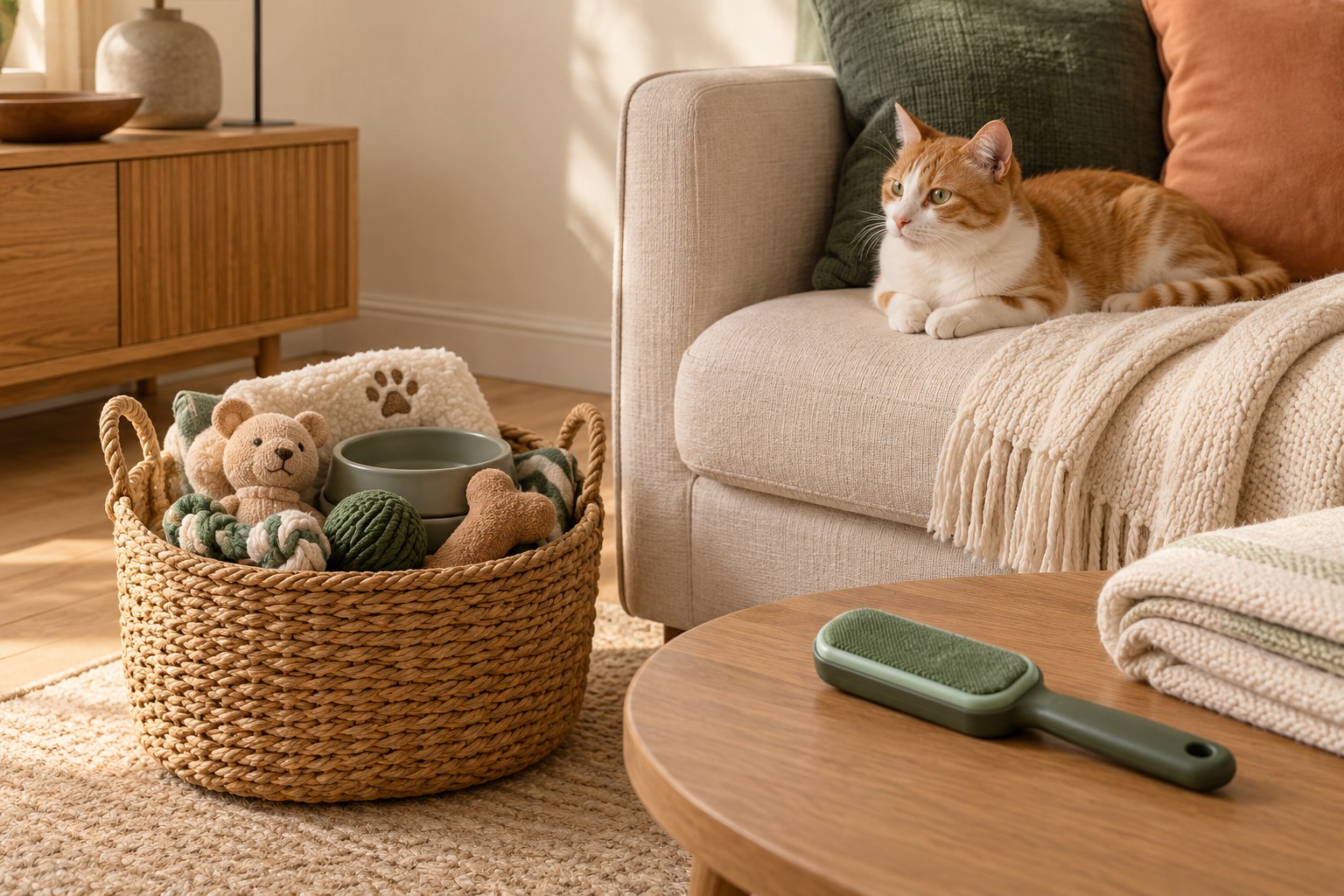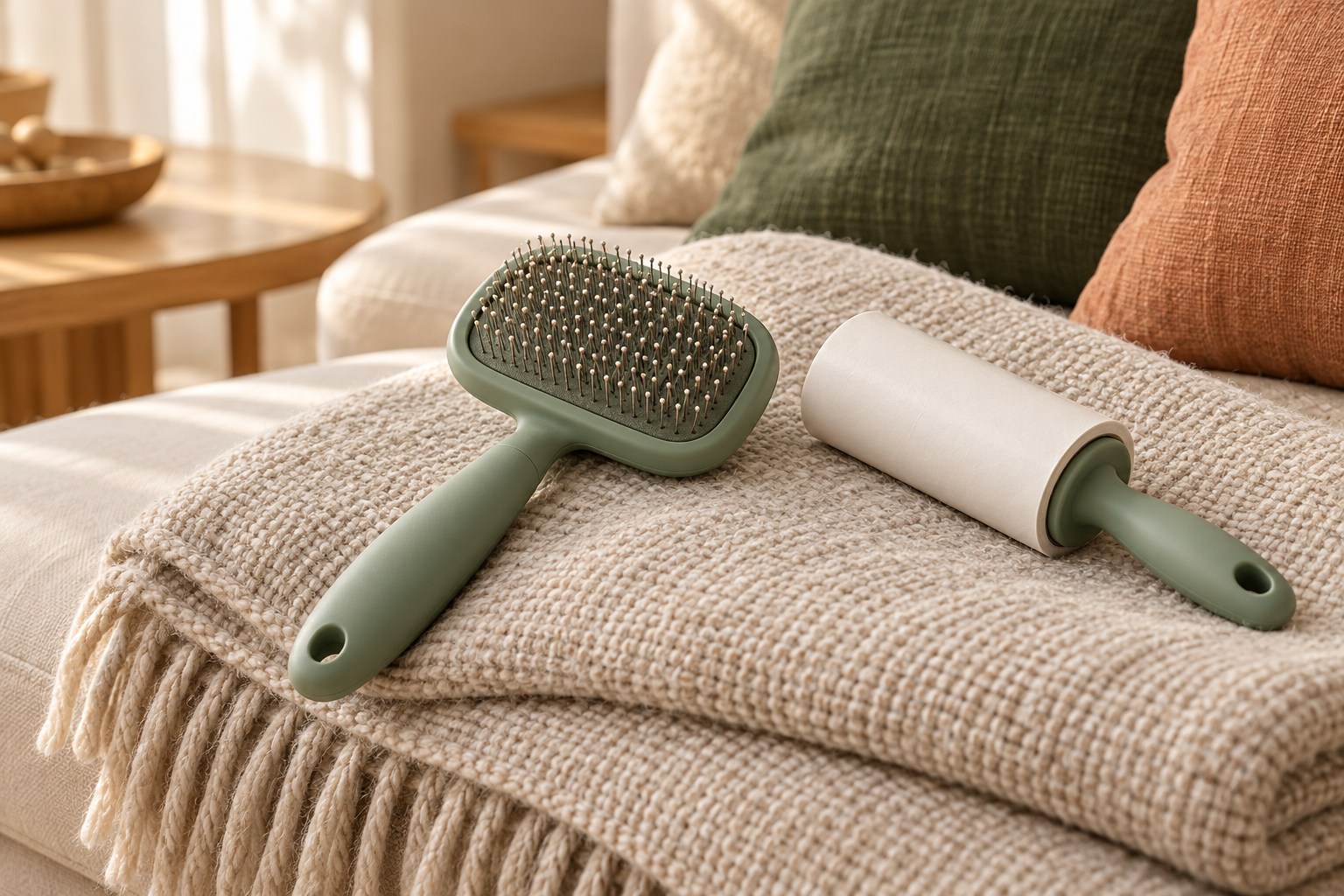
Rubber-edged hair removers can gather loose pet hair into visible lines on some textiles. Their simple construction makes them appealing, but the result depends on the fabric and the way the edge contacts it. A tool that works on a sturdy woven seat cover may be unsuitable for a delicate cushion. Begin with material compatibility rather than a dramatic demonstration video.
Understand the working edge
Some tools use a thin flexible blade; others have rounded ribs or several parallel edges. These patterns change how force is concentrated. Inspect the working surface for rough molding, damaged corners, or embedded grit. A small hard particle can matter more than the softness of the surrounding material. Clean the edge before use and stop if it becomes nicked or uneven.
The handle should allow light controlled contact without encouraging scraping. A long handle adds reach but can make pressure harder to judge on a small area. A compact palm tool may offer better local feedback while requiring the person to move around the furniture. Choose the shape that fits the actual task and the handler's reach rather than the largest tool marketed for a whole room.
Do not assume every rubber-like material has the same flexibility or care requirements. Read the composition where available and follow the maker's instructions. A tool that becomes sticky, brittle, or cracked should be removed from use. The intended surface should remain consistent, not gradually replaced by damaged fragments that make cleaning less predictable.
Check the textile before broad use
Read the furniture or fabric care guidance and the tool's permitted surfaces. Test an inconspicuous area as directed, using gentle contact, and inspect for changes in texture, pulled fibers, or color transfer. Do not treat a successful pass on one cushion as approval for every textile in the room. Velvet, loose knits, and open decorative weaves can behave differently from a flat sturdy panel.
Avoid forceful repeated strokes in one place to chase every embedded hair. If the tool catches or changes the fabric's appearance, stop and choose another appropriate method. A vacuum attachment or a compatible washable cover may be a better option for that surface. Good cleaning preserves the textile as well as removing hair; speed alone is not a useful measure of success.
Seams and piping need separate care. An edge that glides over a broad panel can catch at raised stitching. Work only within the tool's instructions and keep hard corners away from fragile trim. Do not use furniture-cleaning tools on the pet unless the product is explicitly designed and appropriately selected for that role. Similar material does not make household and grooming tools interchangeable.
Clean and store the tool deliberately
Collect gathered hair and dispose of it appropriately rather than moving it into nearby gaps. Clean the tool according to its label and dry it before storage. A simple edge may rinse easily, while a textured head can hold debris in channels. Inspect the entire surface after cleaning, including where it joins the handle, so the next use begins with clean contact.
Store the tool away from pet access; many rubber accessories are tempting to mouth. Keep it separate from sharp metal items that can damage the edge. A dedicated small compartment near cleaning supplies makes it easy to find without leaving it on a sofa. If several tools serve different textiles, mark the storage area so household members know their permitted roles.
Assess whether the tool saves useful work over a week of ordinary cleaning. If it only functions after extensive scraping, it may not suit the fabric or coat hair involved. The best choice is a gentle repeatable method that leaves the surface intact. A modest tool used appropriately can be valuable without becoming the universal answer for every hair-covered item.
For our approach to product claims and illustrations, see the Editorial Policy.