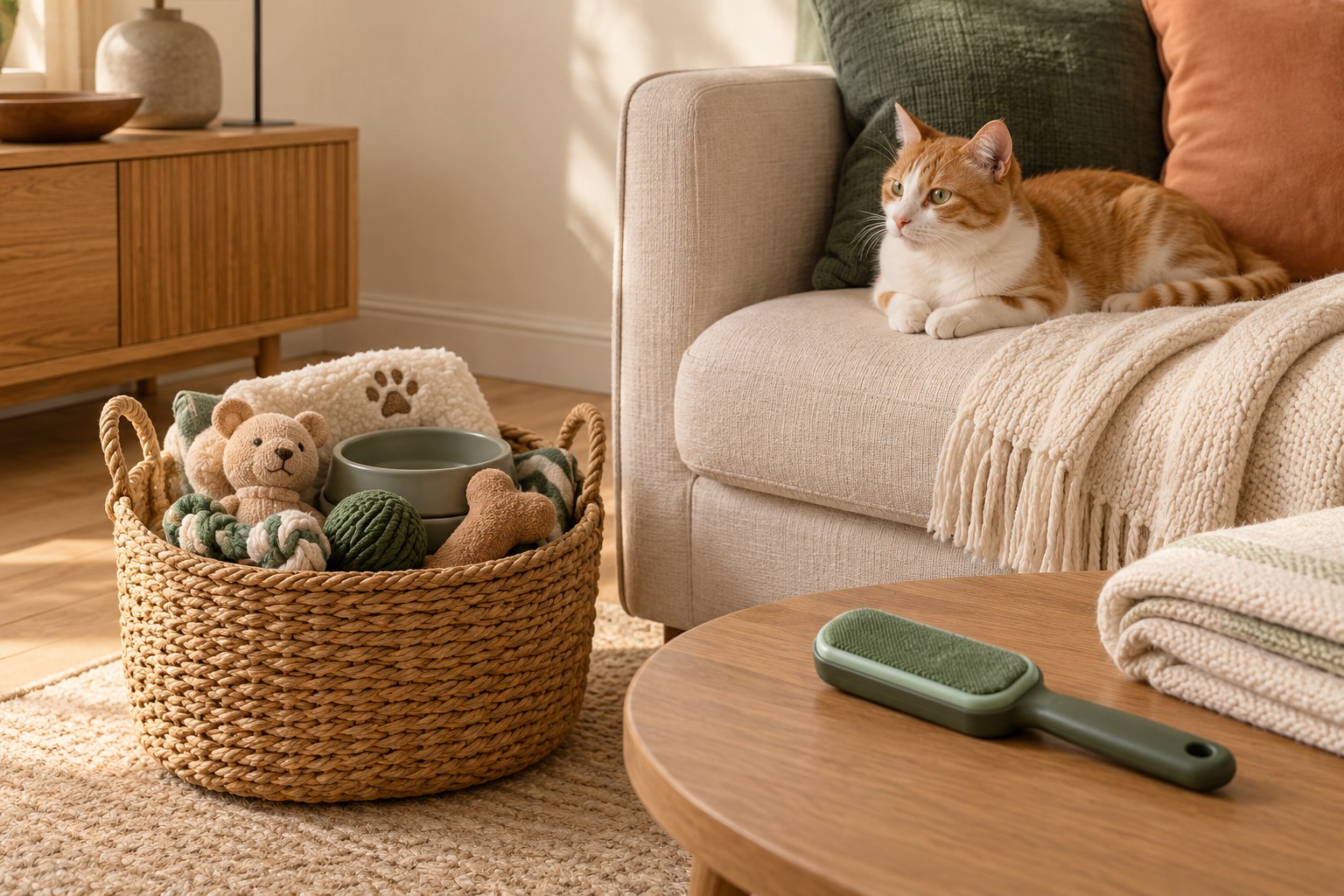
Small homes benefit from supplies that are easy to reach and equally easy to put away. A pet-care cleanup station can be a shallow cupboard section, a wall-adjacent cart, or a washable tray in a secure location. It works when its few contents match ordinary tasks. The goal is reduced searching and clutter rather than a new piece of furniture filled with unused products.
Choose the location from the cleanup
If most dirt arrives after walks, a place near the entrance may make sense. If the main task is hair on a living-room chair, the nearest suitable cupboard may be better. Keep the station out of door swings and narrow routes. Avoid storing supplies where the pet must be stepped over to retrieve them. A convenient location should remain accessible when the room is being used normally.
Measure the proposed space with doors and drawers fully open. A compact cart may still project into the walkway when a handle or wheel is included. A wall shelf must be installed appropriately and should not hold heavy supplies where they could fall onto a resting area. Choose a stable arrangement before organizing the contents, and keep chemicals and sharp tools securely out of access.
Do not make the station a permanent damp zone. If used towels will wait there temporarily, provide a separate washable place and a prompt route to laundry. Keep clean tools above or apart from wet textiles. The distinction can be simple and visible, without requiring many small baskets. A station should help materials leave the room for cleaning rather than conceal them indefinitely.
Select a few compatible tools
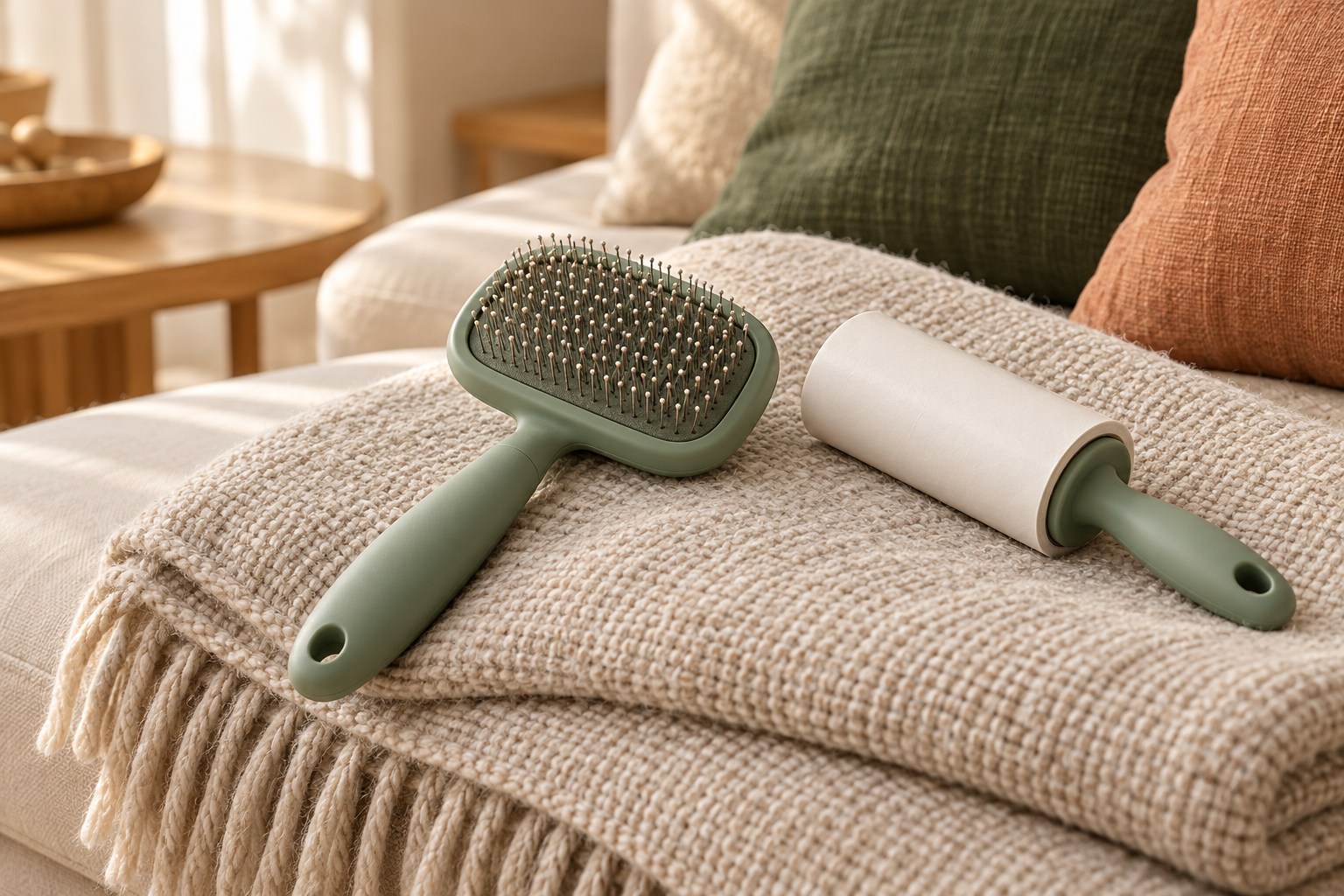
Choose a hair-removal method suitable for the actual upholstery and a manageable towel for ordinary moisture or dirt. Read the surface-care instructions and the tool's permitted uses. A reusable roller, rubber edge, or vacuum attachment serves a different task, so one appropriate option may be enough. Avoid stocking every format merely because they all carry a pet-hair label.
Keep cleaning products in original clearly labeled containers and follow their storage requirements. A general pet-themed cleaner may not be suitable for every floor or fabric. Do not mix products or transfer them into anonymous bottles. If a surface requires a particular method, retain a short accessible note so everyone in the household follows the same guidance rather than experimenting with stronger solutions.
Use small quantities that reflect actual use and check them periodically. A cluttered supply tray becomes harder to inspect and may hide leaks or damaged tools. Keep replacement parts only when they belong to identified equipment. A spare cover or liner should be stored clean and dry with its size noted, not squeezed beside wet towels simply because it is another pet-related object.
Design the reset as part of the station
After cleanup, empty collected hair and waste appropriately, clean tools as instructed, and put used textiles into the laundry routine. Wipe and dry the tray or bin when necessary. Return only clean dry items to their ready positions. A station that looks tidy while containing damp fabric or an unclean roller has not actually been reset for the next task.
Inspect tools for wear during that reset. Rough rubber edges, damaged roller chambers, and loose vacuum attachments should be removed for assessment rather than put back among usable supplies. Check the floor or shelf beneath the station as well. A washable container can hide moisture under its base, and a cart can gather hair around its wheels even when the upper shelf appears clean.
After a week, remove anything that has no clear role and adjust the position of items left out repeatedly. The problem may be access rather than insufficient storage. A small station can stay flexible as the household changes, with each addition justified by a real task. Its value comes from a repeatable sequence: retrieve the appropriate tool, complete a manageable cleanup, and restore a clean dry setup.

For our approach to product claims and illustrations, see the Editorial Policy.