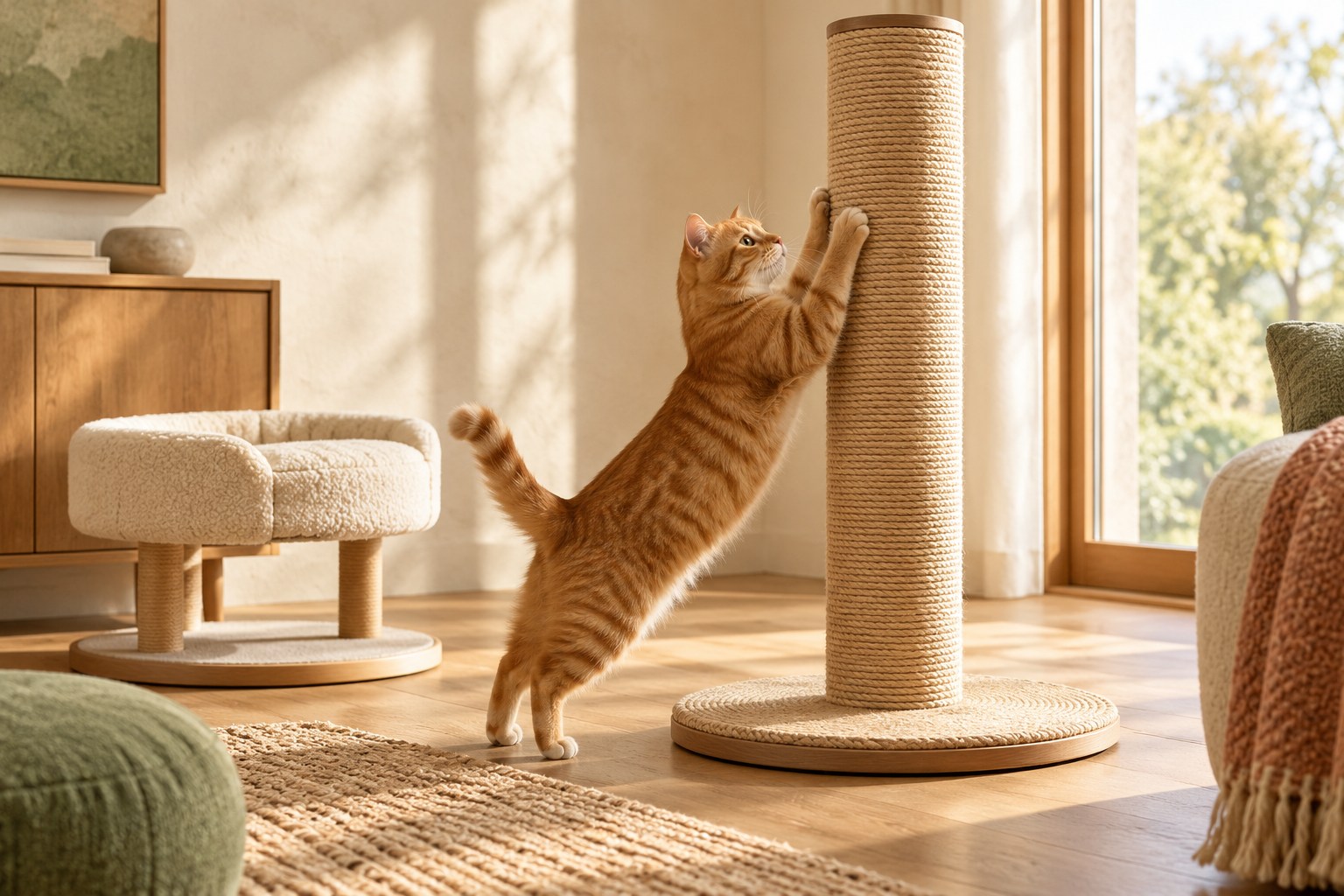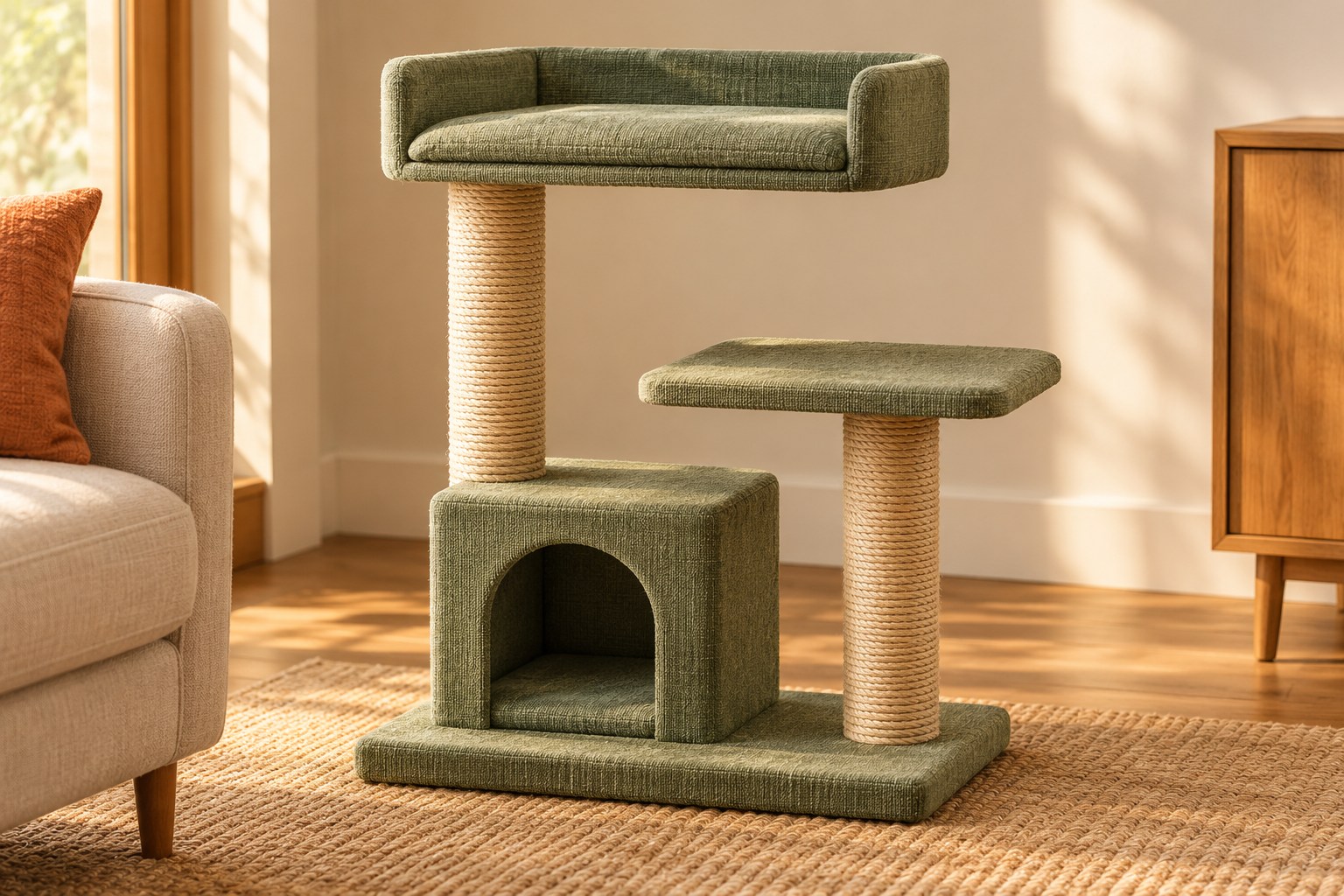
Cat furniture often wears unevenly. A scratching post can fray while the base remains sound, or a cover can become damaged while the platform beneath is intact. A repairable design lets those working parts be replaced without discarding the whole structure. The word modular, however, does not guarantee long-term part availability.
Investigate the replacement route before purchase, when model details and support information are easiest to compare.
Identify the parts most likely to wear
Look at scratching surfaces, covers, corner bindings, and exposed platform edges. Ask which are removable and which are permanently bonded. A zippered cover can simplify maintenance if it refits securely; a removable post can extend service life if its replacement remains available. A hypothetical tree with one heavily used lower post may benefit from an independently replaceable section, while a sealed fabric-wrapped structure may require much more extensive work for the same wear.
Record dimensions and connections
Replacement compatibility involves diameter, length, thread type, fastener length, and attachment geometry, not just a similar appearance. Keep the assembly instructions and model identifier. Do not substitute a longer post or a differently sized platform casually, because it changes support and leverage. Use the manufacturer’s approved parts or obtain explicit guidance. A part that screws into place is not automatically structurally equivalent to the original component.
Ask about supply rather than promises
Check whether spare parts are actually listed and whether they can be ordered individually. A general statement that support is available may not mean the specific post or cover is stocked. Consider shipping cost and whether the product is likely to be serviceable in your location. Buying a small spare cover may be reasonable after confirming fit, but stockpiling many structural parts before the cat uses the tree can create unnecessary expense and storage.
Inspect repair access
A hidden screw beneath permanently glued fabric may make a nominally replaceable part difficult to reach. Choose joints that can be inspected and serviced according to clear instructions. Keep cats away from the work area during disassembly, and account for all screws, washers, and packaging before reopening access. Do not leave a partly assembled tree available overnight. Exposed hardware and unstable intermediate stages are different from the finished product’s intended configuration.
Know the boundary between wear and failure
Replacing a surface is different from repairing a cracked base, stripped structural connection, or bent support. Seek the manufacturer’s advice when the underlying structure is damaged. Do not hide a failed joint under fresh rope or a new cover. Check the rest of the tree while one part is removed, since concentrated wear may coexist with loose connections elsewhere. Stop use when the structure is uncertain rather than treating every problem as a cosmetic refurbishment.
Reintroduce after maintenance
After replacing parts, assemble and inspect the tree as though it were new. Confirm that platforms are level, covers are secure, and required restraints are restored. Keep familiar placement where suitable and allow voluntary investigation. A new surface can change feel or scent even when dimensions match. Review the first climbs for unexpected movement. Repairability creates value only when the restored product still functions comfortably and predictably for the cat.

For our approach to product claims and illustrations, see the Editorial Policy.