A portable feeding kit should make an ordinary stop easier, not turn a short outing into a collection of gadgets. Start with the tasks you expect: carry the intended food, provide water, serve it in a usable bowl, and contain used equipment until it can be cleaned properly.
Keep the food and serving approach already appropriate for the individual pet. Travel is not a reason to introduce unfamiliar ingredients or improvise storage beyond the product's instructions. Choose containers around the planned duration and conditions, with room for a sensible contingency.
Separate serving from storage
A bowl is designed for access, while a container is designed to close. A product that combines both functions may be convenient, but check each independently. A deep storage jar can be awkward to eat from, and a folding bowl may not keep food contained in a bag.
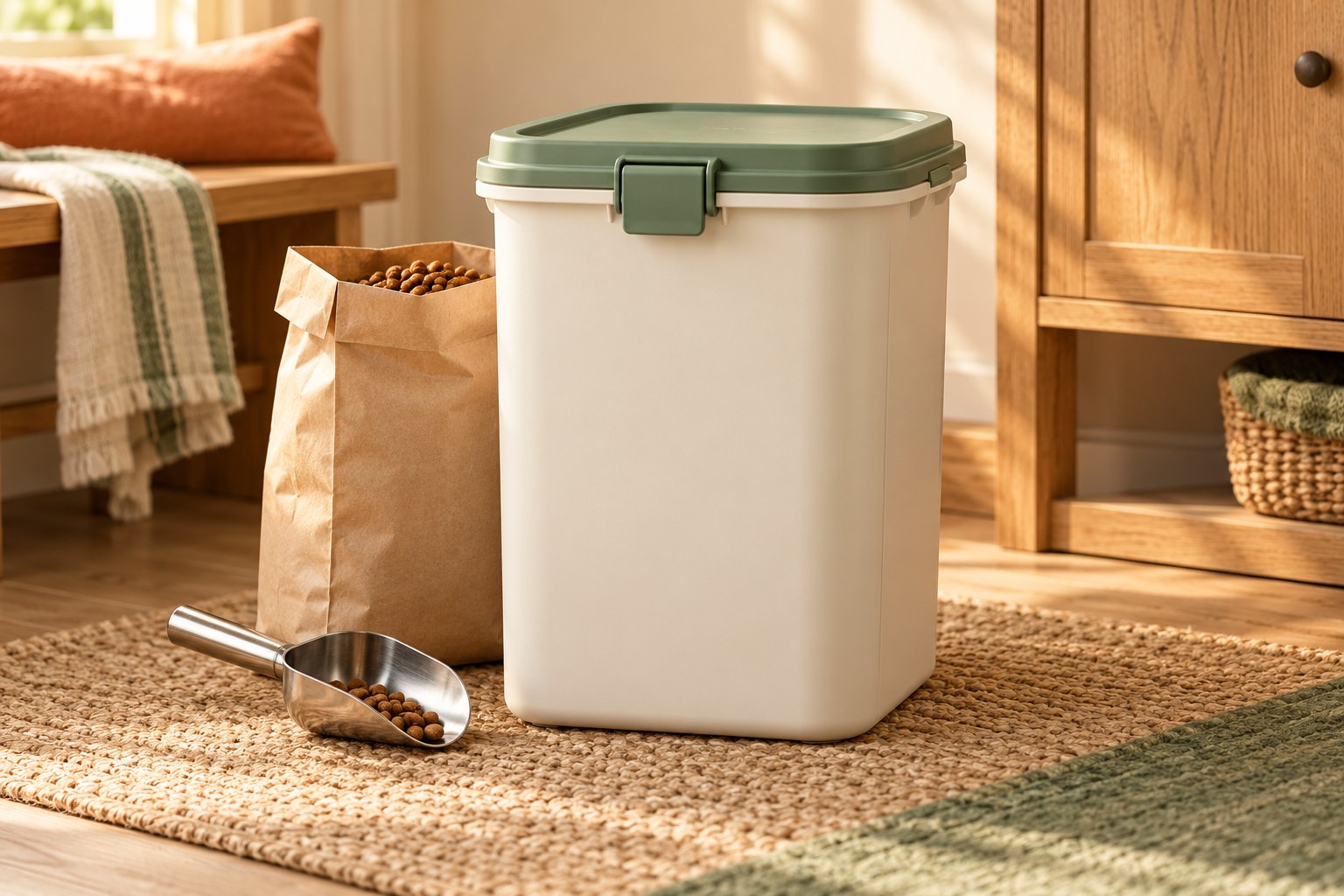
Use clearly identified food-contact containers with closures suited to travel. Keep product details available, particularly if food is removed from its original package. Follow the packaging's handling requirements rather than assuming every lidded container is suitable for every food.
Choose the bowl by the stop
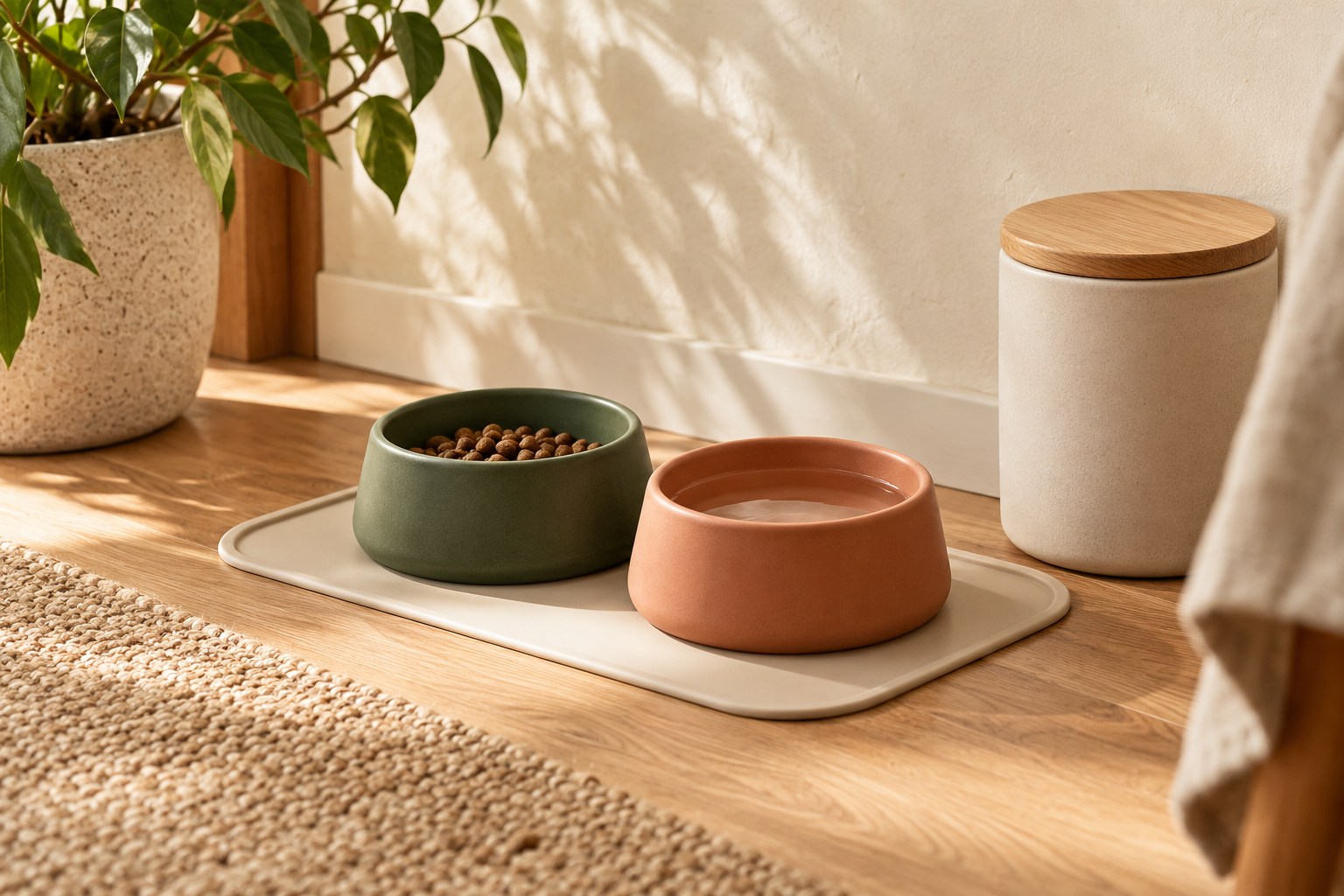
For a brief outdoor stop, a stable lightweight bowl may be sufficient. A collapsible model saves space but needs folds that remain open and can be cleaned. A rigid bowl takes more room but may be easier to fill and move without deforming.
Imagine setting it down on the actual surface: a level rest-area table, firm ground, or a car-side mat. Avoid balancing it on sloped seats or loose bags. The most compact bowl is not useful if there is nowhere stable to use it.
Plan water as its own load
Carry water in a suitable closed vessel and use a bowl that is easy to refill. Think about the total weight rather than just the bottle's advertised volume. Keep it accessible so you do not have to unload the entire bag at every stop.
Do not treat an anti-splash bowl as a sealed transport container unless the maker explicitly supports that use. A bottle and empty bowl often provide a clearer separation between carrying and serving. Check bottle caps and seals before placing them beside other equipment.
Give used equipment a place
Include a washable pouch or container for damp bowls and utensils. Keep it separate from clean items and remove its contents for cleaning at the first suitable opportunity. A sealed pouch contains drips during the journey; it is not a long-term drying method.
A small cloth can collect ordinary exterior drips, but it does not replace washing food-contact surfaces. Choose items that will fit your sink or usual cleaning setup when you return. Elaborate travel gadgets can create more maintenance than the simple outing warrants.
Pack by a short scenario
For a hypothetical six-hour day trip, lay out what happens at departure, the planned stop, and arrival home. Check that the intended serving, water vessel, bowl, and used-item pouch each appear in that sequence. Add only accessories that solve a real step.
Before leaving, inspect for damaged seals, torn flexible bowls, missing lids, and stale leftovers from the previous outing. A dedicated kit is useful only if it is reset after use. Keep a plain checklist where the bag is stored so another household member can pack it reliably.
For our approach to product claims and illustrations, see the Editorial Policy.