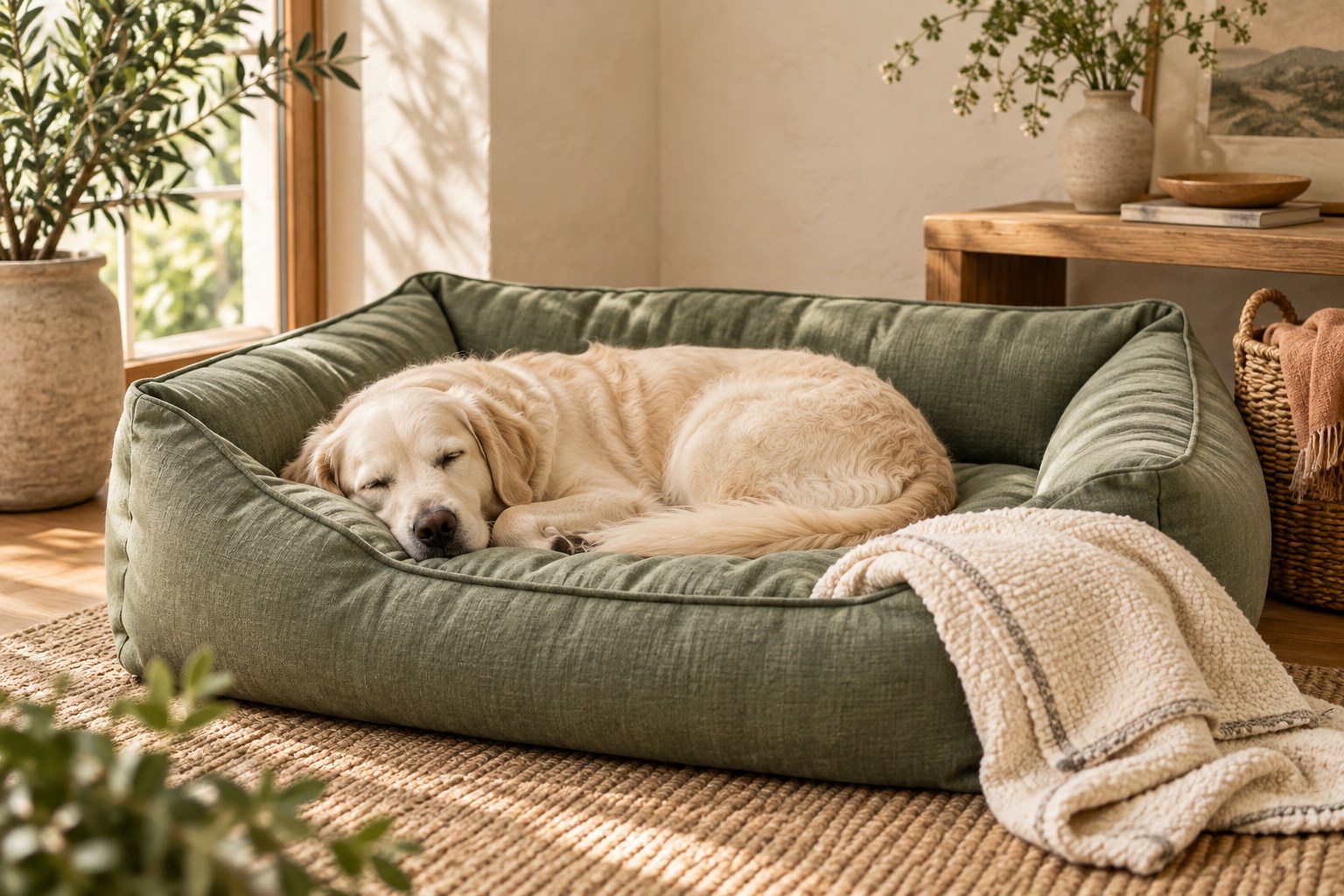
Entry height is easy to overlook when a bed is photographed from above. A deep cushion may look inviting yet create a large step, especially when a raised rim surrounds it. A low-entry design reduces that barrier, but it should still offer a stable platform rather than a thin front that folds beneath the first paw.
Measure the actual step
Find the height from the floor to the lowest usable entrance, not just the height of the outer walls. A cutout in a bolster can still sit on top of a substantial base. Compare this measurement with the pet's current preferred surfaces and ordinary movement. If mobility has changed or entry appears painful, obtain veterinary guidance rather than expecting a product description to explain the cause.
An entrance should be wide enough for a natural approach. A narrow notch can force a dog to place its feet in a precise sequence, which defeats the purpose of an accessible front. Look at photographs from floor level and ask for the opening width when necessary. The transition should remain useful after the bed is placed beside a sofa or against a wall.
Check what happens under a paw
Soft edges can compress unevenly. The first paw may push the mattress forward or make the front roll downward, particularly on polished flooring. A stable underside and a well-fitted insert reduce this movement. Grip dots or rubberized panels still require a clean, dry floor; they cannot compensate for a product that is too small or badly positioned.
Avoid adding a pile of extra blankets to make a low bed look fuller. Loose folds can change the entry surface, and thick layers can increase the very height you were trying to reduce. A flat removable cover or a thin compatible pad is easier to assess. Check any added layer for bunching after the pet circles, then remove it if it compromises the approach.
Give the pet room to turn
A low opening placed in a tight corner may offer less practical access than a slightly taller open mattress in a clear area. Leave enough space for the pet to face the entrance, turn, and leave without backing into furniture. Keep nearby rugs flat and cords out of the route. Watch the entire approach instead of evaluating only the moment a paw crosses the edge.
When comparing beds, make a simple cardboard height marker and place it at the proposed location. It helps visualize the obstacle without asking the pet to step over an unfamiliar object. After delivery, keep packaging while checking dimensions and assembly. A bed should fit the space and the pet's movement before decorative details become the deciding factor.
For our approach to product claims and illustrations, see the Editorial Policy.