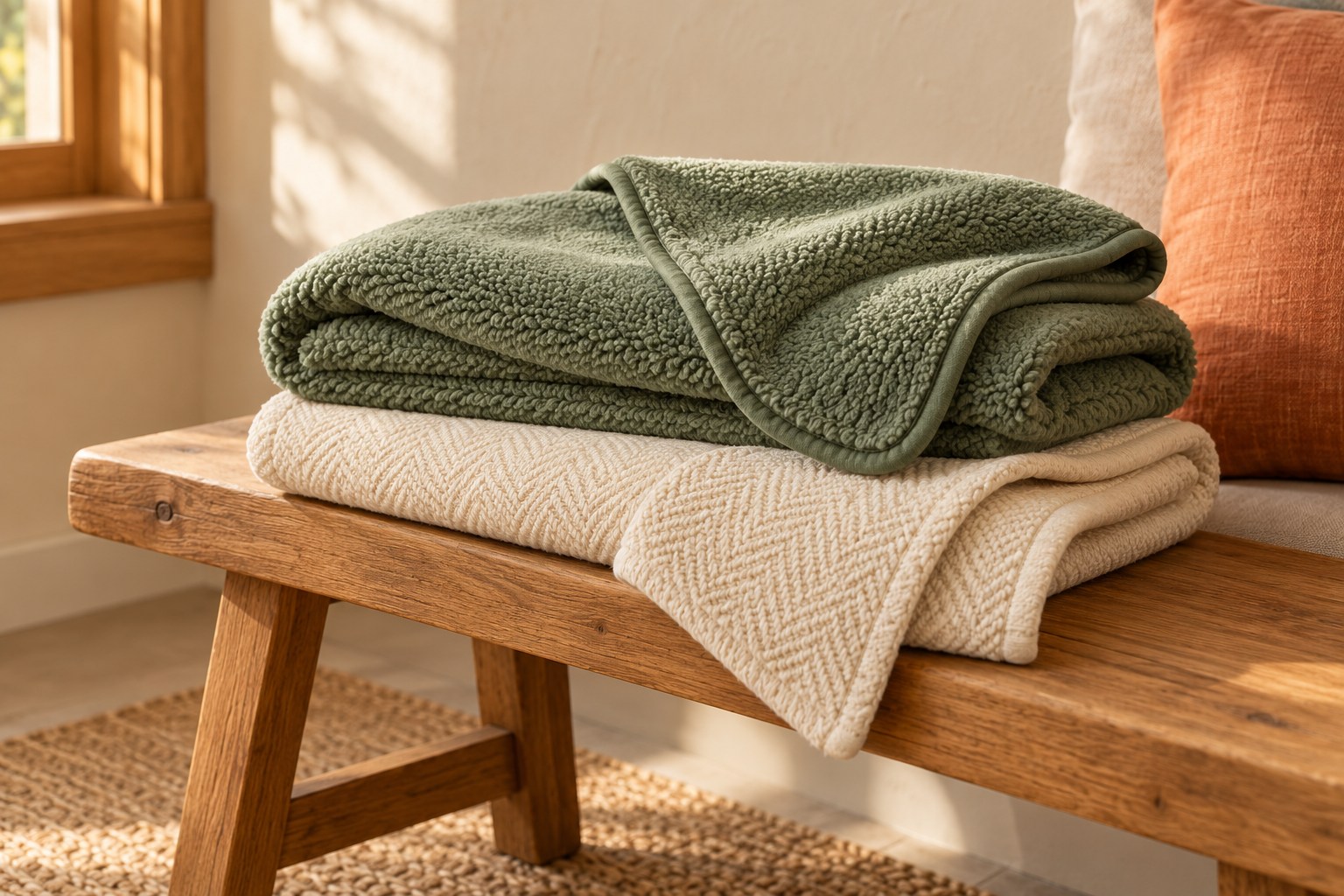
Protective throws are often photographed spread neatly across a single cushion. Real sofas have gaps, sloping backs, removable seats, and arms that pets use as headrests. The useful purchase is therefore not simply the largest waterproof textile. It is a throw whose shape covers the vulnerable area and remains in place during the movements that occur there.
Draw the actual coverage zone
Measure the route from the back cushion over the seat and down its front, including whatever tuck is needed to keep the throw positioned. If the pet leans against an arm, include that surface separately. A rectangle may work for one broad seat but leave a narrow arm exposed. A shaped cover can improve coverage, though it may fit fewer sofa styles when furniture changes.
Imagine a small spill near the boundary rather than in the center. Liquid can run down a sloping surface or enter an uncovered cushion gap even if the coated panel itself resists penetration. A short decorative throw is therefore different from full furniture protection. Check whether the maker explains seam construction and overall coverage, and distinguish a water-resistant surface from a claimed waterproof barrier.
Keep the protective side correctly oriented
Some throws use similar-looking fabrics on both faces, but the intended underside may provide grip or locate a barrier in a particular way. Follow the supplied orientation and do not assume reversibility from appearance. A label or subtle corner marker can help the household replace it correctly after washing. Check that the cover lies smooth rather than forming a channel that directs liquid toward a gap.
The underside should be compatible with the sofa upholstery. Grippy dots or coatings can behave differently on leather, delicate fabric, and textured weaves. Read both product and furniture care guidance before use. Avoid adhesive or pin-based improvisations that could damage the sofa or leave hard points accessible. If movement is persistent, a fitted protector may be more appropriate than adding increasingly elaborate anchors.
Account for entry and everyday movement
A dog that climbs onto the seat pushes fabric differently from one lifted onto it. A cat that circles in a favorite corner may repeatedly gather the top layer. Watch the first few supervised uses and see where the throw shifts. The point is not to arrange the pet around a perfectly photographed cover; the cover needs to work with ordinary movement.
Tucking excess material into deep cushion gaps may help some designs, but only when the instructions and sofa construction permit it. Long straps should remain inaccessible and should never be used as pet restraints. Avoid leaving loose fabric tails across a walkway. A protector that requires daily complicated resetting can become more inconvenient than a simpler washable cover for one well-defined resting spot.
Build cleaning into the choice
Confirm whether the entire throw is machine washable and what heat its barrier can tolerate. Some protective constructions need gentle drying, which affects the usefulness of a spare. Inspect seams and the underside after cleaning rather than assuming that an intact outer textile guarantees an intact barrier. Stop using a layer that flakes, cracks, or transfers residue until its condition is resolved.
For cleanup, remove the throw without dragging the affected face across other cushions. Follow the maker's care method, inspect the furniture beneath, and let all affected surfaces dry before replacing it. A protective layer reduces some cleanup work but cannot eliminate inspection. If the pet frequently soils furniture unexpectedly, discuss the change with a veterinarian while keeping the product routine separate from the underlying concern.
For our approach to product claims and illustrations, see the Editorial Policy.