Litter boxes are often sold by a large or jumbo label, yet those words do not reveal usable floor area. A wide rim, sloping wall, or projecting lid can inflate the exterior measurement. The cat experiences the lower interior and the route into it, which may be considerably smaller.
Build a simple dimension checklist before comparing products. It is more informative than arranging listings by their size names.
Ask for measurements at litter level
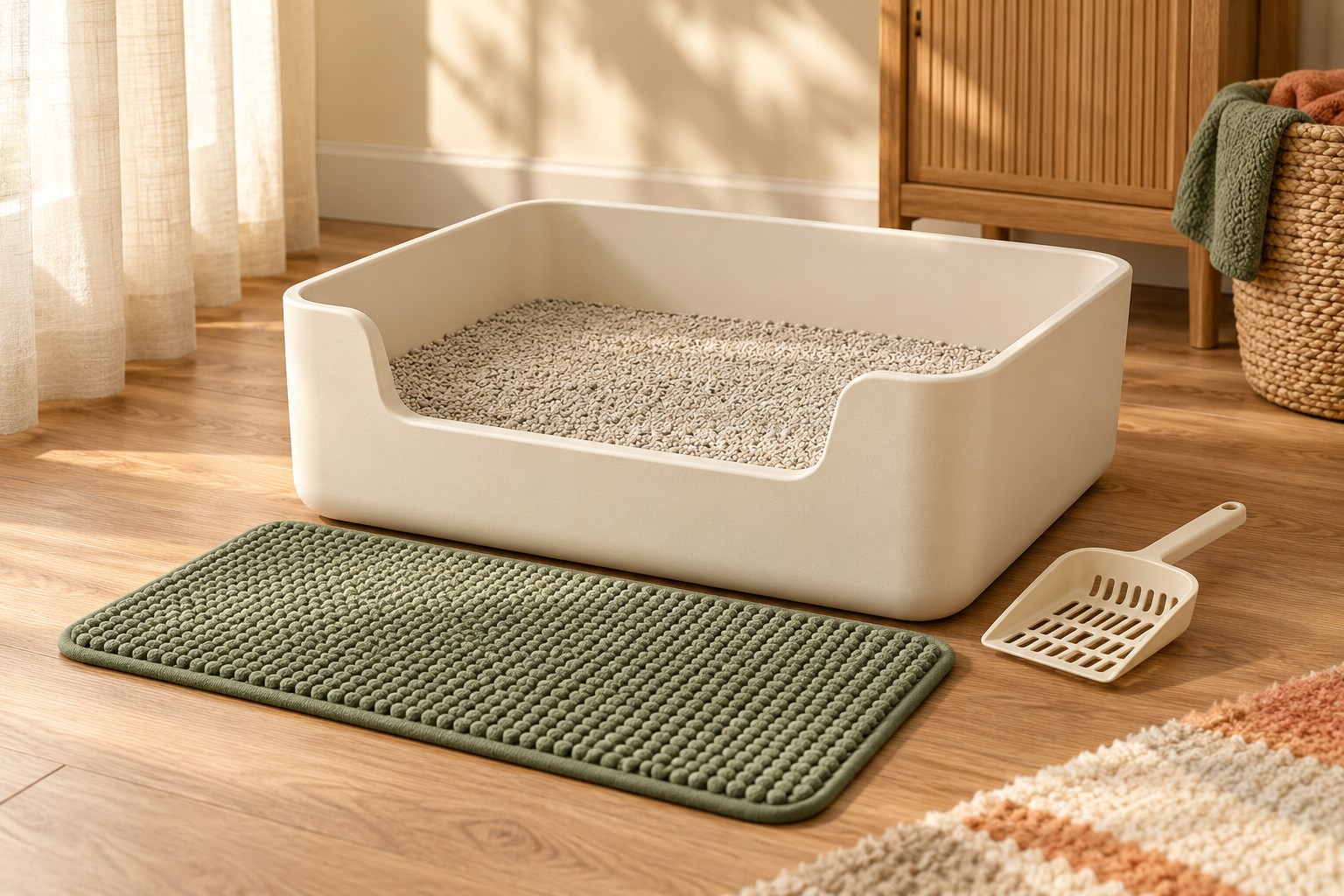
The floor may narrow toward the base, and the usable width changes as litter is added. Request internal floor dimensions and inspect the wall angle. Rounded corners reduce some nominal rectangular area but may simplify scooping. Internal handles, filter housings, and stepped sections can occupy additional space. A hypothetical box measuring broadly across its rim may offer less working room than a simpler open tray with smaller exterior dimensions and more upright walls.
Consider the cat’s whole movement
The cat needs to enter, turn, dig, position itself, and leave. Compare the box with the cat’s ordinary body outline and movement without forcing it into a measuring exercise. Long tails, broad bodies, and individual posture can affect how the space works. Avoid treating one numerical rule as a guarantee for every cat. A roomy accessible choice with observation of normal use is more useful than squeezing a particular measurement into an inconvenient location.
Measure entrances independently
A generous floor does not help if a narrow doorway makes access difficult. Record entry width and lip height, plus any tunnel or flap that reduces clearance. For a covered box, request internal height where the cat actually stands, not only at the highest central point. A sloping roof may require crouching near the edges. If a flap is optional, check how removing it affects the opening and whether any rough attachment points remain.
Include the human working space
You need room to remove a lid, turn a scoop, and lift or slide the box as directed. Measure the surrounding area with those tasks in mind. A box that fits perfectly beneath a shelf may be impossible to inspect without moving it every day. If the box sits in an enclosure cabinet, the cabinet must provide suitable access and ventilation as well as physical clearance. Do not assume a furniture product labeled for litter boxes accommodates every model comfortably.
Use a paper footprint before purchase
Mark the full exterior dimensions on paper or removable floor markers, then add the space needed for the cat’s approach and your maintenance position. Check door swings and neighboring objects. This can show that the chosen corner is too cramped before you buy. If the room cannot accommodate an appropriate box, reconsider the location rather than downsizing automatically. The box is a functional resource whose access needs to survive ordinary household movement.
Verify through use after installation
Keep a familiar option available during a change when feasible and observe the cat’s voluntary use. Look for crowding, awkward turning, or an entrance blocked by another animal. Maintain the product according to its instructions. New avoidance, altered toileting behavior, or signs of discomfort need veterinary attention rather than assuming size is the only possible explanation. Measurements improve the purchase decision, but actual behavior remains essential feedback about the whole setup.
Build a comparison card for two candidates
Write five entries for each product: internal floor length, internal floor width, entry lip height, clear opening width, and usable internal height if covered. Add a note about wall taper and whether the cover can be removed in the intended location. Blank entries are useful because they show what to ask the seller before buying.
Suppose one candidate is wider externally but has heavily sloping walls, while another is narrower externally with a nearly full-width base. The second may provide more useful floor area despite appearing smaller in a listing. Do not calculate a simple rectangle and treat it as the final answer, though: corner shape, entrance position, and the cat’s movement still affect use.
Keep the card after purchase and record the specific outcome. If the cat turns comfortably but the lid is hard to remove, the next change concerns maintenance access rather than interior size. A clear record helps avoid replacing a product with a different-looking model that repeats the same actual limitation.
Save the actual interior measurements after purchase rather than relying on an old listing. Product names can continue across revised versions. When replacing the box later, compare the current specification so a familiar label does not conceal a smaller floor or higher entrance.

For our approach to product claims and illustrations, see the Editorial Policy.