A growing dog can change shape faster than walking equipment wears out. The temptation is to buy a large harness and tighten it now, but oversized openings and long panels may not fit a smaller body even at the minimum setting. Useful adjustment means the pattern works today and retains some room for change.
Treat replacement as a normal part of growth rather than a failure to buy one product that lasts forever.
Fit today’s proportions
Take the manufacturer’s required measurements with the dog standing, then compare neck, chest, and underside proportions. A long chest connector cannot always be shortened enough for a young dog even if the girth strap fits. Check elbow clearance and whether the neck opening could allow a foreleg to slip through. Avoid using a larger size simply because the dog is expected to become large. A suitable current fit matters more than an estimate of adult weight on a breed chart.
Keep hardware proportionate
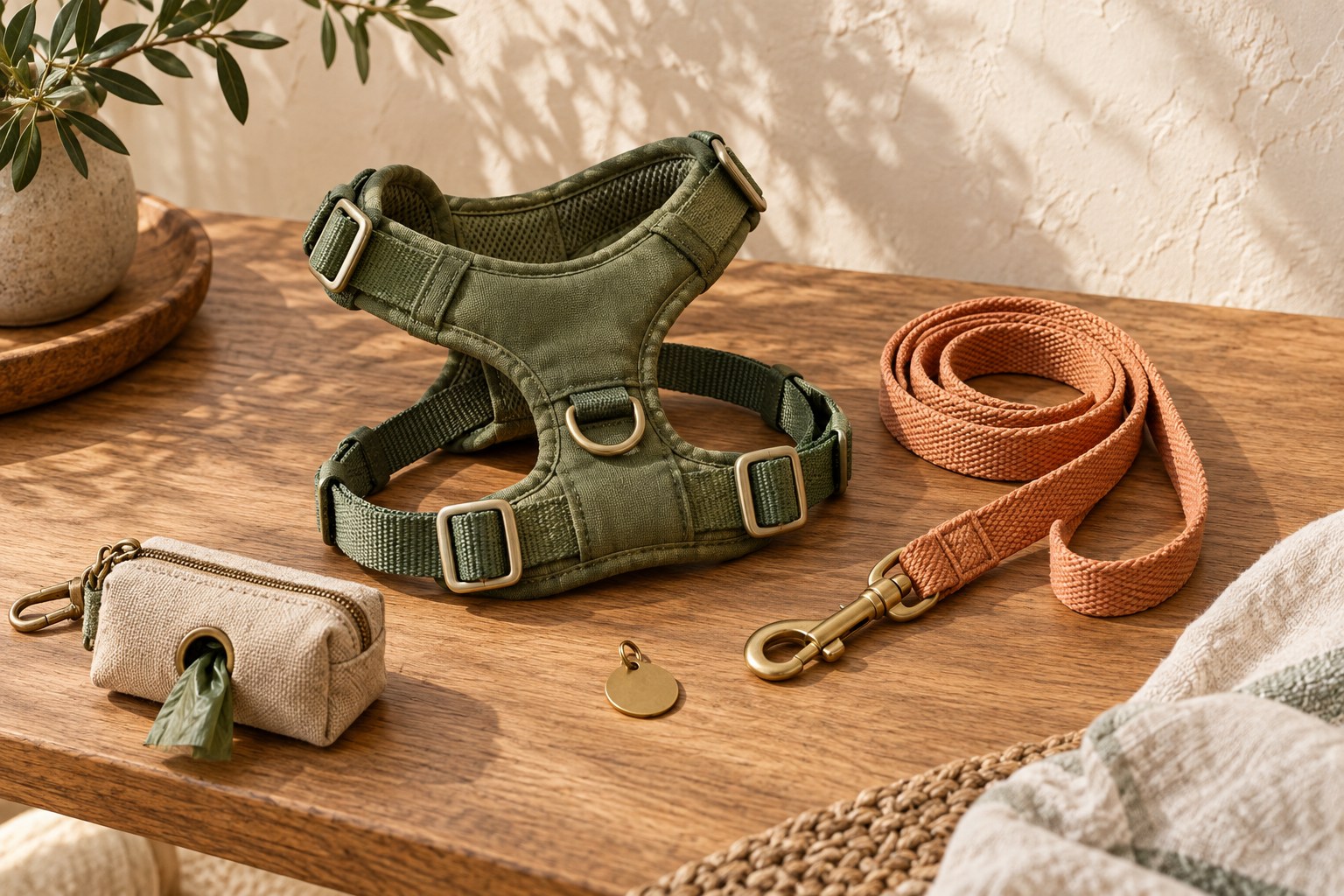
Large clips and thick webbing can feel bulky on a small young dog. Choose equipment that is easy to handle and appropriate for the dog’s present size, while following stated product limits. A light collar carrying identification may work alongside a fitted harness for walking. Keep excess strap tails secured so they do not brush the legs or become chewing targets. Inspect all material frequently, because a curious dog may damage a strap long before it shows ordinary outdoor wear.
Create a repeatable fit check
Check before each outing for obvious tightness, looseness, twisted straps, and buckle closure. Take fresh measurements regularly during active growth and whenever the fit looks different. Rather than relying on a calendar alone, watch for the rib band moving toward the elbows, a neckline rising, or adjusters reaching their limit. A hypothetical harness that needed only one slider change last week may need a complete refit this week because chest depth and neck size do not necessarily change at the same rate.
Make dressing a learned routine
Introduce equipment in brief calm sessions, rewarding voluntary approach and comfortable handling. Avoid chasing the dog with an open harness or pulling legs through openings in a hurry. A design with a neck buckle may simplify dressing for a dog that dislikes overhead movement; a step-in pattern may suit another dog. Choose the mechanism that supports a calm routine now, and reassess as the dog develops. Training comfort and physical fit are related but separate reasons to change equipment.
Know when adjustment has ended
Replace a harness when one part is at its limit and another still fits poorly, when the pattern restricts movement, or when structural material is damaged. Do not extend straps with improvised webbing or remove a keeper to gain a little more length. Record the old model and the fit problem so the next purchase solves the actual issue. If donating outgrown gear, clean it appropriately and pass on only intact equipment with its size information and instructions.
For our approach to product claims and illustrations, see the Editorial Policy.