Cold-weather clothing needs vary with coat type, age, size, activity, weather, and the individual dog. A padded garment may be useful for some outings, but thickness alone does not tell you whether it fits or suits the conditions. Heavy padding can restrict movement, retain moisture, or make harness adjustment awkward.
Use the garment’s construction to answer practical questions, and ask a veterinarian about an individual dog’s temperature tolerance when unsure.
Separate warmth from weather protection
An insulating layer traps air, while an outer shell may reduce wind or shed moisture. A thick fleece can feel warm indoors yet admit wind readily. A thin shell can block wind but contribute little insulation by itself. Read the product’s stated construction rather than relying on a single winter label. For a hypothetical short-coated dog on a slow, dry outing, a flexible insulating coat may make sense; the same item may be poorly suited to sustained rain without appropriate weather protection.
Place coverage where it stays comfortable
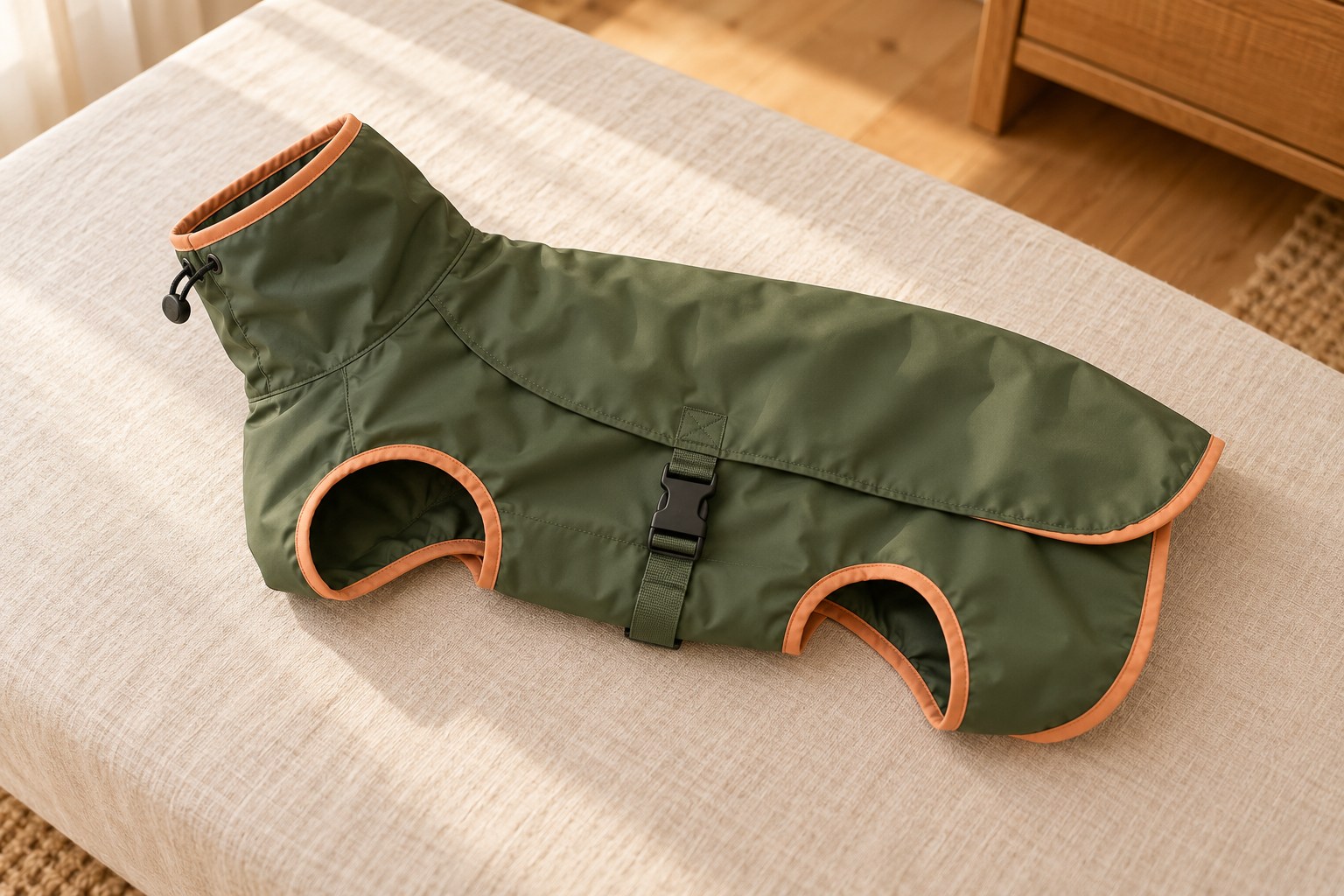
Look for a pattern that covers the intended chest and back areas without crowding the armpits or restricting the tail. A high collar should allow head turns and comfortable sniffing. Belly coverage must clear toileting and avoid pressure from closures. Measure the dog standing and compare every required dimension. If a coat is long enough in the back but too tight across the chest, upsizing may make the rear flap excessive; a differently proportioned pattern is often the better answer.
Inspect the lining and compression points
A smooth lining can make dressing easier, but slippery layers may rotate under a harness. Raised seams, zipper guards, and thick binding can become pressure points when a harness compresses them. Check those areas with the complete outfit fitted. Padding that looks lofty on a table may flatten beneath straps, changing both its insulating behavior and the harness fit. Avoid placing bulky pockets or decorative hardware directly beneath a load-bearing harness band.
Let activity and conditions guide use
A dog moving briskly generates a different amount of heat from one standing during a long conversation. Wind, dampness, and shelter also change the experience. Watch behavior throughout the outing rather than relying on a fixed temperature rule from a product page. Unusual discomfort, reluctance, or signs of becoming too warm or cold are reasons to adjust the outing and seek veterinary guidance when appropriate. A coat does not make severe weather or a long unsheltered stop automatically suitable.
Make removal and drying straightforward
Practice opening the garment without catching fur or needing to lift stiff legs awkwardly. Remove damp clothing promptly after the walk and dry it fully according to the care label. Inspect the inner surface for grit and the skin for repeated pressure marks. If using two garments in rotation, fit each with the harness rather than assuming equal labeled sizes create equal bulk. Choose clothing that supports an adaptable routine instead of one heavy layer intended to solve every cold-weather situation.
For our approach to product claims and illustrations, see the Editorial Policy.