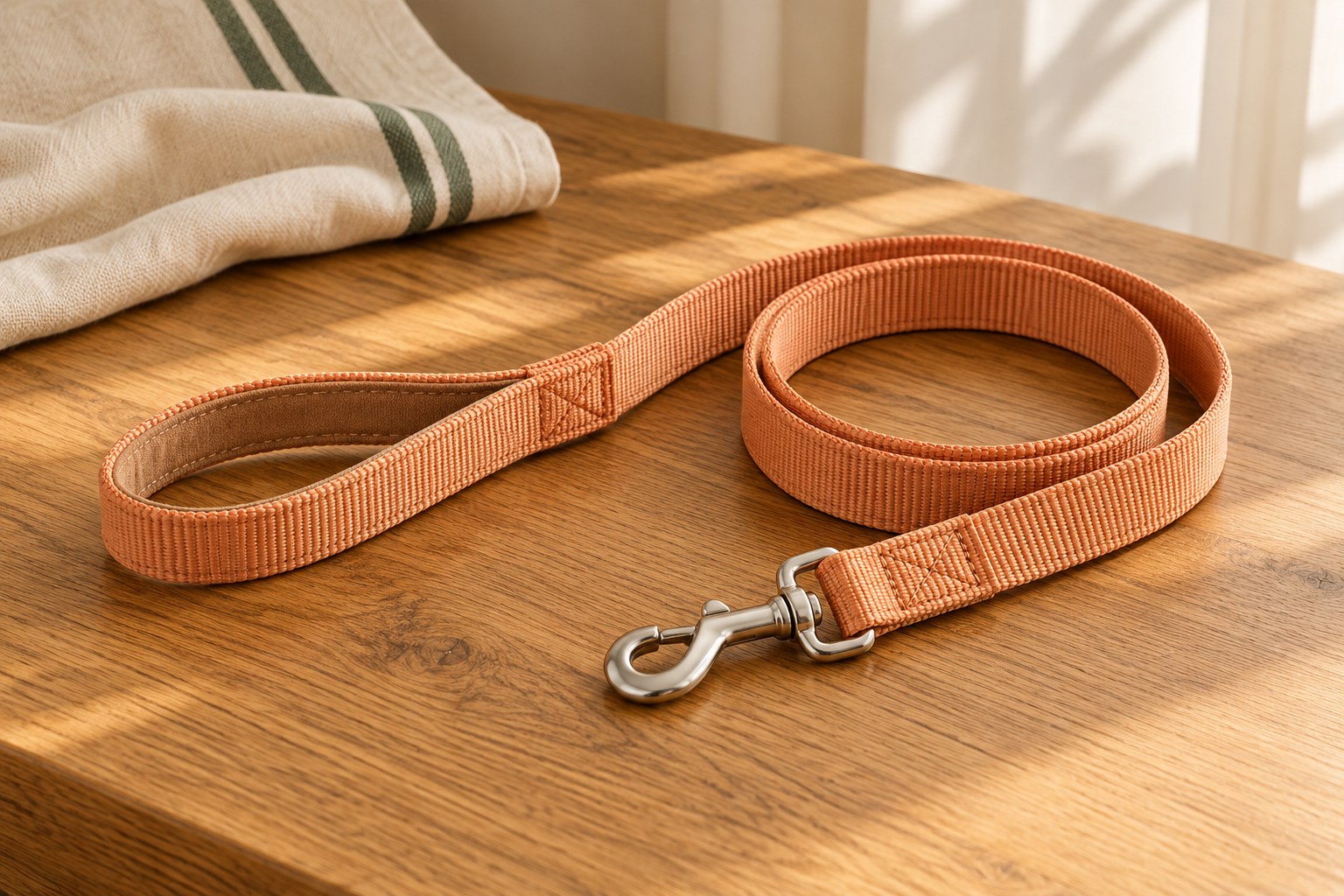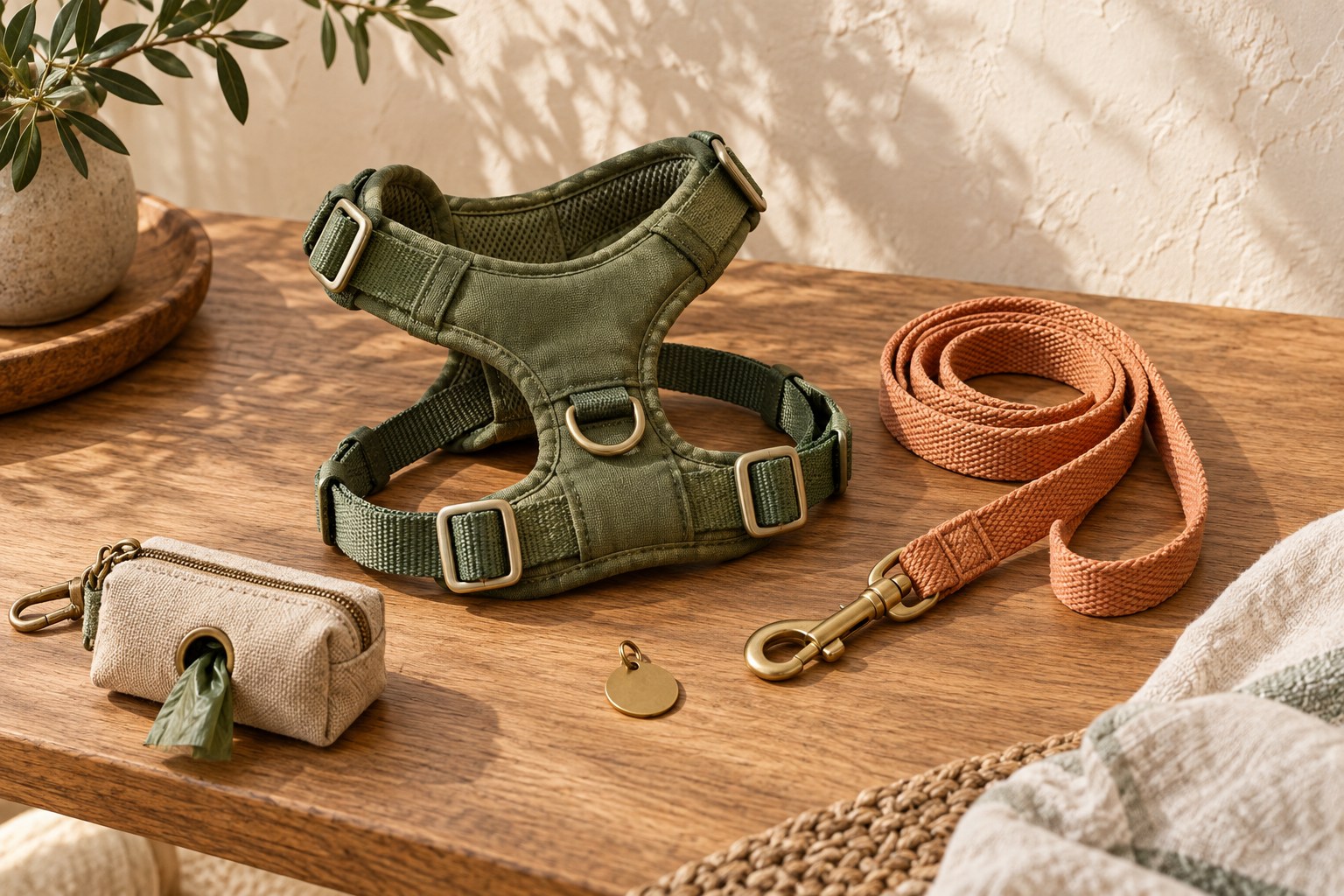
A deep chest creates a long distance between the spine and breastbone, sometimes paired with a relatively narrow waist. A harness sized only by circumference may fit around the ribs but leave its underside too short. The result can be a girth strap creeping into the elbows or a neck opening that needs excessive tightening to compensate.
Compare the proportions of the harness with the dog’s outline before focusing on its size label.
Measure more than the widest point
Use the manufacturer’s required chest and neck measurements, then inspect the distance its pattern provides from the breastbone to the girth band. Some product diagrams include an underside length; if they do not, ask for it. Measure while the dog stands squarely and the tape follows the body without compressing the coat. A hypothetical dog with a narrow neck and deep ribcage may fall across two different size recommendations, making independent adjustment especially valuable.
Look for useful connecting length
An adjustable strap between the chest meeting point and the rib band can move hardware away from the elbows. Its range matters more than the mere presence of a slider. At maximum extension, a short connector still cannot suit a long sternum. Check that any excess strap can be secured after fitting. Loose ends can work free or brush the legs, and a bulky adjustment slider directly under the chest may become uncomfortable when the dog lies down during a break.
Balance the upper opening
Do not solve a misplaced rib band by enlarging the neck opening until the whole harness slides backward. The front should continue to sit around the firm breastbone area, clear of the throat and shoulder action. Adjust left and right sides evenly. When a neck section has only one adjustment point, examine whether the chest junction drifts off center. The best arrangement is the one that produces the intended shape on the dog, not the largest number of buckles.
Test transitions as well as straight steps
Watch a slow walk, a sit, a turn, and the motion of lowering the head to sniff. Deep-chested dogs can change outline considerably through these movements. Inspect whether the rib band rises into the armpits or the neck section opens enough for a shoulder to slip through. Perform checks in an enclosed area with gentle leash contact. Revisit the fit after changes in body condition, and replace a harness whose structural webbing has stretched or frayed instead of trying to tighten around damage.
Compare circumference with depth in a worked example
Imagine two dogs with similar rib circumferences. One has a broad rounded torso; the other has a narrow ribcage extending much farther downward. A harness can wrap around both while placing its underside and top section differently. On the deeper dog, the same fixed connector may pull the rib band toward the elbows and leave the neck section at an unintended angle.
That is why an adjustable circumference should not be mistaken for a fully adjustable pattern. Ask which distances actually change. If the underside length is fixed, compare it with a harness already known to fit or request a diagram from the maker. A size up may add some depth, but it also changes neck width and panel size. The better candidate is the one that solves the vertical proportion without creating loose openings elsewhere, even if its size label seems unexpectedly small or large.
Check stability when the outline narrows
A deep chest sometimes narrows considerably behind the ribcage. The main girth band should sit where the product intends, rather than slipping rearward into soft abdominal space. Watch the harness when the dog bends to sniff and then straightens. If it migrates, inspect connecting length, strap angle, and circumference together. Avoid simply adding a tighter rear band to a design not made for one.
For a hypothetical dog with a slim neck, make sure adjustment sliders do not collect in one crowded area beneath the jaw. The dog should be able to turn its head without hardware pressing into the neck. Long fur may conceal this contact, while short fur makes small shifts easier to see. Use your hands gently to inspect the actual strap path, and compare photographs from both sides so uneven adjustment does not masquerade as a body-shape problem.
Ask for a side-profile product diagram when possible. A top-view photograph can conceal the underside distance that matters most for a deep torso. Compare that distance before ordering multiple circumference sizes, which may all repeat the same proportion problem.
For our approach to product claims and illustrations, see the Editorial Policy.