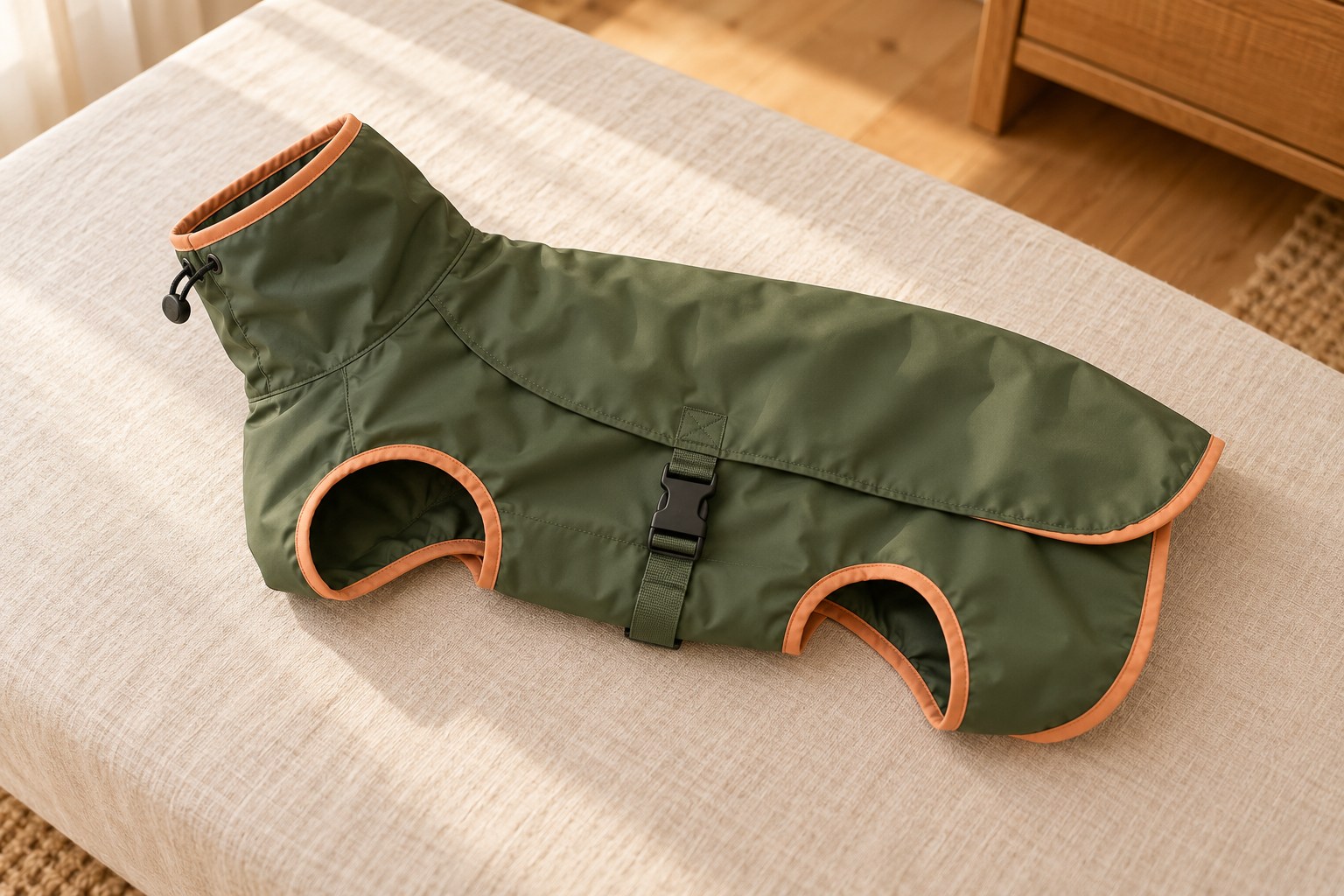
A useful dog raincoat keeps its intended coverage while the dog walks, sniffs, and toilets. The longest coat or the most waterproof-looking fabric is not necessarily the most practical. A shell that slides sideways can expose the back while wrapping wet fabric around a leg.
Look at the pattern and closures first. Fabric performance matters, but it cannot correct a shape that moves badly on your dog.
Decide which areas need coverage
Back coverage reduces how much rain reaches the coat beneath, while a belly panel can intercept splashes from the ground. A large belly panel also needs to clear the dog’s toileting anatomy and avoid dragging through wet vegetation. Measure back length and chest circumference according to the maker’s diagram, then examine the cut rather than trusting breed examples. A long body and a broad chest may require different proportions even when the listed measurements seem close.
Inspect neck and front-leg clearance
An open neck can admit rain; a tight neck can make dressing uncomfortable. Adjustable neck sections or side openings may help, provided their closures do not sit against the throat. Watch the dog lower its head and step forward. The coat should not pull the neckline backward or place a stiff seam in the elbow fold. Sleeved rainwear requires even more care because sleeve length and foreleg spacing must work together. A sleeveless shell may be simpler for a dog that dislikes paw handling.
Treat closures as part of the pattern
Hook-and-loop panels are quick to adjust but can collect fur and grit. Buckles may be easier to inspect yet create a hard point under a harness. Zippers offer a tidy join but need protection from catching hair. Check how loose ends and belly straps are secured. In a hypothetical windy walk, a broad tail flap may lift and twist the coat unless the cut stays stable; additional straps should not become an excuse to tighten uncomfortable fabric around the hindquarters.
Check the harness opening in use
Put the raincoat together with the actual harness before deciding on size. A slot should align with the leash ring without stretching the coat or opening a large gap across the back. If the harness sits above the coat, look for slippery movement beneath its bands and refit to account for the fabric. Read any stated water-resistance or waterproof claim carefully, including seam construction. A water-resistant fabric with unsealed seams may behave differently during prolonged rain from a brief shower.
Plan the wet return
Take the coat off where the dog can stand securely and avoid pulling a soaked sleeve over a twisted paw. Hang the shell open so panels and closures dry rather than leaving it folded in a bag. Follow care directions because detergent, heat, and fabric softeners can affect some finishes. Inspect for rubbing and note where water entered. Those observations help distinguish a coverage problem, a shifting-fit problem, and a fabric limitation before you replace the whole coat.
For our approach to product claims and illustrations, see the Editorial Policy.