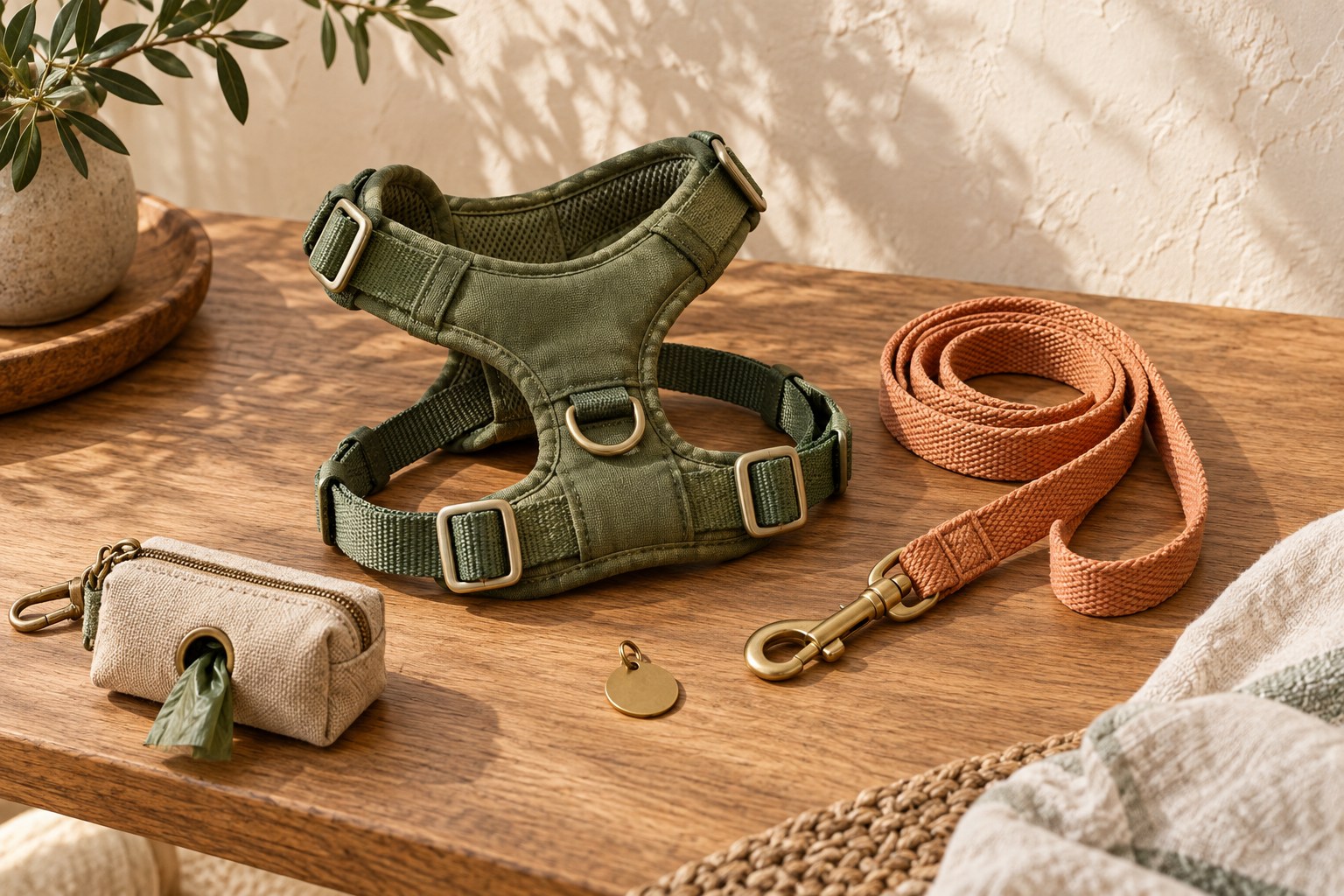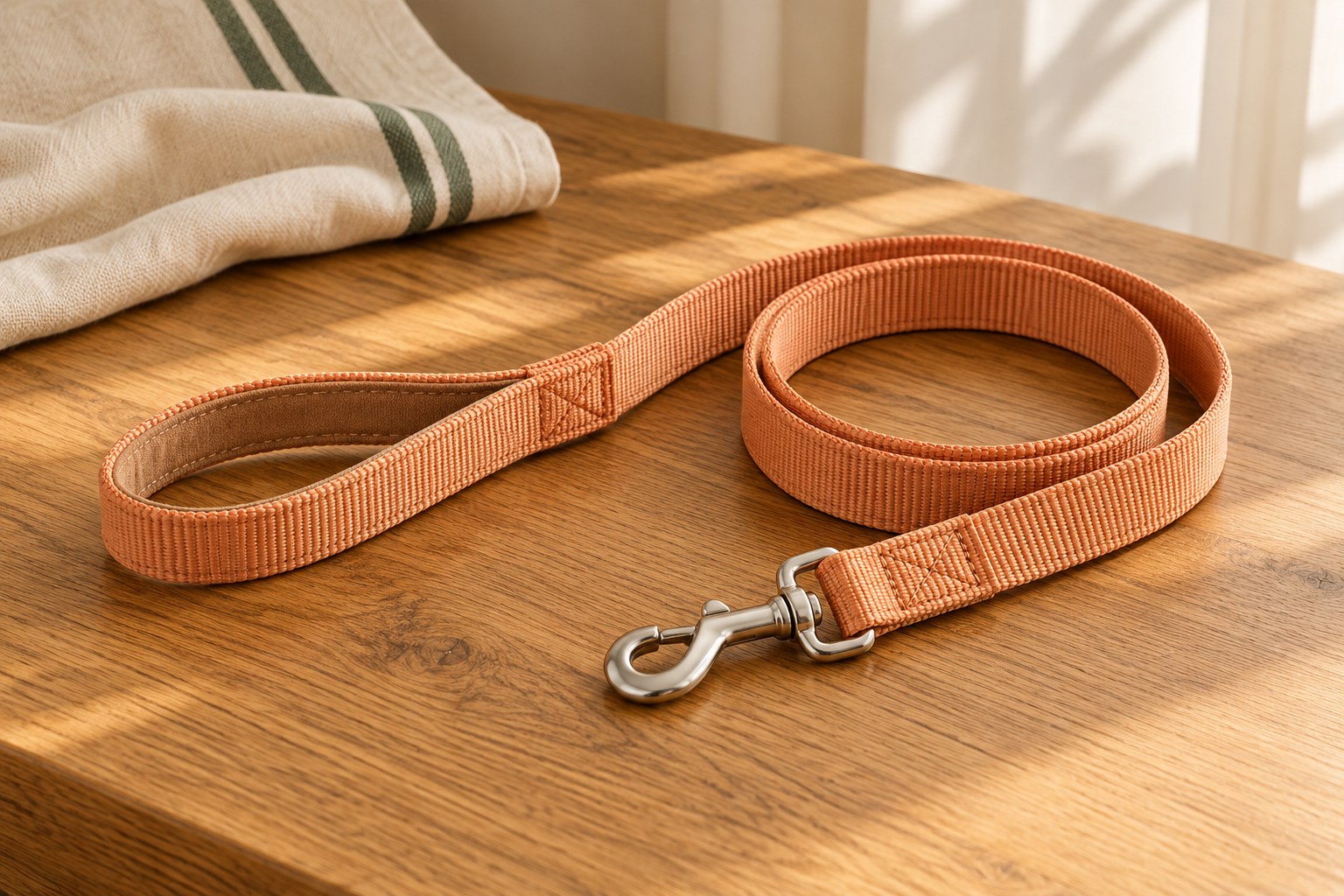
A leash spends much of its life in a person’s hand, so handle comfort deserves as much attention as the color or clip. Flat webbing folds into a pocket and spreads contact across the palm. Rope offers a rounded grip and can feel substantial without a broad edge. Both can become uncomfortable if a dog pulls hard, and neither should be wrapped around fingers.
Choose by handling a realistic length, including the hardware.
Match thickness to the whole system
A thick rope may feel reassuring but can carry a heavy clip that bumps a small dog’s harness. Thin webbing is light yet can cut into the hand when tension develops. Compare the complete product, not just the nominal width. Hold a folded section as you would while shortening the leash near a crossing. Check whether you can maintain a relaxed grip without building a bulky knot in your palm or placing your hand close to the clip.
Inspect the handle construction
Padded handles feel soft initially, but thick foam can reduce control when wearing gloves or carrying another object. A plain loop may be easier to hold loosely and reposition. Look at stitching where the loop joins the leash: thread should be intact and webbing edges should not be unraveling. On rope designs, examine the termination covering and the maker’s description of how it is secured. A decorative sleeve should not conceal movement between the rope and its attachment.
Think about water and grit
Woven materials can absorb water and trap fine sand, changing both weight and texture. A rope with a soft outer sheath may pick up burrs; coarse flat webbing can feel abrasive when muddy. Rinse and dry according to the care instructions, opening folded sections so trapped moisture can escape. For a hypothetical beach walk, the clip deserves particular attention: sand in a spring gate can prevent full closure even when the leash itself looks clean.
Evaluate grip during ordinary tasks
Imagine opening a gate, picking up waste, and asking the dog to wait beside a bench. The leash should let you gather slack smoothly and release it without loops falling around the legs. Avoid letting a long spare loop drag where shoes or paws can catch it. If your hands have reduced grip strength, try handle shapes before buying and consider professional advice on an appropriate setup. Material choice cannot compensate for a leash length or handling method that overwhelms you.
Compare the same task with both materials
For a useful comparison, take two leashes of similar working length rather than comparing a short rope lead with a much longer webbing one. Attach each to the same correctly fitted harness in a secure space. Practice gathering enough slack for a gate, returning to relaxed length, and holding the dog beside you for a brief pause. Notice whether the material folds predictably or twists into an awkward stack.
A hypothetical walker wearing a smooth rain glove may find a round rope easier to reposition, while another may prefer the broad flat contact of webbing. Neither observation establishes a universal winner. Check whether wet material changes the grip before choosing it for regular rain. If trying a product indoors under return conditions, respect the seller’s requirements and do not wet or soil it without permission. Weight, grip, and organization are practical observations you can make without pulling hard on the dog or attempting a strength test.
Keep the better-performing leash for its intended route, and avoid assuming that comfort in one hand position predicts comfort while carrying a bag. The complete routine is the relevant comparison.
For our approach to product claims and illustrations, see the Editorial Policy.