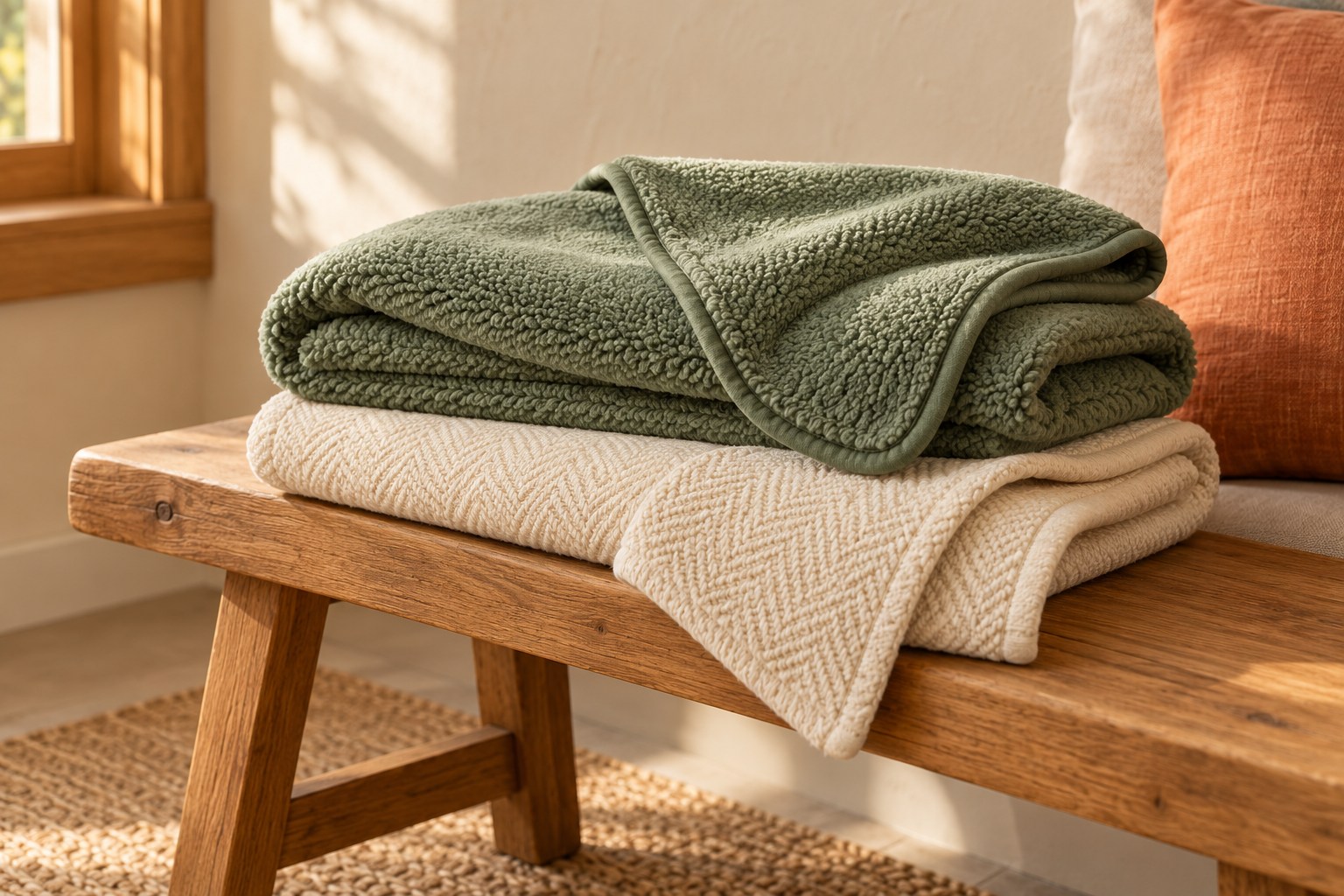
There is no universally hair-proof pet bed fabric. Coat texture, fabric weave, and the cleaning tool all influence how much hair remains after a quick tidy. A cover that looks clean in a dark showroom photograph may become time-consuming at home. Examine the surface closely and consider how you already remove hair from other household textiles.
Understand where hair catches
Smooth, tightly woven material gives individual hairs fewer loops to catch around, although fine hairs can still work through some fabrics. Knits and plush surfaces offer more texture, which may feel appealing but can hold hair in multiple directions. Long pile hides debris beneath the visible surface. Ask for close-up photographs rather than judging only the overall color and shape.
Coarse hairs may stand visibly on a cover while very fine hair forms a less obvious film. A sample swatch is useful when available: try an ordinary lint tool according to its instructions without assuming success on a sofa predicts identical performance on a bed. Avoid abrasive scraping that damages the weave. The goal is a repeatable cleaning action that removes hair while leaving the textile intact.
Seams can matter more than the broad panel
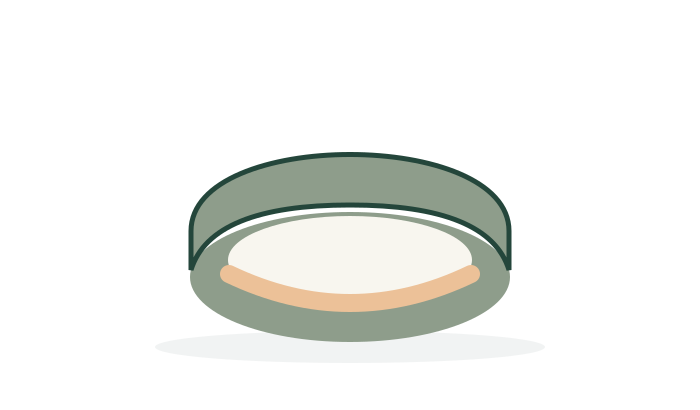
Piping, quilting, and deep channels create places where hair gathers. A flat central panel is generally easier to sweep with a hand tool than a heavily tufted surface. The join between a bolster and cushion deserves attention because it often collects material that a broad roller misses. A removable central pad can expose this valley for cleaning.
Consider the underside too. If the bed must be lifted to remove hair, handles can be helpful, provided they are intended for moving the empty bed. A cover that opens widely lets you shake out loose debris before washing when the care instructions allow. Inspect the washing machine's own guidance for pet hair management rather than sending a heavily coated cover directly into every cycle.
Make color serve visibility
A color close to the pet's coat can make hair less noticeable, but that is a visual preference rather than a cleaning solution. Mid-tone woven covers often show both dirt and lint clearly enough to guide maintenance. Very dark or very pale fabric may highlight one type of debris while concealing another. Choose a color you can inspect under the room's ordinary lighting.
Keep a suitable hair-removal tool near the bed's laundry supplies and use it before hair becomes tightly embedded. Follow fabric instructions for washing and drying, especially if a surface has a coating or grippy backing. When ordering replacement covers, prioritize the same effective textile construction rather than assuming every color in a product range uses an identical material.
For our approach to product claims and illustrations, see the Editorial Policy.