
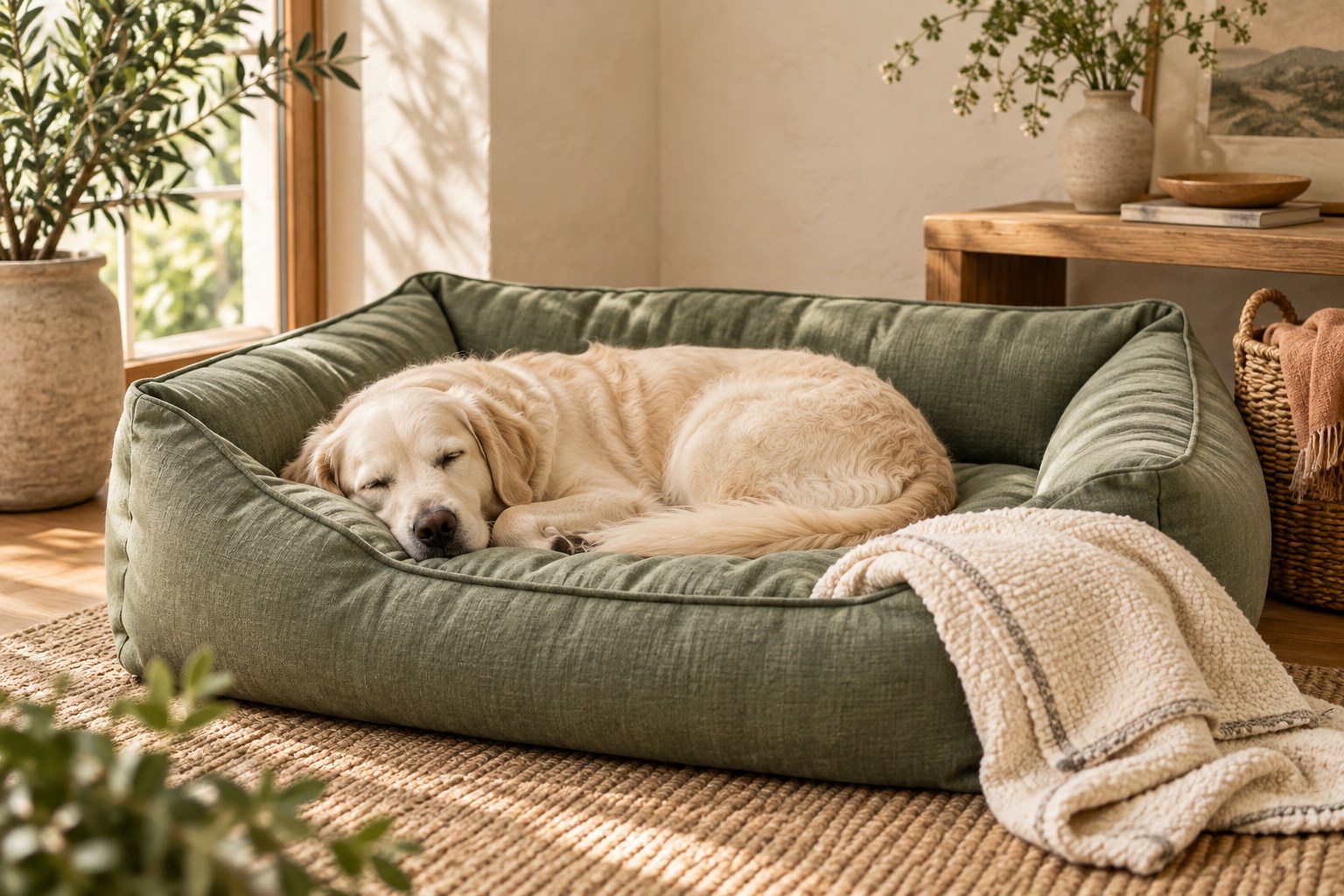
A portable mat is useful when a pet needs a clear place to settle beside a picnic table, in a quiet visiting room, or during a supervised break. It provides a recognizable surface and a barrier from ordinary floor debris. Its strength is portability, so evaluate how well it opens, stays put, and packs away after use.
Balance the two sizes
Measure the usable mat when open and check the packed dimensions separately. A compact roll is easier to carry, but very thin material may offer little cushioning. A thick padded mat can be comfortable on a firm surface yet take more room than expected in a day bag. Decide whether the priority is a simple resting marker or a substantial temporary bed.
Packed straps and buckles should secure the empty mat without leaving loose loops across its resting surface. Look for storage hardware that can be tucked away or detached according to the design. Do not use carrying straps to restrain the pet. If a product has a handle, confirm whether it is intended only for the packed mat rather than assuming it can support any additional load.
Check how it lies on the floor
Rolled materials sometimes retain curved ends. Unroll the mat at home and see whether it settles flat before taking it somewhere busy. A lifted corner can catch a foot or invite chewing. A grippy underside may help on smooth floors, but it needs clean contact and may perform differently on grass, carpet, or rough ground. Choose a surface compatible with the specific backing.
The upper fabric should suit the pet's ordinary resting habits. Slick coated material wipes clean quickly but can feel different from a familiar textile. A soft top may be more inviting yet hold more hair. A removable thin cover can bridge these preferences if it fits securely and the maker permits it; loose household layers that slide independently can undermine the mat's stability.
Build the travel cleaning habit
Keep dirty ground contact away from the sleeping side when rolling the mat. Some products have an intended folding sequence that brings the underside inward; practice it once while the mat is clean. Shake off loose debris where appropriate, then follow the washing instructions. Do not store a damp roll in a closed bag, because the inside can remain wet even when the exterior appears dry.
Use the mat first in a quiet familiar setting so the pet can investigate voluntarily. On visits, choose a location away from doorways and foot traffic and leave room for the animal to move away. A mat defines space but does not create a safe distance from hazards by itself. Supervision and thoughtful placement remain part of every stop.

For our approach to product claims and illustrations, see the Editorial Policy.