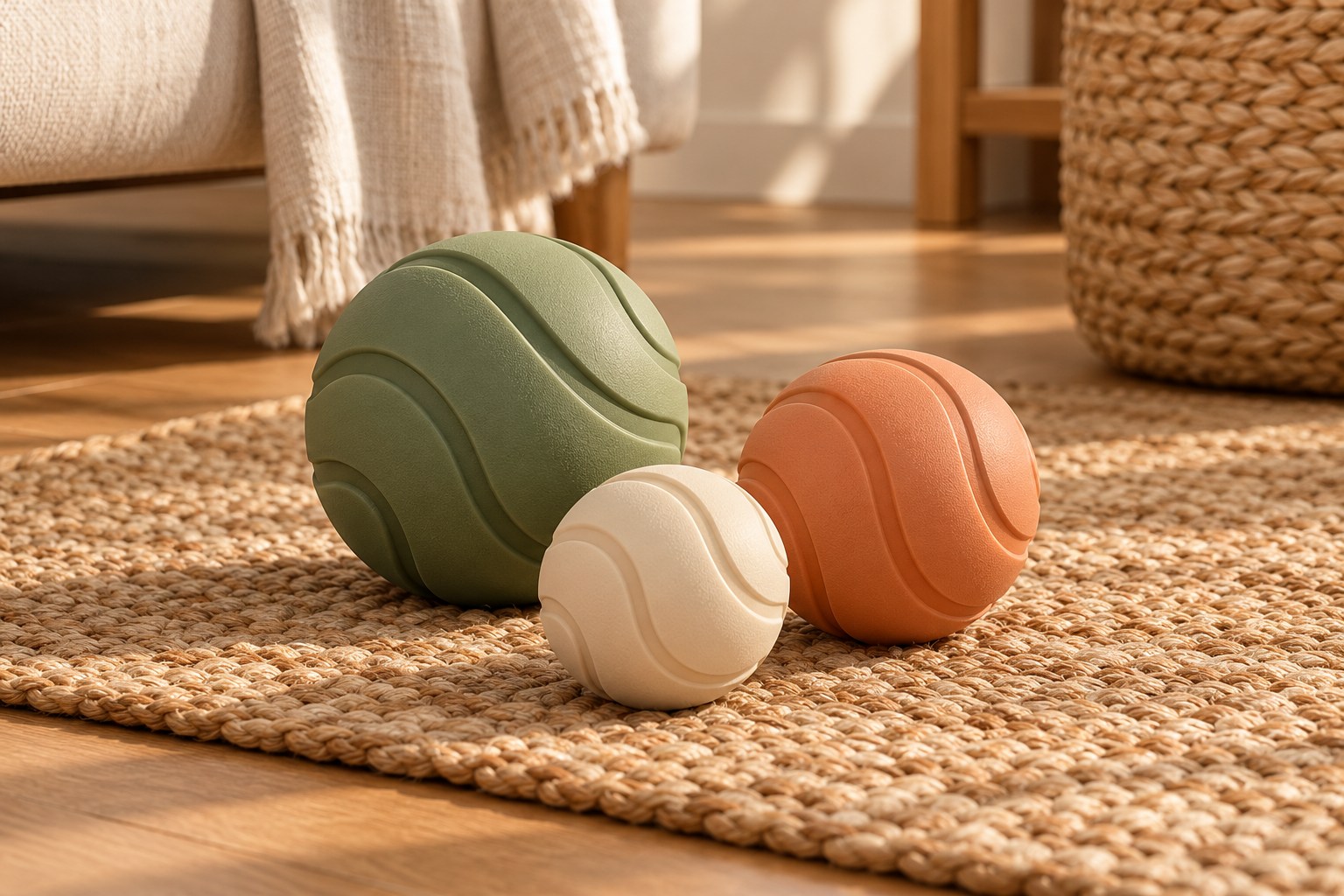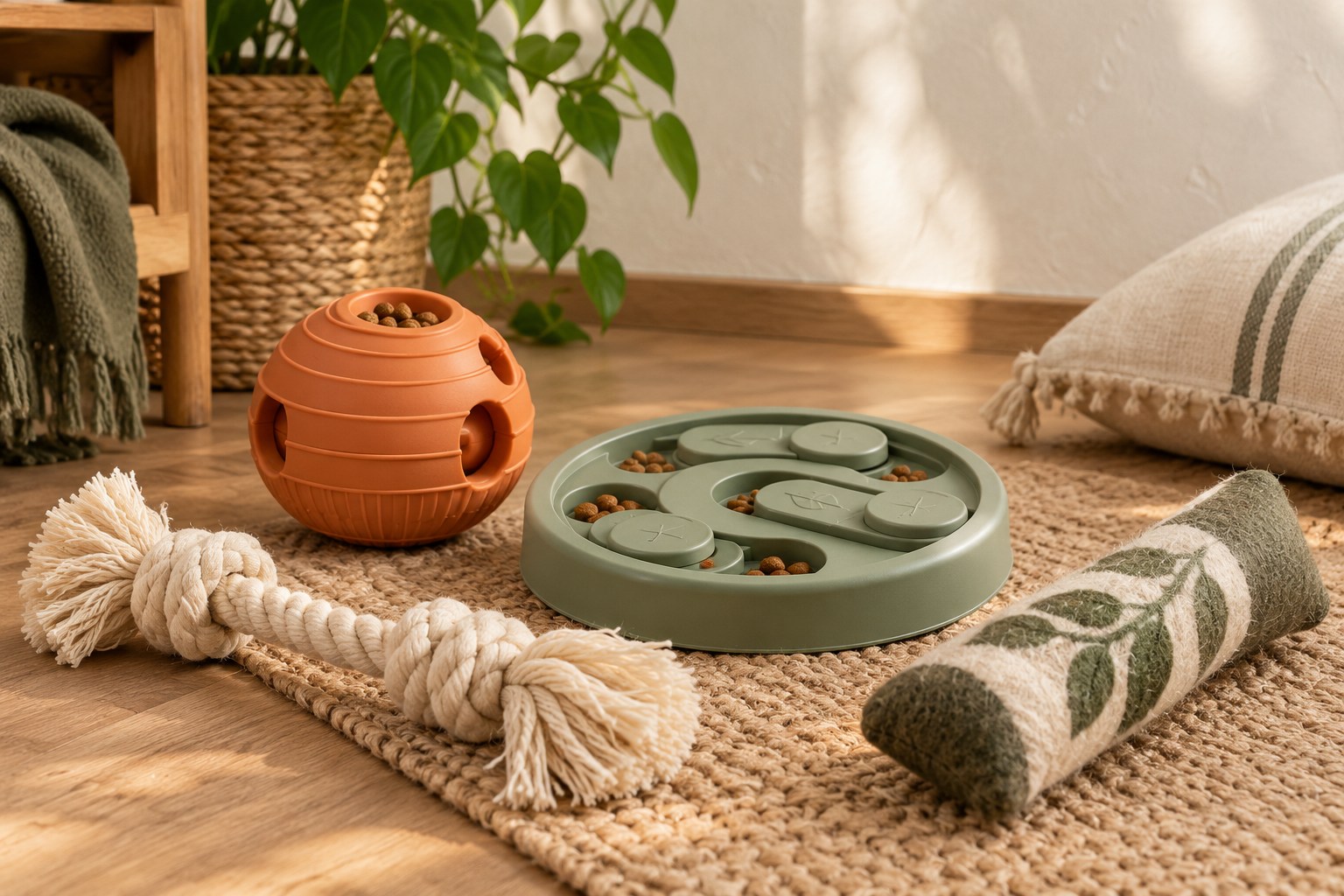
Rubber toys are often chosen for their simple shape and washable surface. The word rubber, however, covers many constructions, and durability claims do not make a toy permanent. Openings, narrow bridges, and moulded joins deserve close attention because damage may begin there before the overall shape changes.
Follow the maker's intended activity, sizing, and supervision instructions. A food dispenser, fetch toy, and chew product can all use rubber while being designed for different interactions. Do not transfer a use claim from one product to another because the material looks similar.
Begin with a clean view
Remove surface dirt using the supported care method, then inspect in good light. Grit can conceal small splits, and food residue can make a damaged edge look like part of the original texture. Look at the toy dry as well as wet because the surface appearance can change.
Check the product photograph or a reference image taken when it was new. A familiar shape can make gradual changes harder to notice. A simple baseline picture helps distinguish an original opening from one that has become enlarged or ragged through use.
Examine openings and thin sections
Run your eyes around each hole and along narrow connecting parts. These locations may flex repeatedly during use. Look for cracks, missing material, exposed inner layers, or edges that no longer match the original smooth profile. Do not stretch a damaged toy aggressively to test how far it will go.
If the toy contains food, inspect inside the opening using the access the manufacturer provides. A tear beginning on the inner edge can be less visible from outside. Choose products whose important surfaces can be seen and cleaned without unsupported disassembly.
Watch for changed behaviour
A toy that previously held its form may now collapse more easily or fail to close correctly. A removable plug may loosen, or a ball may stop rolling evenly. These changes can indicate that the object no longer operates as intended, even if no large piece is missing.
For a hypothetical hollow dispenser, a widened opening may release food much faster and expose an edge to further chewing. Resetting the adjustable cover cannot repair that damage. Replace the affected supported component or retire the toy instead of compensating with a different setting.
Avoid cosmetic repairs
Glue, tape, coatings, and improvised plugs can change the surface and introduce materials not intended for the animal or food contact. They can also hide the original damage during the next inspection. Use only a manufacturer-supported replacement or repair procedure, if one exists.
Keep retired toys out of the animal's reach until disposal. A toy placed beside the bin may still be retrieved. If several household members offer play equipment, tell them which object has been removed so it is not returned to the storage basket as a familiar favourite.
Link inspection to ordinary use
Check before a session, observe the interaction during it, and inspect again when collecting the toy. Stop if the animal begins tearing or swallowing material. The right interval depends on the toy and use, but linking the check to handling makes it less likely to be forgotten.
Store clean, dry toys according to the product's guidance and away from unsuitable heat or exposure. A product left outdoors can change condition without being played with. When in doubt about a change, choose another appropriate toy rather than treating continued shape as proof of continued suitability.
Keep the condition record proportionate
For an ordinary simple toy, a quick visual comparison may be enough. For a complex dispenser with replaceable parts, retain the model details and original assembly picture. The purpose is to make damage easier to recognise, not to create paperwork that delays removing an obviously damaged object.
For our approach to product claims and illustrations, see the Editorial Policy.