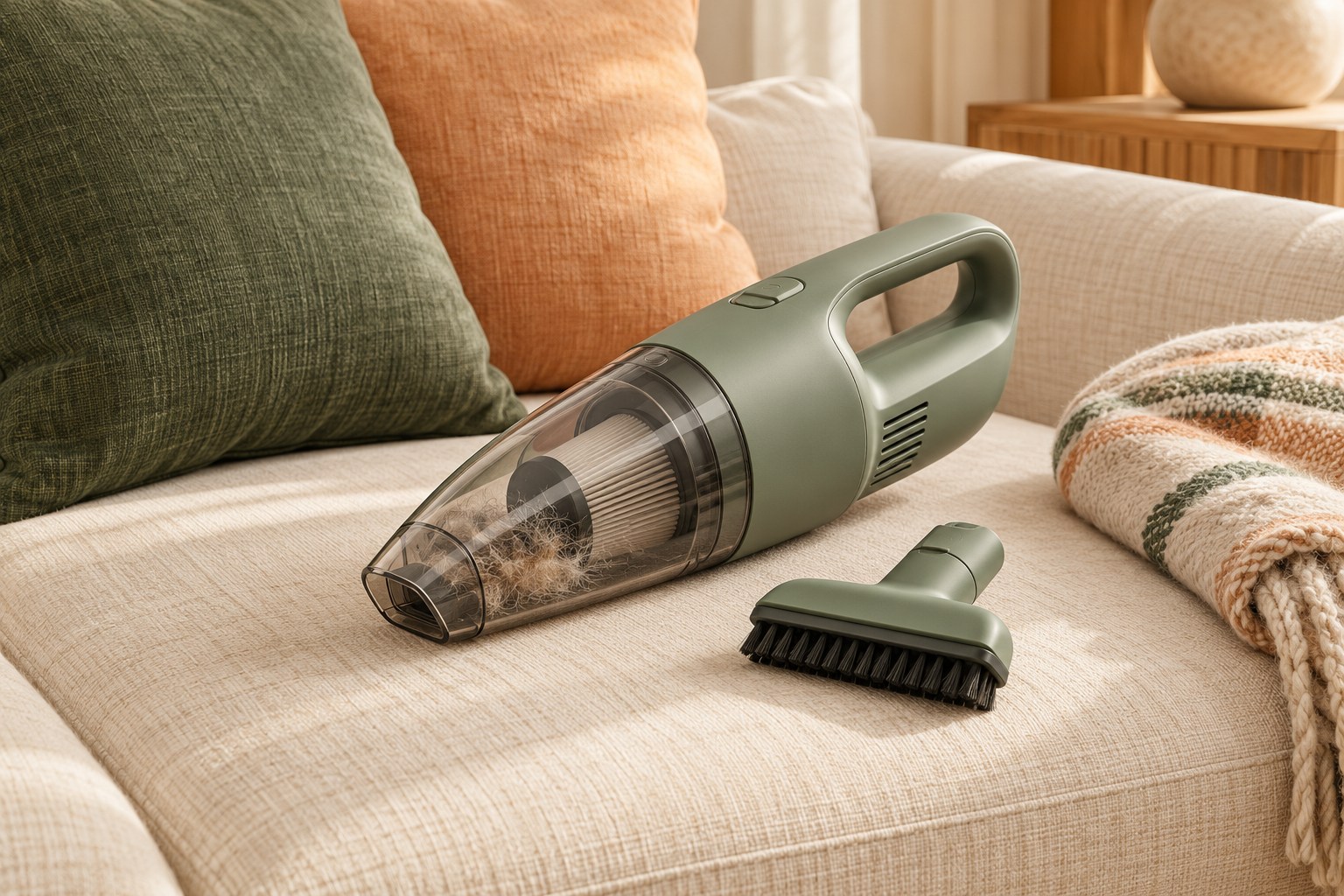
A vacuum sold for pet households may include a small upholstery tool, but that label does not establish how well the attachment suits every fabric or machine. The connection, power requirements, brush design, and cleaning access all affect usefulness. Start with the vacuum's exact model and the surfaces you need to maintain, then compare compatible tools within those limits.
Confirm the connection before comparing features
Check the manufacturer's compatibility information for the exact vacuum model and generation. A tube diameter that appears close may not provide a secure seal or latch. Powered attachments can require electrical contacts or controls that a simple adapter cannot supply. Do not assume that an accessory advertised as universal is appropriate for every machine merely because it can be pushed onto the hose.
Use approved adapters only where the vacuum and attachment makers permit them. A loose connection can make the head awkward and change the way the tool is handled. Retain model and part numbers so replacements do not depend on appearance. Similar housings may conceal different brush systems or power connections, especially when a product range changes over time.
Consider hose reach and the machine's stable position. A useful head is less convenient if the person must pull the vacuum sideways or balance it on furniture to reach a sofa back. Follow the machine's intended placement and do not strain the hose around sharp corners. The attachment should extend a sound setup rather than create a new handling problem elsewhere.
Compare working heads for the task
A passive upholstery nozzle relies on the machine's airflow and its own surface design. A rotating brush introduces moving parts that may be powered by airflow or electricity. Those formats have different maintenance needs and may have restrictions on delicate fabrics. Read the permitted surfaces and the furniture care instructions before using a rotating head on a cushion or throw.
Head width trades coverage against maneuverability. A broad tool cleans a seat quickly, while a narrow one may reach corners more easily. Look at the distance between the working edge and the housing, because bulky borders can prevent access near piping. A crevice tool serves another role and should not be pressed aggressively against delicate seams simply because it fits the gap.
Adjustable controls can be useful when the machine and tool provide them, but settings should follow the instructions. More suction or faster brush movement is not automatically better for every fabric. Stop if the head catches, pulls the material, or changes its appearance. A gentle appropriate tool is preferable to repeated forceful passes that remove hair at the expense of the textile.
Make maintenance accessible
Hair can wrap around a rotating brush or lodge near its ends. Check whether the brush removes through an intended latch and whether the instructions explain cleaning. Disconnect power as required before maintenance, and keep fingers clear of moving parts. Do not improvise cutting or disassembly around an active tool. A tool that is difficult to open may become inconvenient in a household that needs frequent cleaning.
Inspect the attachment for worn strips, damaged bristles, cracked housings, and blocked passages. Clean and dry components only as permitted; not every powered head can be rinsed. Refit covers and brushes securely before use. Keep the machine's filters and dust container maintained according to its own instructions, because an attachment is only one part of the overall cleaning system.
Store the head where the working face is protected and the connector is not bent under heavier equipment. If the pet mouths accessories, keep them out of reach. Reassess the tool if the household changes upholstery or replaces the vacuum. The useful purchase remains the one that fits both the machine and the actual surface, with maintenance simple enough to complete regularly.

For our approach to product claims and illustrations, see the Editorial Policy.