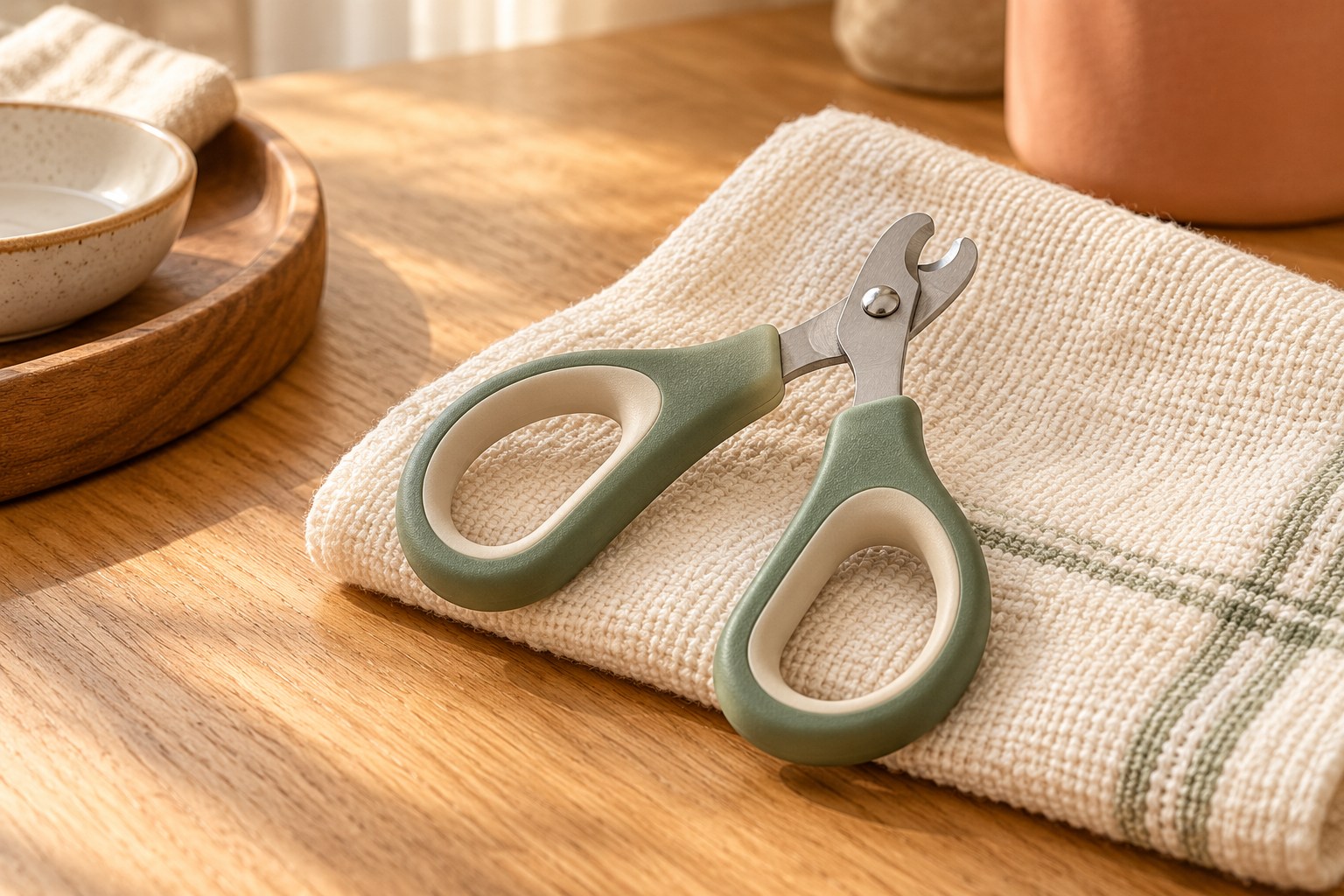
A guillotine-style nail clipper looks different from a scissor design because the nail is positioned in an aperture and a blade moves across it. That layout can suit some routines, but it introduces its own questions about fit and visibility. The name describes the mechanism, not an automatic advantage in comfort or safety for every pet.
Start with professional instruction
Ask a veterinarian or qualified groomer to help determine whether the format is suitable for your animal and to explain its correct orientation. A tool that is held backward or positioned poorly may not behave as intended. Do not rely on a generic product photograph to resolve uncertainty about individual nails, anatomy, or handling. Equipment should follow a demonstrated routine rather than encourage trial and error.
The aperture needs to suit the relevant nail size, but a larger opening does not necessarily improve control. Check the actual dimensions where the maker provides them. Consider whether the surrounding housing leaves a clear view. If the nail cannot be positioned without obscuring what you need to see, a different appropriate format may be more practical than adding accessories around the same head.
Inspect the moving blade
Operate the empty tool away from the pet according to the instructions. The blade should travel smoothly across its intended path and return predictably. Look for damage, loose fasteners, or sideways movement. A mechanism that sticks or requires unexpected force needs attention before use. Do not attempt to discover whether it is sharp enough by experimenting on the animal.
Some guillotine designs provide replacement blades. Confirm the exact part number, cost, and installation instructions before treating this as a long-term benefit. A replacement for a visually similar clipper may not fit correctly. If installation requires a process you cannot perform confidently, use the manufacturer's service guidance or choose an alternative maintenance path rather than improvising the assembly.
Evaluate the handle as a control system
The squeeze distance should fit the person's hand comfortably. An overly wide opening may require an awkward grip; a very small handle may encourage pinching. Spring tension also affects how easily the head returns. A comfortable tool lets the person place it deliberately and stop promptly, which is more useful than a handle advertised only as strong or professional.
Look at storage locks and covers. The sharp portion should be protected according to the tool's design, and no cover should require reaching carelessly across an exposed blade. Keep the packaging or instructions until the setup is familiar. Tools with moving parts benefit from a dedicated dry compartment where towels, hair, and unrelated small items do not jam the mechanism.
Know when equipment is not the issue
Persistent difficulty with nail care may arise from handling, discomfort, or uncertainty about technique rather than from the clipper format. Stop if the animal is distressed or the person cannot see and control the task appropriately. Professional assistance is a practical choice. A product should not become a reason to continue when individual guidance is needed.
Clean the tool only as instructed and dry it fully before storage. Inspect it after a fall, even when the handle seems intact. Changes in blade movement, aperture shape, or fastener tightness are relevant. Retain the model details if replacement parts are available, and remove worn blades from pet access immediately. Convenient maintenance should preserve the intended mechanism, not extend a damaged tool indefinitely.
For our approach to product claims and illustrations, see the Editorial Policy.