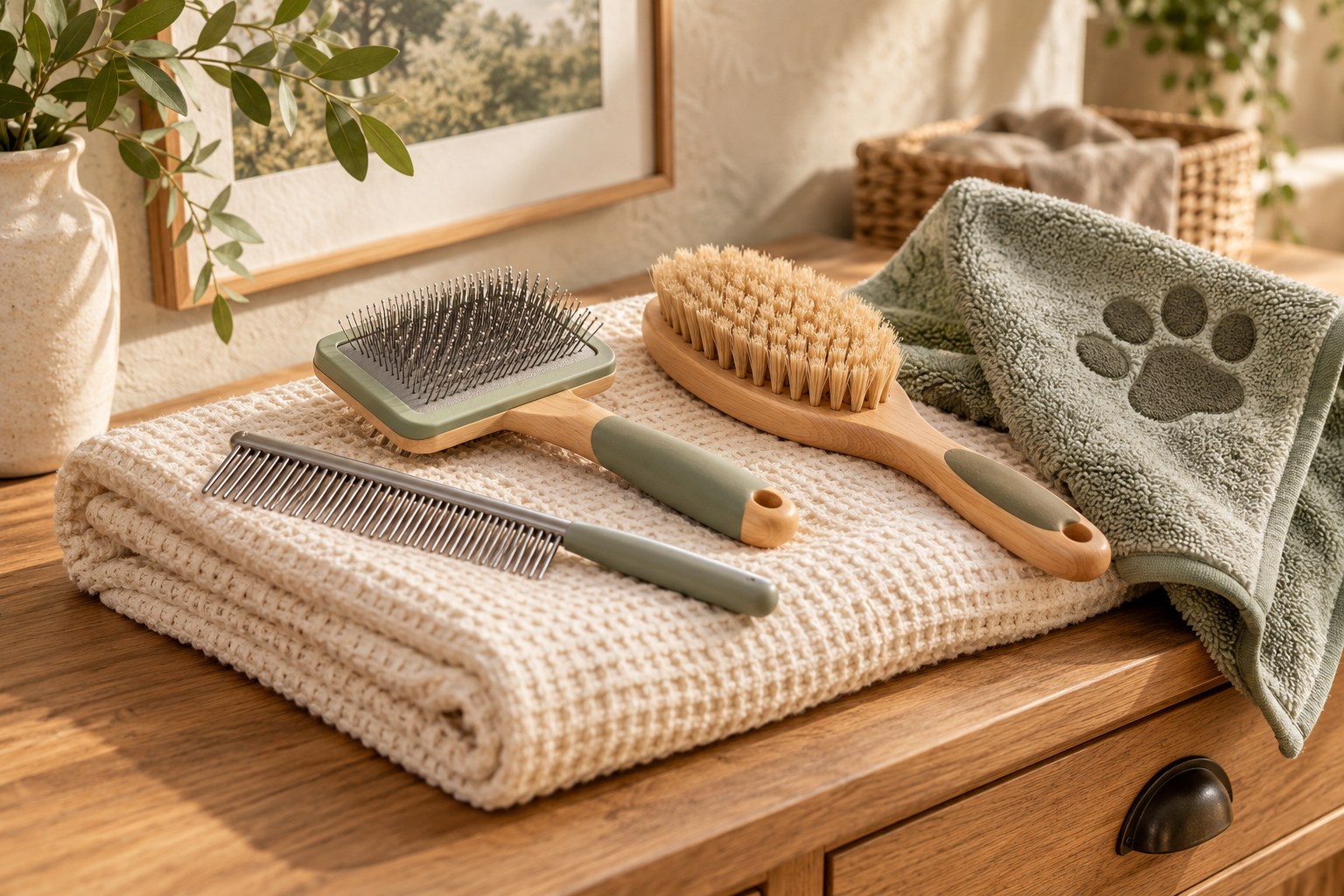
A grooming comb appears simple because its working parts are visible. That simplicity makes careful comparison possible: tooth length, spacing, tip finish, and rigidity are all worth examining. A comb should have a defined role in an appropriate coat-care routine, rather than being dragged through every type of coat until it passes.
Coarse spacing offers a different first contact
Widely spaced teeth engage fewer strands at once and may suit some routine tasks on fuller coats. Closely spaced teeth create a different level of contact and may be used for more detailed finishing when appropriate. Neither spacing establishes suitability by itself. The length and thickness of the coat and the technique shown by a qualified groomer should guide the choice.
A two-spacing comb places both formats on one spine. That can reduce the number of tools to store, but it also shortens each working section. If most of the routine uses only one end, a full-width dedicated comb may feel easier to handle. Look at the actual division rather than assuming a half-and-half arrangement is always the most versatile purchase.
Inspect the teeth individually
Teeth should be straight, securely attached, and free from rough edges. Rounded tips are a useful detail to inspect, yet even a smooth comb can be uncomfortable if used with force. Hold the new tool under good light and check the space between teeth as well as the tips. A damaged tooth may be easy to miss when looking only at the overall outline.
Metal teeth can bend, and molded teeth can develop cracks or rough seams. Stop using a tool with an irregular working edge. Filing or bending parts at home may create a surface that looks restored but behaves differently. If a maker supplies a suitable replacement part, follow that process; otherwise replacing a modest tool can be more sensible than continuing with uncertain contact points.
Choose a controllable shape
A spine-only comb keeps fingers close to the working area, while a handled comb changes the wrist position and reach. Which feels better depends on the handler and the coat-care task. Avoid a grip that encourages excessive force. The useful tool allows light precise placement and can be paused immediately when it catches or the pet indicates discomfort.
Comb length affects maneuverability. A long tool spans a broad area but can feel unwieldy around small contours. A compact comb offers more local control but may be slow across a large coat. Check whether the storage sleeve covers the tips safely without forcing them sideways. Carrying an exposed metal comb among loose towels can make it harder to find and inspect.
Recognize when to stop
A persistent snag is information, not a request for stronger pulling. Stop if the coat resists, the skin moves with it, or the pet becomes uncomfortable. Dense mats and uncertain tangles should be assessed by a qualified groomer or veterinarian as appropriate. Do not cut close to the skin with household scissors or use a comb as a guide for an improvised cutting method.
Clean between teeth according to the tool's instructions and dry it fully before storage. Keep combs away from damp towels and inspect them after a drop onto hard flooring. If several pets use the same equipment, make cleaning between uses part of the routine. A sound simple comb remains useful through good handling and inspection, rather than through an ever more aggressive tooth pattern.
For our approach to product claims and illustrations, see the Editorial Policy.