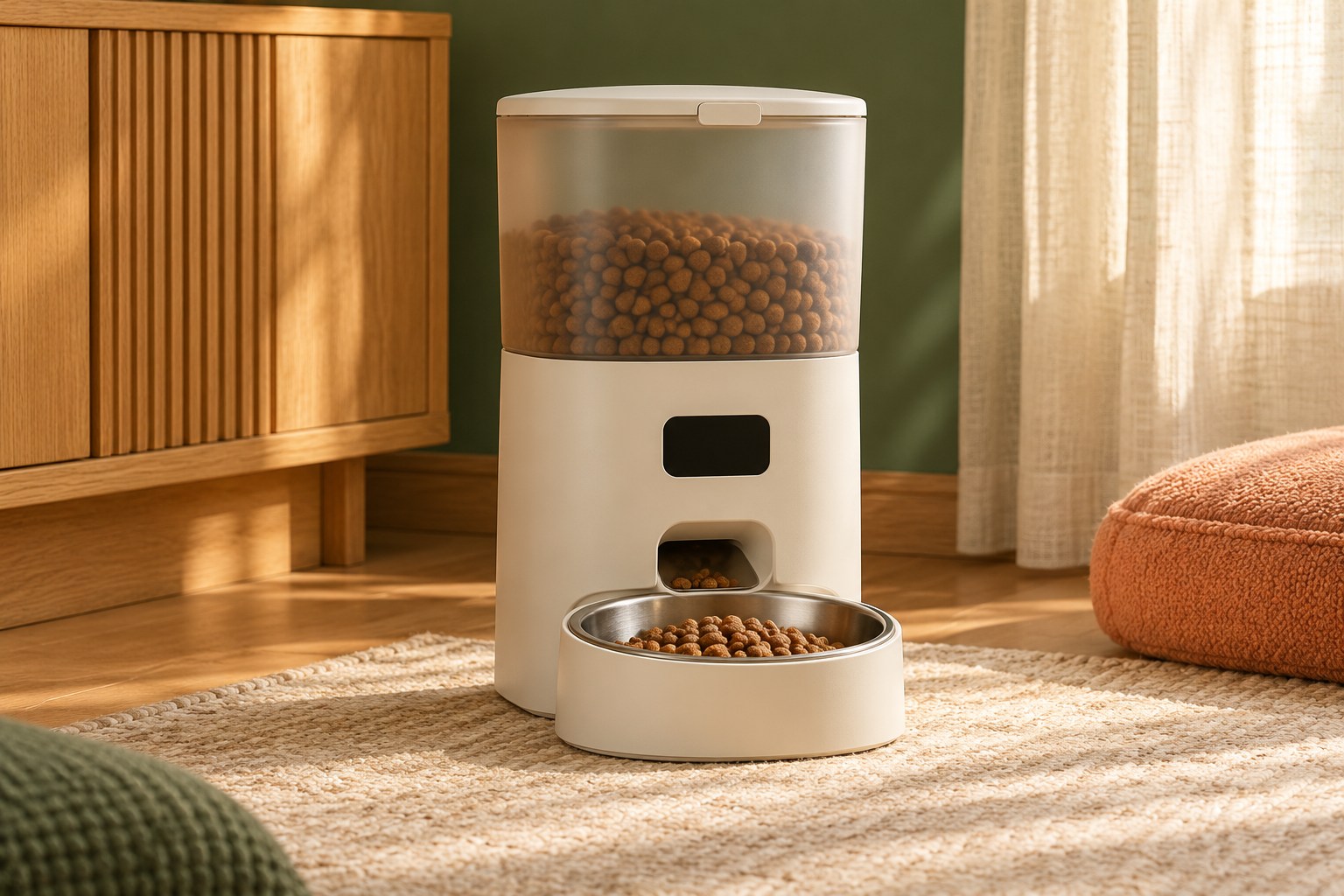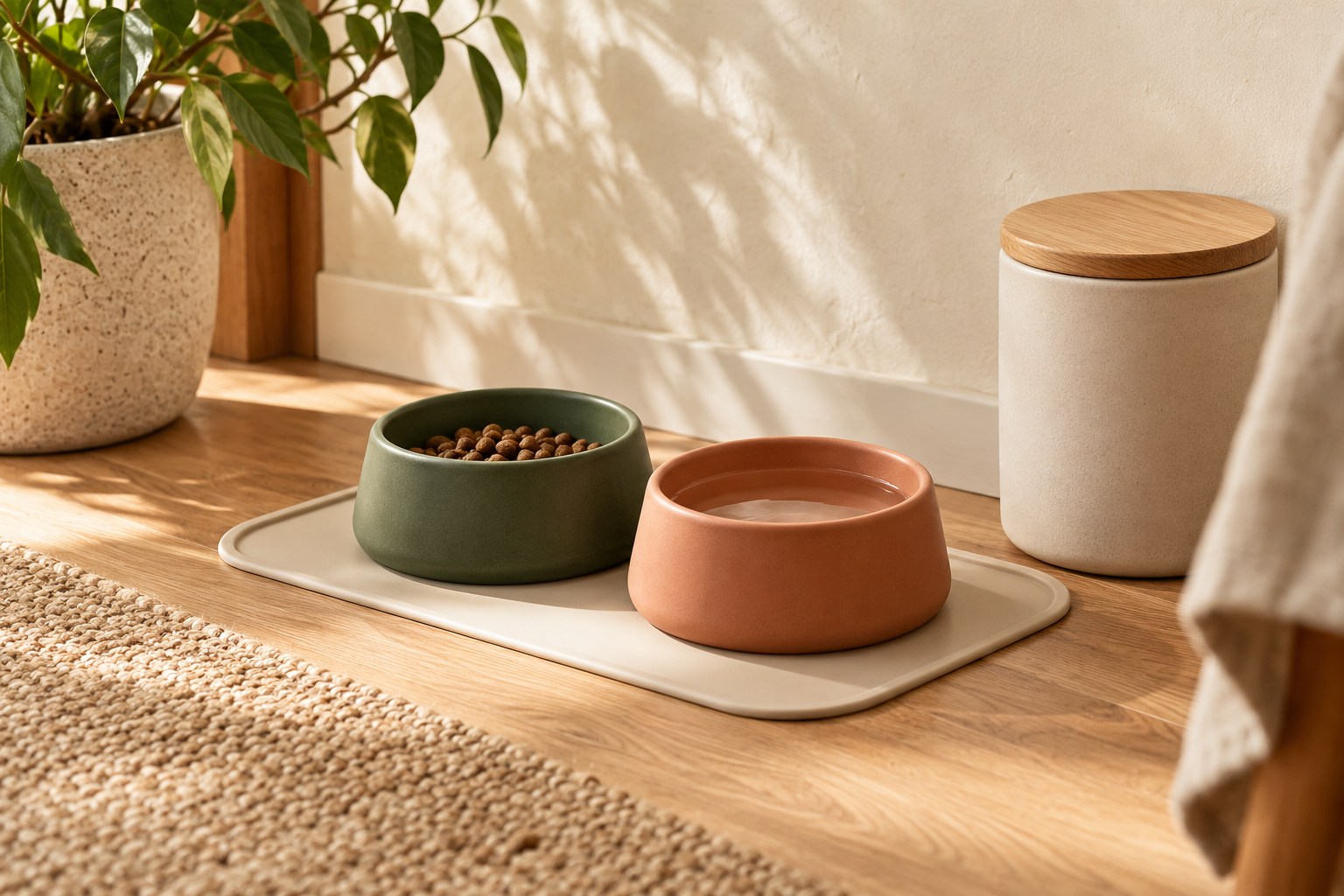
The most attractive feeding mat in a catalogue may be too small once two bowls, a water splash, and a moving pet enter the picture. Start by observing the pattern of mess on your own floor. A small amount of food scatter needs a different solution from a water bowl that travels several centimetres during use.
The mat's job is to collect that mess while remaining stable and easy to wash. Extra surface area is useful only if it fits the location and does not curl into a walking route.
Draw the working footprint
Place the bowls where you intend to use them and mark their combined outline on scrap paper. Add space where drips or crumbs usually land. This creates a practical template that you can compare with a product's actual measurements instead of relying on lifestyle photographs.
For example, two bowls with 18-centimetre bases already occupy 36 centimetres before allowing a gap. A 40-centimetre-wide mat may leave little margin at the ends. Check front-to-back depth as well, particularly when the pet tends to pull food forward.
Understand what a raised lip changes
A low lip can retain small spills and give crumbs a boundary. A high lip may catch more liquid but can also create a step around the feeding area. Consider the animal's route into the station and whether the edge will be underfoot.
A lip does not make a mat a secure water container. Flexible corners can collapse when lifted, sending pooled water across the floor. If you regularly need to move a wet station, a rigid tray with handles may be easier to manage than a thin silicone sheet.
Compare grip on both sides
The top needs to hold the bowls, while the underside needs to stay on the floor. These are separate interfaces. A textured upper surface may help one bowl and destabilise another with a narrow foot. Test the complete setup with a gentle sideways push.
Moisture underneath can change the way a mat grips and may conceal a spill. Lift the mat during routine cleaning rather than wiping only its upper surface. Dry the floor and underside before returning it, especially where the station sits beside cabinetry.
Choose a cleaning route you will use
Large mats can be awkward in a small sink. Check whether the mat can lie flat for washing or whether its manufacturer allows a dishwasher. Deep grooves and decorative lettering add places that need brushing; plain surfaces are often quicker to inspect.
If the feeding station sits in a narrow kitchen, use the paper template for a full day before buying. Walk past it carrying a bag and open nearby drawers. That simple layout test can reveal a corner that will be kicked repeatedly, even when the bowl arrangement looks tidy.
For our approach to product claims and illustrations, see the Editorial Policy.