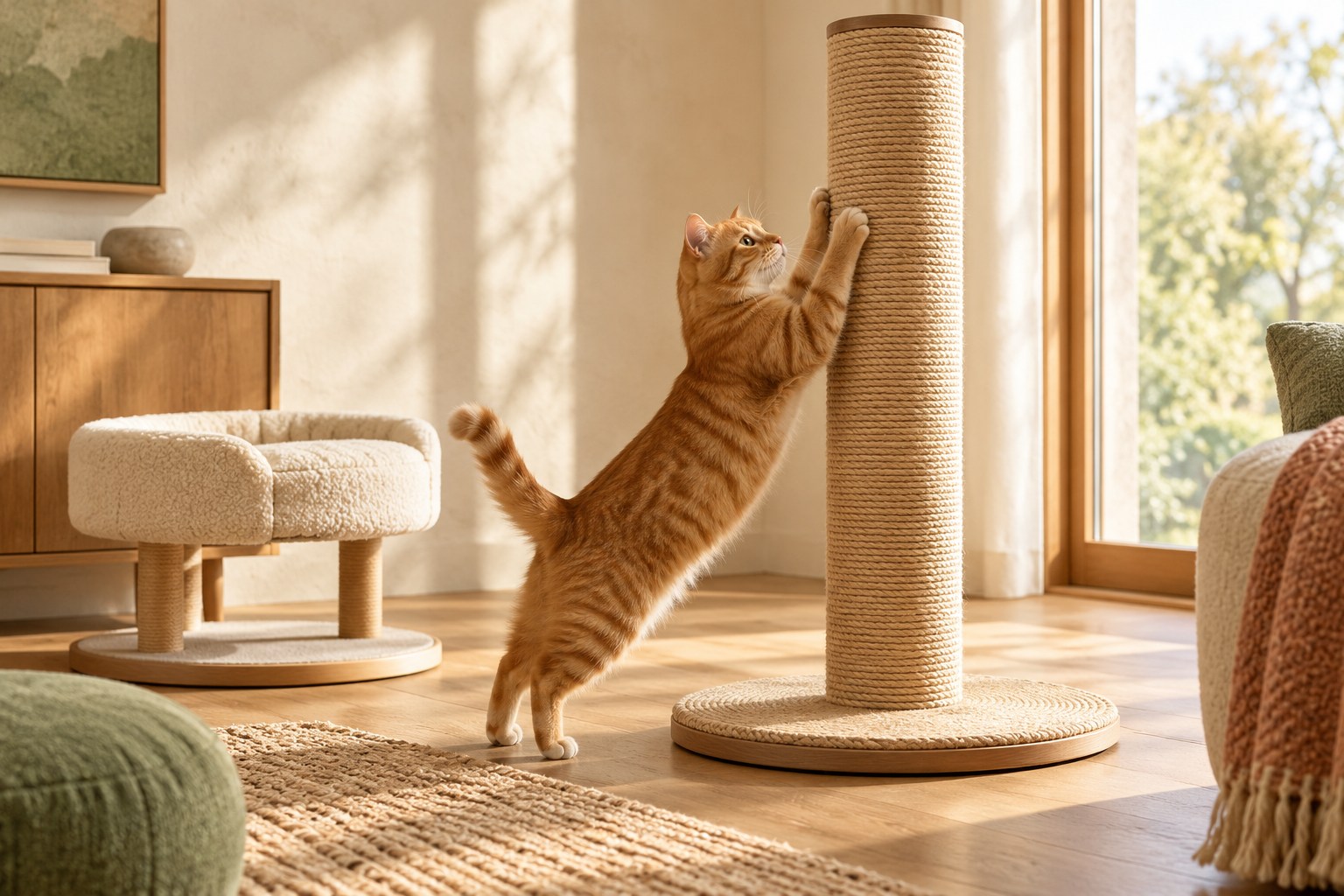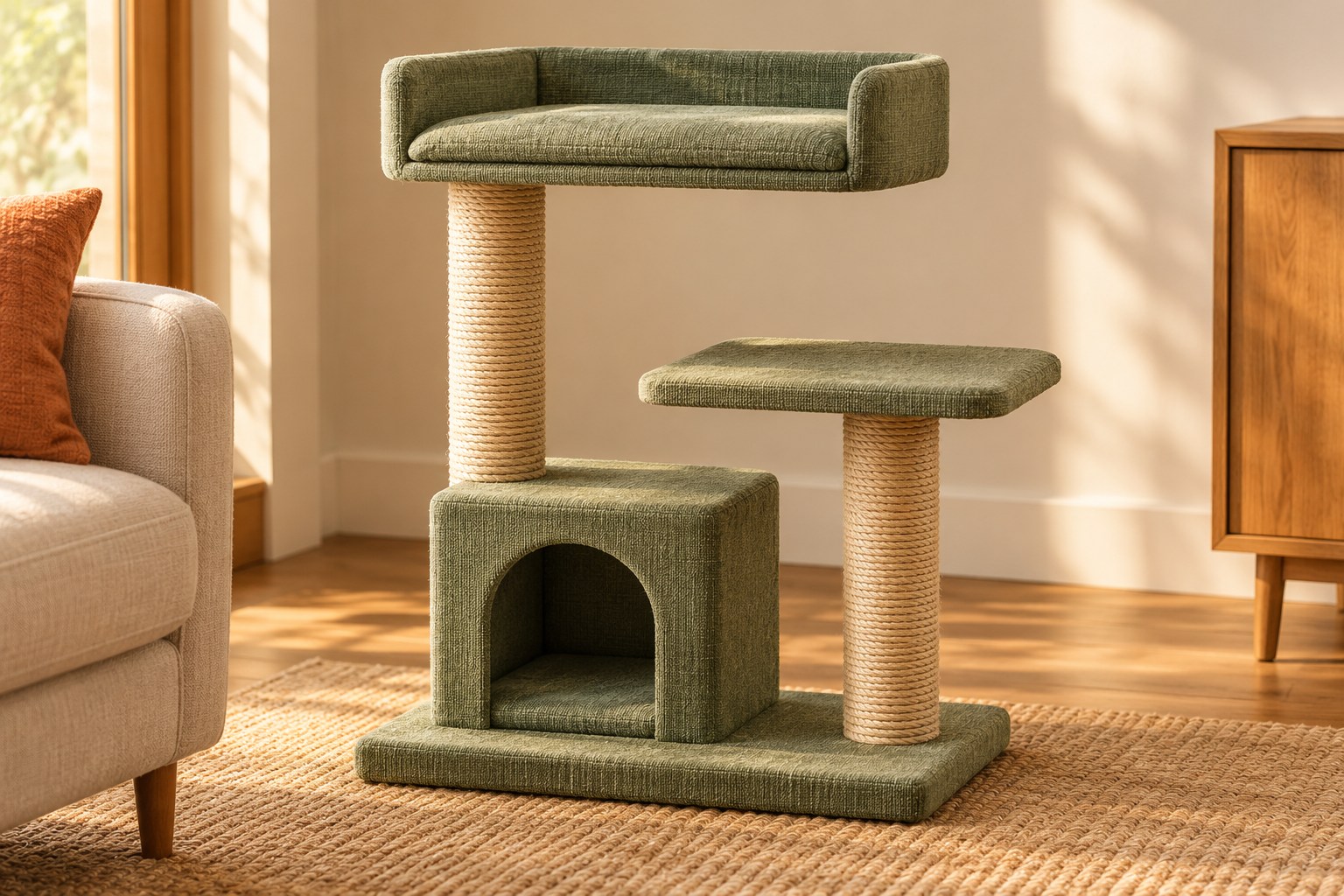
A cat that previously jumped onto a favorite perch may begin choosing a lower route or stop using it. Changes in movement can have medical causes, so discuss new difficulty with a veterinarian instead of treating furniture as the complete answer. Once appropriate needs are understood, steps or a ramp can make a familiar space easier to reach.
The useful design is the one that fits both the cat’s movement and the room around it.
Compare the movement each option asks for
Steps divide height into repeated rises, while a ramp replaces those rises with a continuous incline. A ramp needs sufficient floor length to avoid an awkwardly steep slope. Deep steps provide more room for the cat to place the whole foot and pause; shallow decorative steps may function more like a ladder. Follow individualized veterinary guidance where mobility is affected. Do not choose the shortest product solely because it fits the available gap if its geometry defeats the access purpose.
Measure the destination and landing
Record the height of the intended platform and the clear floor space in front. The top of the access aid should meet the destination in the supported way specified by its maker, without a gap or unstable overlap. Provide room at the bottom to approach without turning sharply around a chair leg. A hypothetical ramp squeezed behind a sofa may be technically long enough yet unusable because the cat cannot line up with its entrance.
Check traction and firmness
The surface should provide secure footing without loose loops or raised edges that catch claws. A soft foam step can feel comfortable but compress differently under movement; a rigid frame may be stable yet slippery if the cover shifts. Press gently on each area and check how the base sits on the actual floor. Follow component limits and inspect any folding or locking mechanism. A ramp that moves when the cat steps onto it can quickly lose its appeal.
Allow room for turning
Narrow products save floor space but can make descent or turning difficult. Compare usable width inside rails or borders rather than the outer measurement alone. Side edges may offer guidance, but they should not crowd the body. If the cat needs to reverse direction on the route, a wider intermediate platform may be required. Consider the descent separately: a route that looks easy going up can feel less secure when the cat looks down toward the floor.
Introduce the route at low pressure
Keep the aid stationary and allow investigation. Encourage voluntary use with familiar rewards or a comfortable destination, without pushing or lifting the cat into the middle of a slope. Initially, a low trial arrangement may help if the product supports it. Keep familiar alternative access available when safe. Watch for hesitation at a particular step, slipping, or avoidance, and adjust the setup rather than assuming the cat is being stubborn.
Keep adapting as needs change
Reassess after room rearrangement, a change in mobility, or cover washing. Check that grippy sections remain secured and that the destination itself has not become unstable. Avoid using the aid as storage or moving it unpredictably between rooms. If the cat continues to avoid a previously valued location, seek veterinary or qualified behavior advice as appropriate. Access furniture can support comfort, but it should sit within a broader understanding of why the cat’s movement changed.

For our approach to product claims and illustrations, see the Editorial Policy.