
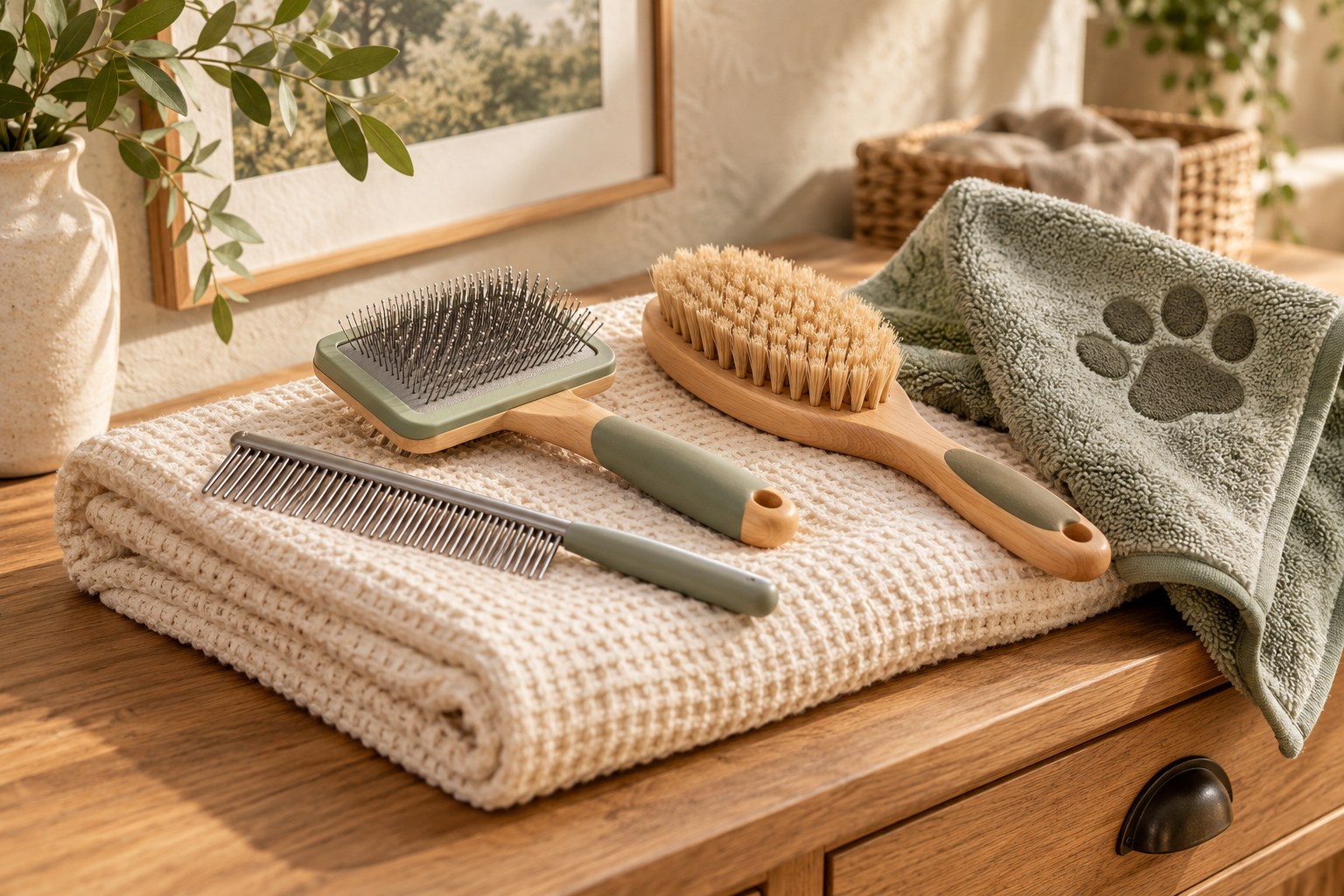
Coming home with a damp pet can turn one towel into a heavy muddy bundle very quickly. A two-towel setup gives each piece a narrower job: one handles the initial dirty moisture, and the other remains available for a cleaner finishing pass. The arrangement is simple, but it works best when the storage and floor area are planned in advance.
Assign roles clearly
Choose a first towel that is manageable for the areas most likely to carry dirt, and a second with enough dry surface for the remaining coat. They need not be identical. Different colors or clearly marked storage hooks help household members recognize the roles without inspecting a damp pile. Labels should stay on the storage system rather than introducing loose tags into the pet's working area.
Keep the finishing towel outside the splash and mud zone until it is needed. Placing both on the floor together defeats the separation. A small shelf or washable bin within reach can hold the clean towel while the first is in use. Avoid positioning supplies where retrieving them requires stepping over the animal or leaving it unattended on an elevated surface.
Make the entry area stable
A flat compatible mat can protect an ordinary floor and provide a clear standing area, but it must not curl or slide under paws. Check floor compatibility and clean beneath it regularly. The towel routine should happen away from a door swing or narrow walkway. Give the pet enough room to stand naturally and leave the area when the handling opportunity ends.
Use towels gently according to an appropriate drying routine, and avoid vigorous rubbing or pressure over uncomfortable areas. If mud is not coming away readily, seek suitable grooming guidance rather than scrubbing harder. Inspect paws and coat as part of ordinary attentive care, and obtain veterinary advice for soreness or an unexpected change. A towel setup organizes cleanup; it does not diagnose what it reveals.
Choose fabric according to the workload
A thin quick-drying towel may suit frequent small cleanups, while a larger absorbent towel can handle more moisture but takes more space to dry. Look at weight and pile as well as dimensions. Deep plush texture can hold debris and hair; a smoother weave may be easier to inspect. Follow each fabric's own instructions rather than assuming the two towels should share every laundry setting.
Remove loose debris as directed before washing, and avoid shaking dirt through the rest of the house. A washable temporary container can keep used towels together until cleaning, but damp items should not remain sealed away. If outings occur several times a day, a second pair in rotation may be more useful than a single enormous towel that cannot dry between uses.
Reset before the next outing
Clean the floor mat and inspect the area beneath it when needed. Hang towels so thick hems and folded sections can dry, then return clean dry pieces to their assigned places. A routine that finishes with both towels in a damp heap will not be ready for the next walk. Build the reset into the same household habit as putting away outdoor gear.
Review the arrangement after a week of ordinary use. If one towel stays nearly unused, adjust its size or role. If both become muddy immediately, the clean towel may be stored too close to the first stage. Small changes in placement can improve the system without buying additional products. The goal is a repeatable cleanup that respects the pet's comfort and keeps the entryway usable.
For our approach to product claims and illustrations, see the Editorial Policy.